




Imari Covered Bowl
These imari covered bowl pieces are vibrant lidded vessels bringing rich palettes and historic weight straight to your table.
Imari Covered Bowl
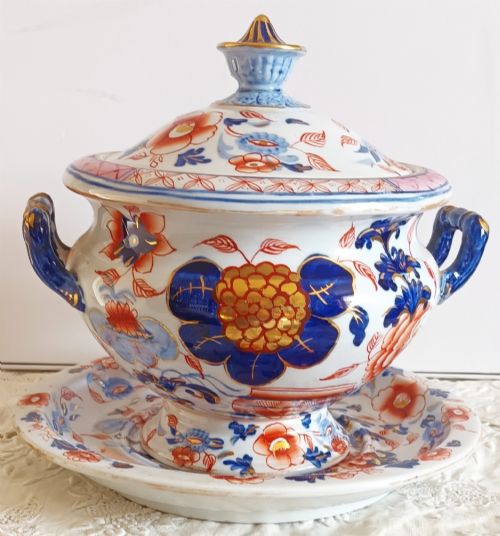
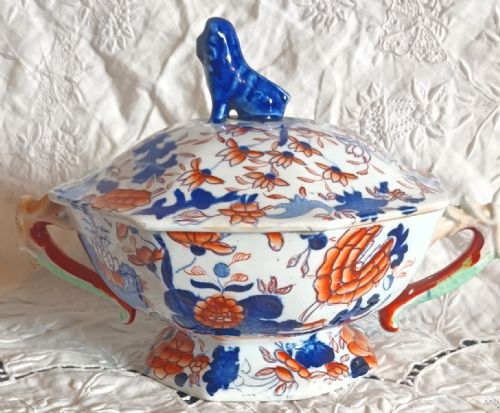
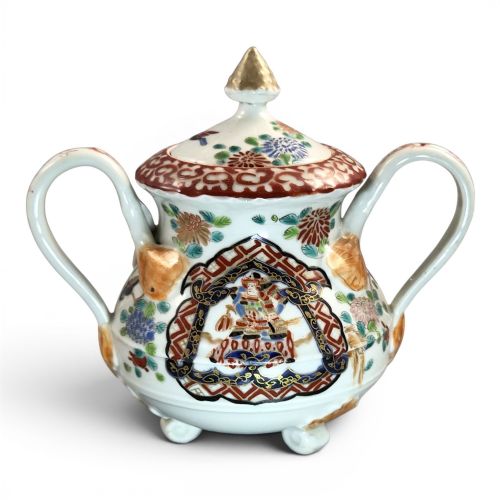
When you search for an imari covered bowl, you encounter a striking mixture of Japanese export porcelain and English ironstone interpretations. The selection ranges from eighteenth century Japanese masterworks featuring samurai figures to nineteenth century English adaptations by makers like Mason's and Royal Crown Derby.
The forms span across sugar bowls, vegetable tureens, sauce tureens, and lidded broth cups. Most pieces you meet on this page date from the nineteenth century, reflecting the strong European appetite for Imari patterns and Chinoiserie motifs during the Georgian and Victorian eras.
Materials and construction
Potters built these vessels using fine porcelain, sturdy ironstone, and earthenware bodies shaped into tureens, sugar bowls, and decorative lidded forms. Artisans then applied detailed enamel colours alongside gold leaf highlights to create the characteristic rich palette.
Techniques combined traditional throwing and moulding with careful hand-painting under and over the glaze. Kiln firing fixed the cobalt blue, iron red, and gilt decoration onto the ceramic surface for lasting durability.
Imari Covered Bowl Retail Price Guide 2026
Typical asking prices for imari covered bowl among the pieces listed under this phrase on Sellingantiques today, from the lower quarter to the upper quarter. They describe what is for sale here now, not the wider market.
Materials recorded across the inventory include porcelain, ironstone ceramic, earthenware, enamel, and gold leaf.
Assessing quality and execution
The standard of an imari covered bowl rests on the crispness of the moulding and the precision of the hand-painted enamel work. Finer examples display meticulous brush control in the intricate iron red and cobalt blue motifs, often enhanced by generous application of gold leaf.
Body material also dictates the character of the piece, distinguishing translucent porcelain bodies from heavier, robust ironstone ceramics. The sophistication of the secondary details, such as gilt handles or specific maker marks, separates standard production wares from superior collector pieces.
Mason·Royal Crown Derby·Flight Barr And Barr·Richard Ginori·Coalbrookdale
The Imari Covered Bowl Glossary
- Imari
- A style of Japanese export ceramics, and later European imitations, defined by a palette of underglaze cobalt blue, iron red, and abundant gold leaf. The aesthetic heavily influenced English factories during the Georgian and Victorian periods.
- Ironstone
- A patented ceramic body developed in the nineteenth century to provide a durable, hard-wearing alternative to porcelain. It formed the robust foundation for many English covered bowls and tureens.
- Chinoiserie
- A European artistic style reflecting Chinese and East Asian artistic traditions. It frequently appears on nineteenth century ironstone covered vessels alongside Imari palettes.
- Tureen
- A large, deep serving bowl with a cover, designed for soups, sauces, or vegetables. These functional dining pieces often feature twin handles and matching lids.
- Broth cup
- A small two-handled lidded cup used for serving individual portions of soup or broth. Nineteenth century examples in porcelain often featured delicate painting and gilding.
Imari Covered Bowl: Frequently Asked Questions
What is an imari covered bowl?
An imari covered bowl is a lidded ceramic vessel decorated in the distinctive Imari style, featuring rich iron red, cobalt blue, and gold leaf. The category encompasses Japanese porcelain export pieces alongside English ironstone interpretations.
These covered vessels include sugar bowls, vegetable tureens, and decorative lidded pots produced across the eighteenth and nineteenth centuries.
How were these covered bowls used?
These covered vessels served practical dining functions, holding soups, sauces, vegetables, or sugar at the formal table. Lidded bowls kept food warm and protected contents between servings.
Over time, many pieces transitioned into purely decorative objects, displayed on sideboards or housed within cabinets to showcase their vibrant enamels.
How do I distinguish Japanese from English pieces?
Japanese examples, such as eighteenth-century bowls or late-nineteenth-century sugar bowls with Fukagawa marks, typically utilise fine translucent porcelain bodies. Their painting reflects traditional Eastern motifs including samurai figures.
English pieces from makers like Mason's or Royal Crown Derby usually employ heavy ironstone ceramics or English porcelain bodies. They adapt the Imari palette into Western dining forms like vegetable tureens and sauce boats.
How do I care for antique ceramic covered bowls?
Wash these historic pieces entirely by hand using lukewarm water and mild soap, avoiding modern dishwashers completely. Enamel and gold leaf decorations on nineteenth-century surfaces require gentle handling.
Protect gilt highlights and ironstone bodies by storing lids separately or placing padded dividers between the bowl and its cover.