






Imari Ceramic Charger Plate
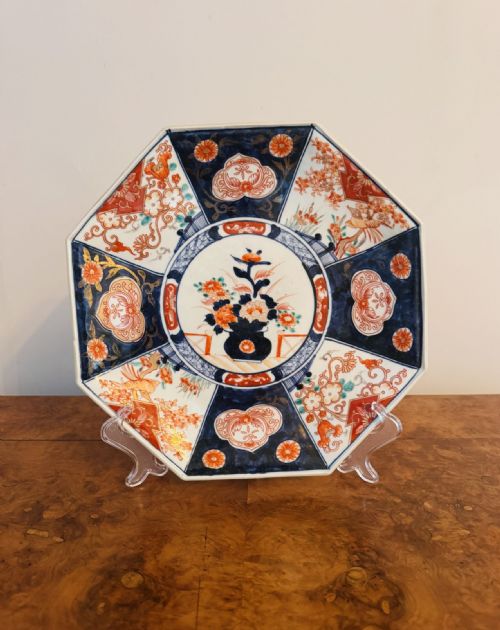
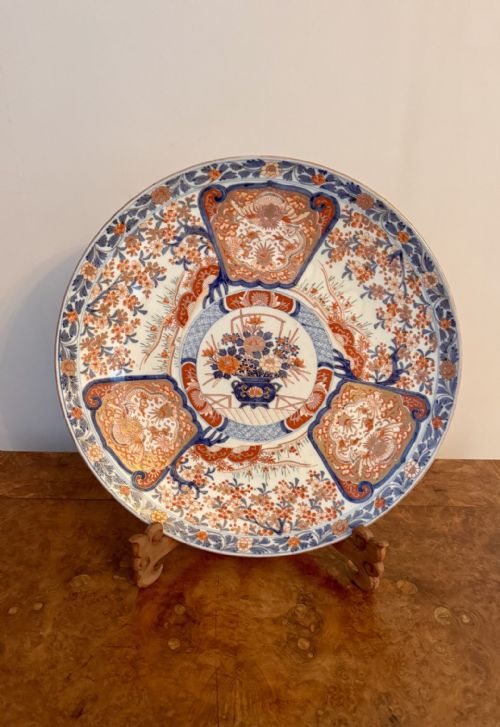
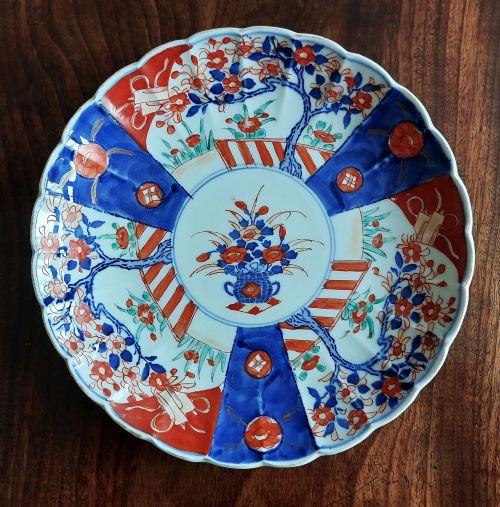
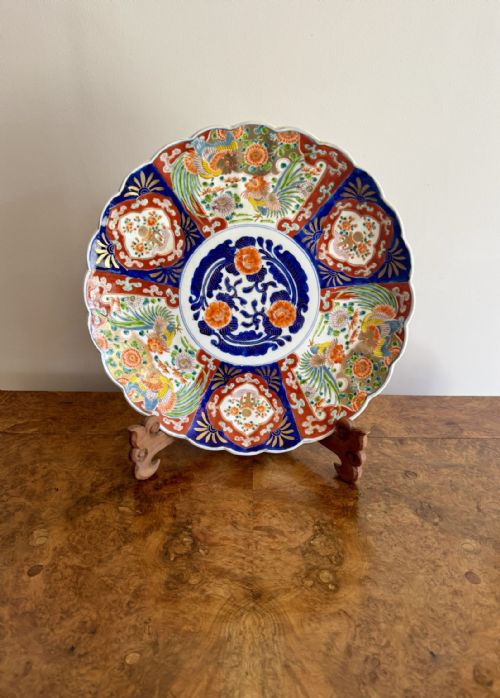
These imari ceramic charger plates bring striking cobalt underglaze patterns and rich enamel detailing into a room.
Imari Ceramic Charger Plate
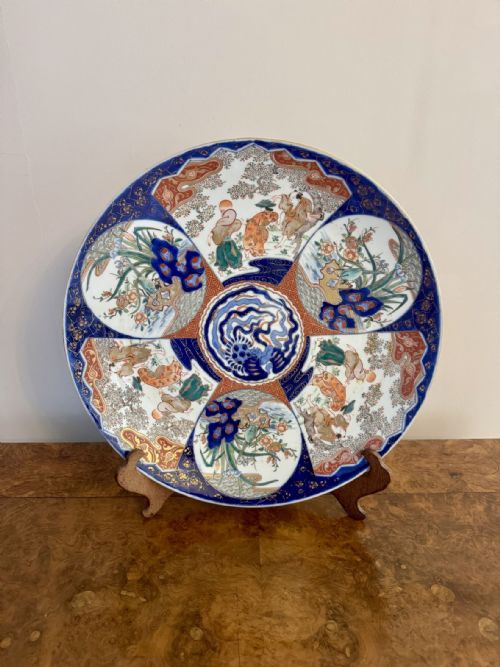
An imari ceramic charger plate is a large decorative dish designed for display rather than dining, originating from traditions in Japan and China. Buyers searching this phrase encounter substantial plates and chargers created during the eighteenth and nineteenth centuries, spanning the Edo, Meiji, and Qing periods.
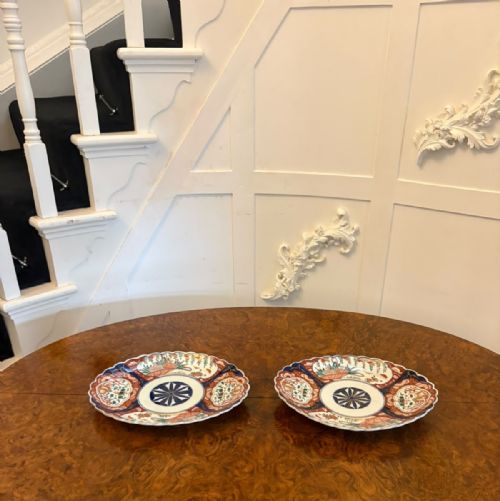
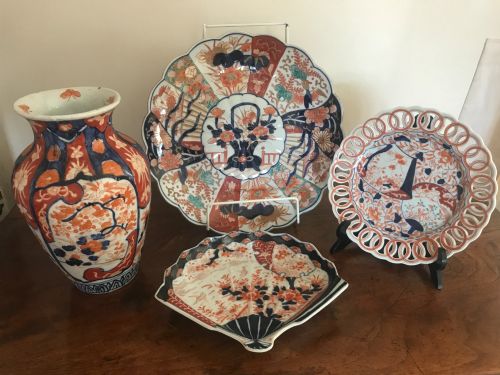
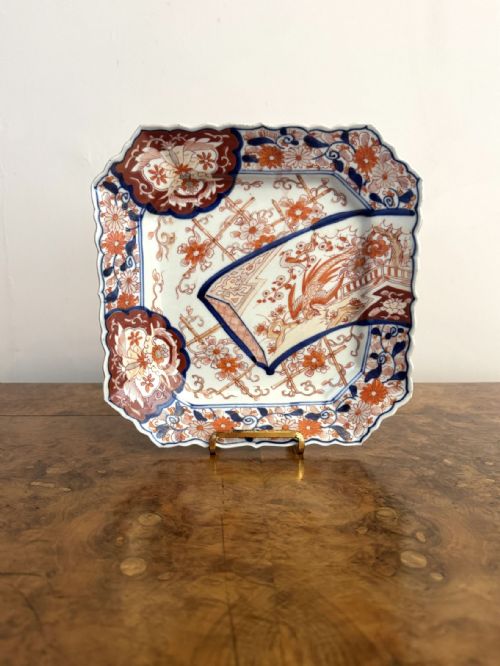
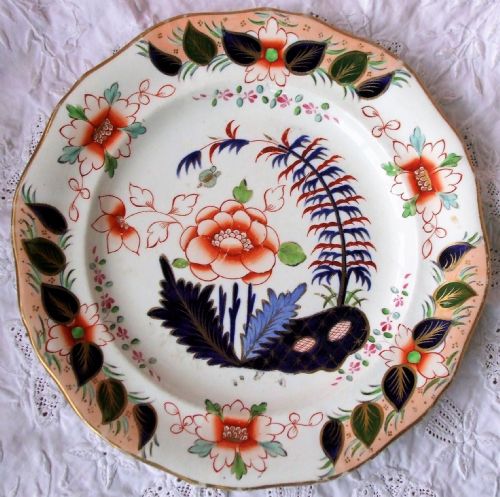
The pieces appearing here include Japanese Arita wares alongside Chinese export examples and English ironstone adaptations. Forms range from traditional circular chargers to scalloped, square, hexagonal, and oval shapes, often found in matched pairs or small collections.
How they were made
Potters shaped porcelain or ceramic bodies before applying cobalt underglaze decoration by hand, often depicting floral and bird motifs. Artisans then added overglaze enamels and gold leaf or gilding to complete the palette.
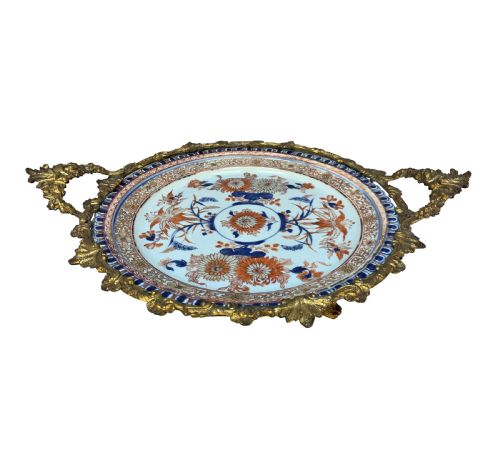
Selected eighteenth-century pieces feature ormolu mounts, combining Asian porcelain production with European metalwork techniques.
Exotic birds peer out from hand-painted branches across multiple nineteenth-century plates, bringing centuries-old avian watchers directly into modern rooms.
What varies in quality
Quality rests in the crispness of the hand-painted brushwork and the vibrancy of the enamel and cobalt colours against the ceramic ground. Pieces demonstrating superior artistic execution show greater precision in detailed floral and bird designs.
The physical weight, symmetry of unusual forms like hexagonal or scalloped edges, and the richness of applied gilding or metal mounts distinguish standard production wares from exceptional examples.
John Davenport of Longport
The Imari Ceramic Charger Plate Glossary
- Imari
- A style of ceramic decoration originating in Japan, characterised by a distinctive palette of cobalt blue, iron red, and gold.
- Charger
- A large decorative plate or dish intended primarily for display on a wall or surface rather than for serving food.
- Cobalt Underglaze
- A blue pigment applied to the ceramic body before glazing and firing, creating a permanent design beneath the glossy surface.
- Meiji Period
- A Japanese historical era spanning from 1868 to 1912, known for significant export of decorative arts.
- Ormolu
- Gilded bronze mounts attached to ceramic pieces, frequently utilised in European decorative schemes during the eighteenth century.
Imari Ceramic Charger Plate: Frequently Asked Questions
How do I display an imari charger?
These large plates suit wall mounting using appropriate brass wire hangers or placement upright on sturdy plate stands within cabinets. Their generous diameters and vibrant palettes draw the eye when positioned as focal points in a room.
Ensure any wall fixture takes the full weight of the ceramic, and keep display positions away from direct, strong sunlight to protect the enamel colours over time.
Were these plates used for food?
Chargers and large plates of this scale served primarily as decorative display items rather than functional tableware during meals. Their rich gilding and delicate enamel work meant they functioned as status objects in wealthy interiors.
Historical examples remain best reserved for visual display today, avoiding heavy domestic use to preserve the hand-painted surfaces.
What does ironstone mean on a listing?
Ironstone refers to a durable type of heavy pottery developed in nineteenth-century England as a robust alternative to imported porcelain. British makers such as Davenport produced imari pattern wares using this dense ceramic body.
These pieces combine European industrial ceramic techniques with the visual aesthetic of traditional Asian export designs.