




Illusion Set Ring
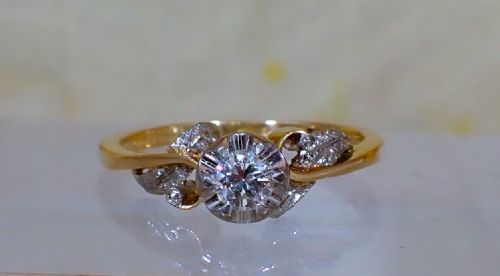
An illusion set ring uses clever metalwork to make a single diamond appear larger than it actually is.
Illusion Set Ring
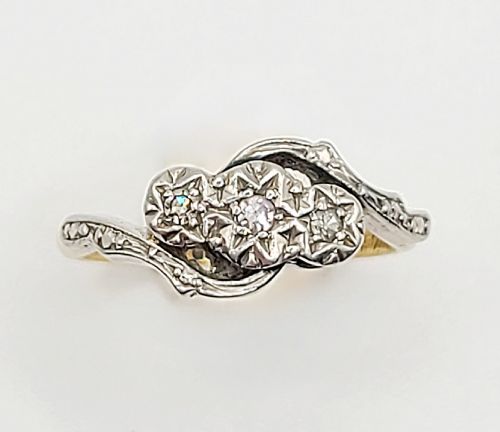
An illusion set ring creates the visual impact of a larger diamond through careful framing, usually involving a faceted or star-cut plate of platinum around the stone. Buyers searching for an illusion set ring will encounter numerous examples dating from the Victorian era through the 1920s, 1930s, and mid-century periods.
The selection ranges from classic solitaire engagement rings to trilogy rings and multi-stone cluster designs. Engagement rings dominate the available forms, often paired with 18ct yellow gold, white gold, or 9ct gold bands.
Art Deco examples frequently combine a platinum setting with an 18ct gold band to showcase geometric styling. Earlier Victorian and Edwardian pieces bring distinct character through traditional claw or star-burst illusion plates.
Materials and construction
Goldsmiths combined durable platinum with yellow, white, or 9ct gold to construct these rings. Platinum was frequently utilised for the illusion head because its strength allowed for delicate, light-reflecting facets around smaller diamonds.
Diamonds used in these pieces span old cut, brilliant cut, transitional cut, and princess cut stones. Metal settings were hand-worked and faceted to catch the light and visually amplify the central gemstone.
Some Art Deco illusion heads feature secret starburst facets designed specifically to trick the eye into seeing extra carats.
Judging quality in illusion rings
Quality rests upon the precision of the metalwork within the illusion plate and how securely the diamond is held. A well-made piece shows crisp, sharp facets on the surrounding platinum rather than softened or worn edges.
The integration between the head and the band dictates structural integrity. Superior examples maintain clean solder joints and balanced proportions between the central stone and its metal frame.
The Illusion Set Ring Glossary
- Illusion setting
- A metal mounting technique designed to magnify the appearance of a diamond by surrounding it with a faceted plate. This gives the visual impression of a significantly larger stone.
- Solitaire
- A ring featuring a single prominent gemstone. Most examples in this category pair a diamond with an 18ct gold or platinum band.
- Trilogy ring
- A ring set with three stones, often representing the past, present, and future. In period pieces, these are frequently arranged with platinum illusion heads.
- Transitional cut
- A diamond cutting style used during the mid-twentieth century that bridges old mine cuts and modern round brilliants. These stones display distinct facet patterns.
Illusion Set Ring: Frequently Asked Questions
What is an illusion set ring?
An illusion set ring is a piece of jewellery where a diamond is set into a specially faceted metal plate, usually platinum. This metal surrounding the stone reflects light to make the diamond look much larger than its actual carat weight.
Such designs became particularly popular during the Art Deco period and the mid-century decades as a way to achieve a bolder visual presence.
How do I date an illusion set ring?
Dating relies on examining the overall style, the type of gold used, and the diamond cuts. Art Deco pieces from the 1920s and 1930s often feature geometric platinum settings on 18ct yellow gold bands.
Victorian and Edwardian versions display different band profiles and earlier diamond cuts like old mine or transitional cuts. Hallmarks inside the shank also provide direct clues to the assay office and year of manufacture.
What diamond cuts appear in these rings?
The inventory records brilliant cut, old cut, transitional cut, and princess cut diamonds. Earlier pieces from the Victorian and Edwardian eras typically feature old cut stones.
Later mid-century examples incorporate brilliant and transitional cuts paired with platinum or white gold settings.