




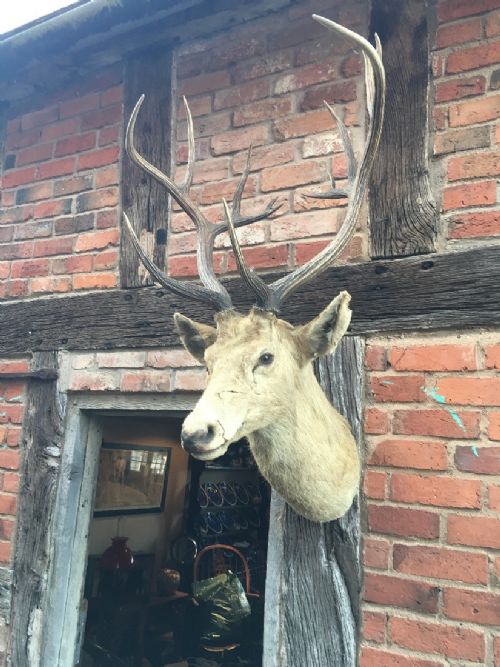
Hunting Lodge Trophy
These hunting lodge trophy pieces bring the traditional atmosphere of the estate room into a modern interior.
Hunting Lodge Trophy
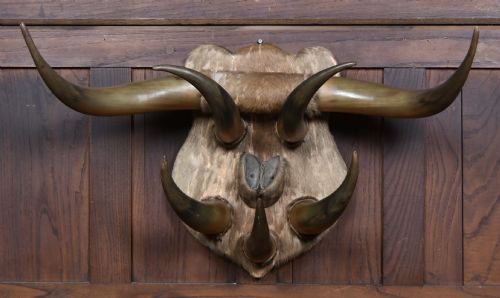
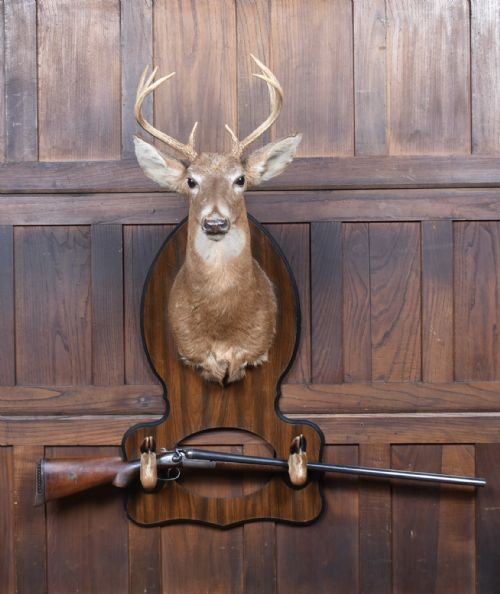
A hunting lodge trophy collection spans wall mounts, taxidermy heads, and carved wood panels rooted in nineteenth-century and early twentieth-century Highland traditions. Buyers seeking a hunting lodge trophy typically encounter red deer antlers, stags heads, and arrangements of cattle horns and hooves.
The objects originate from Victorian, Edwardian, and later periods up to the nineteen-thirties, reflecting the sporting aesthetics of country houses and lodges. Forms range from simple mounted horns to large taxidermy specimens and carved oak panels.
How they were made
Maker techniques combine taxidermy mounting of hide and bone with woodwork, utilising carved wooden shields and oak panels for display. Antlers and horns are secured to wooden mounts, whilst individual specimens such as fox masks and deer heads are preserved and prepared for wall hanging.
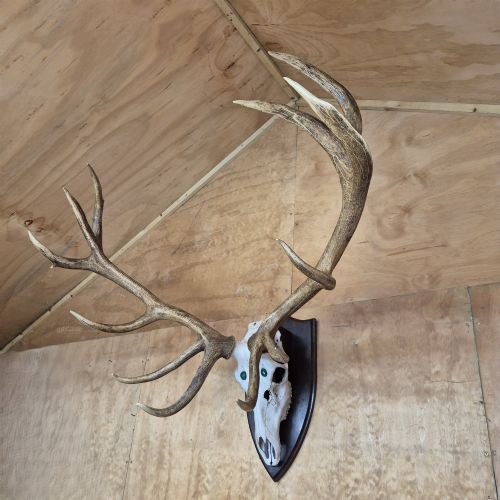
A twelve-point royal red deer antler set spans an impressive one point two metres across.
What varies in quality
Quality rests upon the proportion and symmetry of the antlers or horns, and the preservation state of the taxidermy work. Stags heads and mounted arrangements by notable taxidermists demonstrate superior anatomical accuracy and lasting taxidermy standard.
The execution of the carved wood panels and the structural integrity of the mounting shields distinguish finer examples. Craftsmanship in the taxidermy mounting ensures the piece retains its lifelike presence across decades.
Peter Spicer and Sons
The Hunting Lodge Trophy Glossary
- Taxidermy
- The art of preparing, stuffing, and mounting the skins of animals for display. This technique preserves the likeness of mammals like stags and foxes.
- Shield
- A wooden board, often carved in oak, used as a backing plate for mounting antlers and horns on walls. It provides both structural support and decorative framing.
- Mask
- The head and face of a fox or other game animal preserved as a hunting trophy. These are traditionally mounted on small wooden shields.
- Point
- An individual branch of a deer antler, used to measure the size of the trophy. Larger sets feature multiple points designated by terms such as royal.
Hunting Lodge Trophy: Frequently Asked Questions
How do I hang a heavy stags head safely?
Heavy taxidermy mounts require secure fixing directly into wall studs or masonry using heavy-duty wall anchors. The weight of large stags heads and carved wooden shields demands robust hardware.
Ensure the hanging wire or integrated bracket matches the load capacity of the chosen wall fastening. Professional installation is recommended for very large mounted specimens.
How should I clean mounted horns and antlers?
Dust horns and antlers regularly with a soft, dry cloth or feather duster to prevent surface build-up. Avoid using water or liquid cleaning agents on natural bone and horn.
For taxidermy fur, a very gentle brush can maintain the coat without disturbing the preserved hide underneath.
What periods do these trophies come from?
The available pieces date primarily from the nineteenth century through to the nineteen-thirties, encompassing Victorian and Edwardian eras. Highland lodge and sporting traditions heavily influenced the design of these mounts during this timeframe.
Earlier nineteenth-century pieces often feature simpler wooden shields, whilst Edwardian and later examples expand into varied horn arrangements and taxidermy.
Where were these items originally displayed?
Such trophies traditionally decorated the walls of country houses, Highland lodges, and estate smoking rooms. They served as records of successful hunts and expressions of natural history interest.
Today, they are placed in studies, hallways, and living rooms to create a traditional country interior atmosphere.