


Hunting Folk Art
Hunting folk art brings together vernacular sculpture and rural utility, offering unpretentious wood and antler pieces that capture centuries of field sports.
Hunting Folk Art
Hunting folk art encompasses vernacular objects connected to country pursuits, ranging from carved wooden decoy birds to drinking vessels fashioned from horn and coconut shell. When exploring hunting folk art on this page, the visitor encounters primarily carved timber birds and animal trophies from various periods.
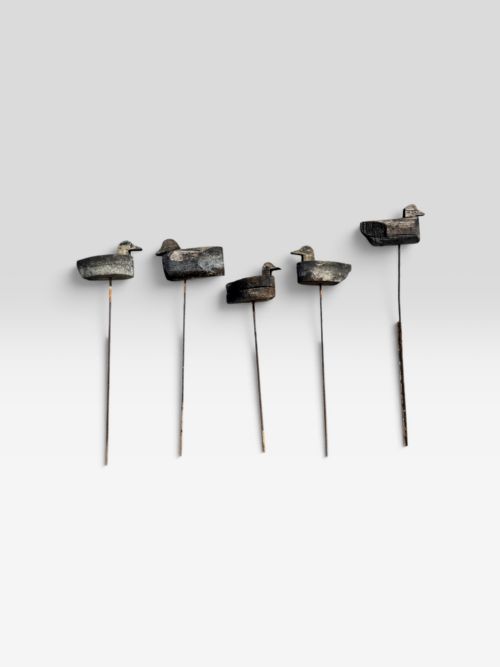
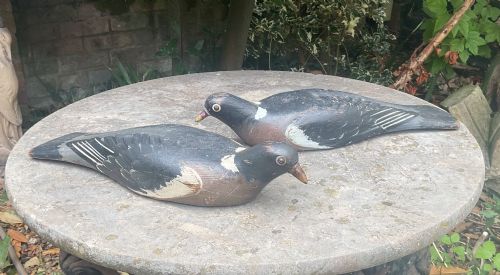
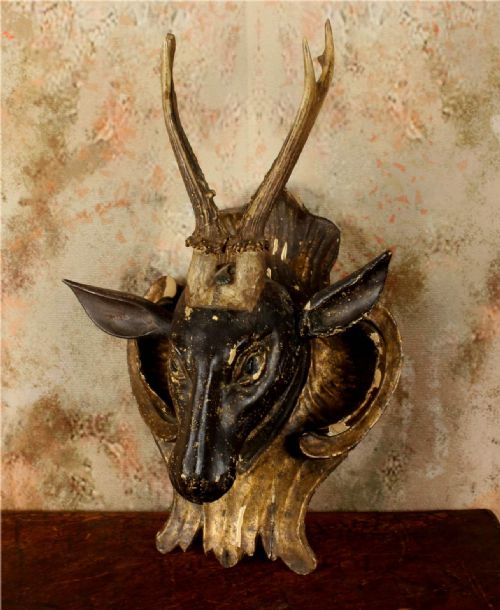
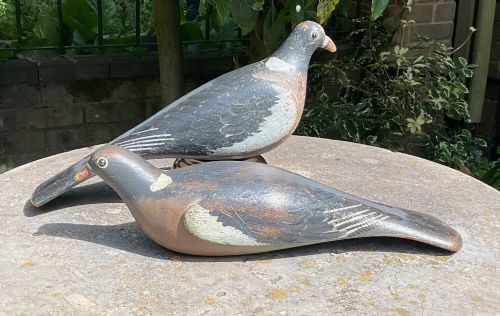
Decoys form the largest portion of the available pieces, often showing the original layered paint applied by working hands. Alongside these waterfowl and pigeons sit antler trophies and carved wooden deer heads intended for domestic display.
How they were made
Makers shaped these objects primarily from timber, utilising carved wood and solid oak blocks to form the bulk of the sculptures. Iron, glass, antler, and horn appear as complementary materials for implements, vessels, and naturalistic trophies.
Surface treatment relies heavily on hand-applied paint, giving decoys their characteristic weather-worn appearance and visible brush marks. Parcel gilt and natural finishes also emerge across the selection, highlighting the grain of the timber or the texture of carved bone.
Object forms recorded here include decoy birds, drinking vessels, daggers with leather sheaths, and wall-mounted deer heads.
What varies in quality
Quality rests in the vigour of the carving and the survival of original surface pigment rather than smooth commercial finish. Pieces with unblemished original paint hold greater visual presence than later over-painted examples.
Proportion and anatomical conviction set the finer sculptures apart from more hurried utilitarian work. A well-observed deer head or a convincingly modelled decoy reveals the maker's intimate knowledge of the living creature.
The Hunting Folk Art Glossary
- Decoy
- A carved or painted representation of a bird or animal used by sportsmen to attract wildlife. These objects were working items made for the field rather than static parlour ornaments.
- Parcel Gilt
- A decorative technique where portions of an object receive a thin application of gold leaf while other areas remain unpainted or natural. This treatment highlights specific carved details on wood or metal surfaces.
- Folk Art
- Artistic production created by self-taught or vernacular makers working within regional traditions. These pieces prioritise utility and direct expression over academic convention.
- Trophy
- An object preserved as evidence of a successful hunt, such as an antler mount or carved animal head. In folk art contexts, these are often hand-carved substitutes rather than taxidermy specimens.
Hunting Folk Art: Frequently Asked Questions
What is hunting folk art?
Hunting folk art comprises handmade utilitarian items and decorative sculptures connected to rural field sports and country life. These range from working bird decoys to carved wall trophies and horn drinking vessels.
They reflect the traditional crafts of rural communities, created without academic training but with a strong understanding of animal forms and natural materials.
How were old wooden decoys used?
Decoys were placed on water or marshland by sportsmen to lure migrating ducks, geese, or pigeons within range of hides. Their forms were painted to mimic live birds from a distance.
After working days on the water, many survived through domestic use or storage in country houses before entering collections as sculpture.
How do I date antique carved wood?
Dating relies on observing tool marks, timber selection, wear patterns, and the chemical composition of early paint layers. Hand-adzed surfaces and crusty oil paint often point toward nineteenth-century origins or earlier.
Comparing construction methods with documented regional pieces helps narrow down the decade of manufacture, particularly among British and Scandinavian makers.
How should I clean painted wood?
Painted wooden surfaces require minimal intervention to preserve fragile historic pigments and patination. Dusting gently with a soft, dry brush is generally sufficient.
Harsh commercial cleaning agents or water must be avoided, as they can strip away original lead-based paints and historic varnishes accrued over generations.