
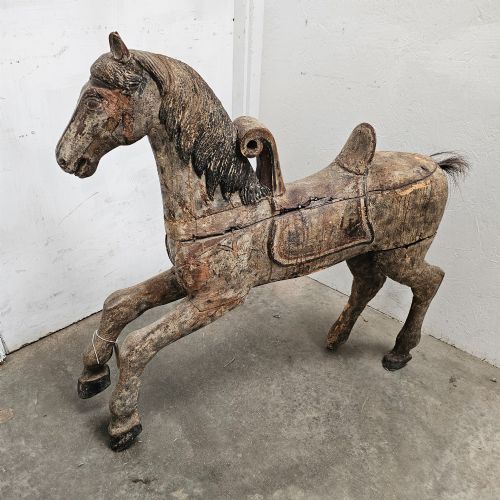


Equestrian Folk Art
Equestrian folk art captures the spirit of the horse through unpretentious craft, offering tactile character for any room.
Equestrian Folk Art
Equestrian folk art encompasses objects made by makers working outside the formal academic tradition, interpreting horses through various domestic and decorative forms. When searching for equestrian folk art, buyers encounter items ranging from carved carousel horses and rocking horses to oil paintings and weathervanes. These pieces reflect the central role of the horse in daily life and leisure across past centuries.
The selection on this page draws primarily from the nineteenth and early twentieth centuries, featuring British, French, Spanish, and Anglo-Indian origins. Common physical manifestations include carved wooden horses, sheet iron weather vanes, earthenware figures, and naive paintings. Each object carries the distinct hand of its maker, prioritizing direct expression over rigid anatomical correctness.
Materials and construction
Wood is the dominant material, shaped through carving into sculptural forms such as rocking horses, carousel animals, and branch figures, often retained in original paint or horsehair. Metal also plays a significant role, seen in sheet iron and iron used for exterior weathervanes designed to withstand the elements. Pigments, leather, and earthenware ceramic further expand the physical vocabulary of these pieces.
Makers utilised readily available local resources, applying simple hand tools to block out timber, beat sheet metal, or shape clay. Surfaces were frequently left with tool marks or coated in functional layers of paint that have since aged into rich patinas. This direct method of production ensures every piece remains a singular record of vernacular skill.
Assessing quality and character
Quality in equestrian folk art rests on the strength of the maker's naive vision and the integrity of the surface. Pieces that retain their original paint or untouched weathered patinas command greater visual engagement than those stripped or heavily restored. The balance of proportion and the boldness of the silhouette distinguish exceptional sculptural work from routine production.
The survival of original elements, such as horsehair manes on carved wooden horses or authentic mounting brackets on weathervanes, elevates an object. Finer examples display a confident economy of line and form, where the maker captures movement and weight with minimal detail. Ultimately, the most successful pieces combine decorative presence with an honest archive of their working history.
The Equestrian Folk Art Glossary
- Naive art
- Art produced by a self-taught maker without formal academic training, often characterised by a rejection of standard perspective and proportion. This approach results in direct, expressive forms.
- Weathervane
- A moveable device attached to an elevated structure to show the direction of the wind, frequently fashioned into silhouette figures of horses and riders. Sheet iron and iron were standard materials for these outdoor objects.
- Flatback
- A ceramic figure modelled fully on the front and sides but left flat on the rear, designed to sit flush against a mantelpiece. Staffordshire potteries produced many examples depicting riders and horses.
- Carousel horse
- A carved wooden figure created for amusement rides, typically exhibiting dynamic poses like galloping. Surviving examples often retain layers of working paint.
- Gingerbread mould
- A carved wooden board used to stamp designs onto dough before baking, featuring raised or incised motifs. Large examples sometimes depict figures on horseback.
Equestrian Folk Art: Frequently Asked Questions
What is equestrian folk art?
Equestrian folk art comprises handcrafted objects depicting horses and riders made outside formal academic traditions. These pieces include carved wooden horses, weather vanes, paintings, and pottery figures.
Created primarily by regional makers for everyday use, commerce, or domestic display, they prioritize expressive character over strict anatomical realism.
How were these pieces used originally?
The objects served varied functions depending on their form, ranging from children's toys and carousel rides to architectural weather vanes and mantle decorations. Paintings and snuff boxes provided personal enjoyment and utility.
Many items bridged practical utility and visual ornament, reflecting the deep economic and cultural reliance on horses in past centuries.
How do I care for antique painted wood?
Antique painted wooden pieces require stable indoor humidity away from direct sunlight and heat sources to prevent the wood from splitting and the paint from flaking. Dusting should be done gently with a dry, soft cloth.
Avoid using liquid cleaners, waxes, or chemical solvents on original painted surfaces, as these can permanently alter or lift the historic finish.
How can I tell the period of a wooden horse?
Dating relies on examining construction methods, tool marks, fixings, and the composition of the wood and underlying ground layers beneath the paint. Nineteenth-century examples often show hand-carved surfaces and period specific pigments.
Comparing the style of carving and wear patterns with documented pieces helps establish a reliable timeframe for manufacture.