



Hunting Country Scene Art
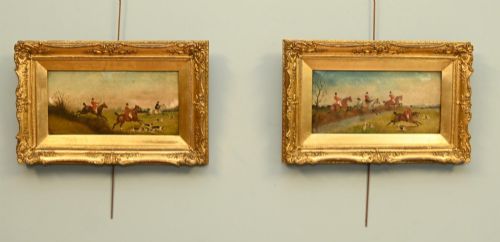
Hunting country scene art captures rural equestrian pursuits and sporting life across canvas, paper, and wood.
Hunting Country Scene Art
Hunting country scene art encompasses depictions of equestrian sports, hounds, and rural landscapes spanning multiple centuries. When exploring this selection, buyers encounter works ranging from early nineteenth-century oils to Edwardian watercolours and engravings.
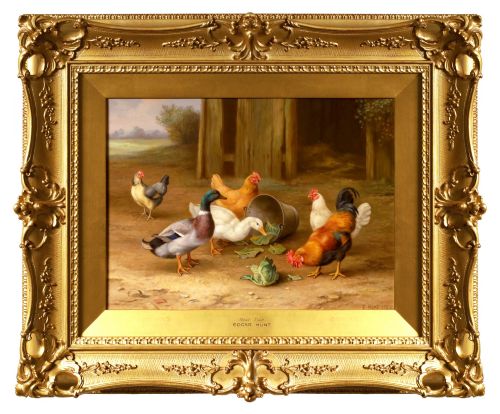
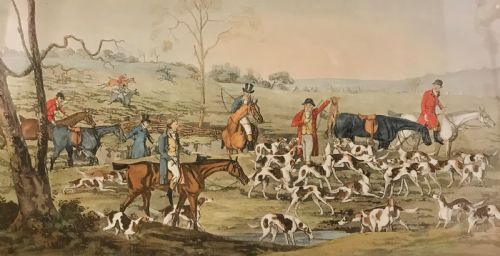
The subjects focus heavily on the hunt, featuring meets, chases, and rural farmyard or moorland settings. Common variations include oil paintings on canvas, hand-coloured engravings, and detailed drawings that record the traditional British and European sporting life.
How They Were Made
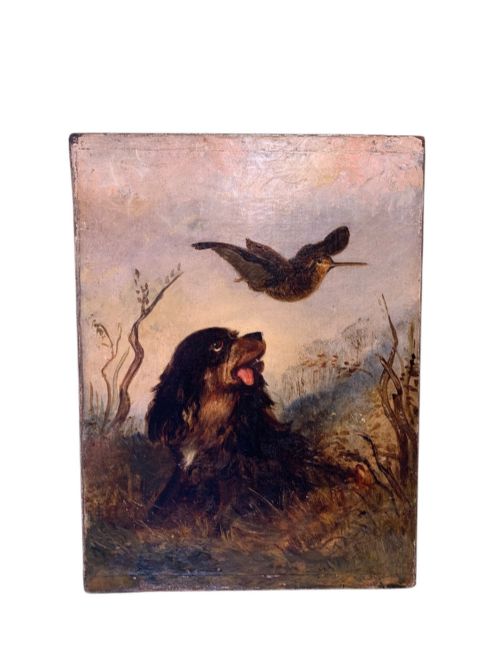
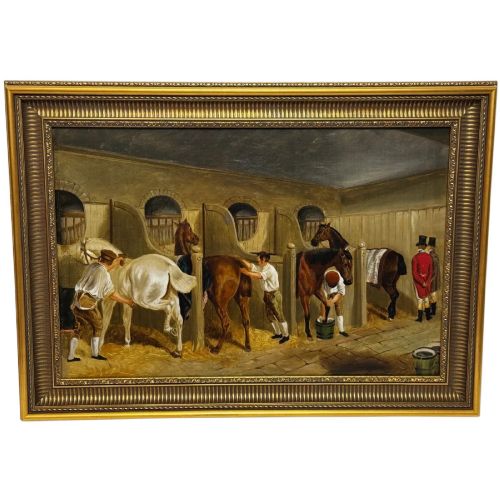
These works rely on traditional media such as oil paint applied to canvas, wood, or board, capturing the textures of horses, hounds, and countryside foliage. Artists also utilised watercolours, pencil, and chalk on paper to produce finished drawings and landscape scenes.
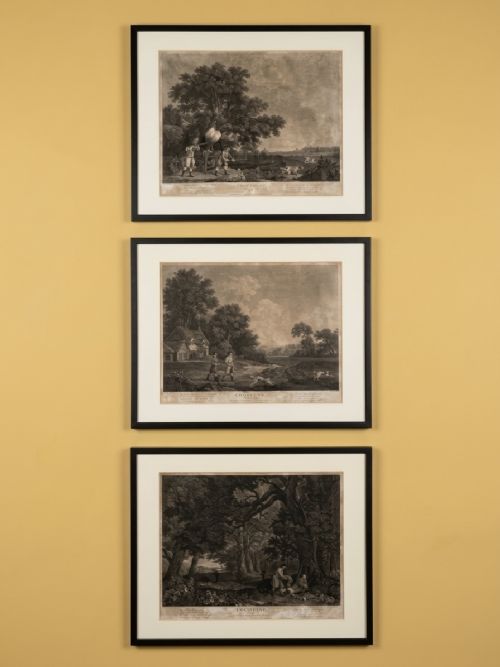
Printmakers employed engraving and lithography techniques, often adding hand colouring to heighten the detail of published hunting plates. Framing frequently involved giltwood mouldings that complemented the period aesthetic of the paintings and prints.
The listings feature works spanning the 18th, 19th, and 20th centuries, executed in oil, watercolour, and engraving.
What Varies In Quality
Quality rests in the anatomical accuracy of the horses and hounds, alongside the artist's ability to render motion and atmosphere within the landscape. Superior examples demonstrate confident brushwork or precise line work that brings clarity to the figures and the surrounding terrain.
The condition of the canvas, paper, or glass surface heavily influences the piece, as does the preservation of original pigments and framing. Works that maintain their intended colour balance and sharpness without excessive restoration sit at the higher end of the range.
Edgar Hunt·John Arthur Lomax·Philip Henry Rideout·George Armfield·Michael Lyne·Charles Faulkner·John Frederick Herring Jnr.·John Charles Tunnard·John Sanderson Wells·Henri Schouten·Heywood Hardy·Robert Cleminson·Thomas Ivester Lloyd·Guillaume Urban Régamey·C de Falens·George Goodwin Kilburne·William J Hodgson
The Hunting Country Scene Art Glossary
- Oil on Canvas
- Pigments bound in a drying oil applied to stretched woven fabric. This medium allowed artists to build rich textures and deep tones suited to expansive rural scenes.
- Engraving
- A printmaking process where an image is incised into a metal plate using a burin. The resulting lines hold ink to transfer fine details onto paper.
- Watercolour
- Paint made of colourants suspended in a water-soluble vehicle. It produces translucent washes often used for lighter countryside landscapes and preliminary studies.
- Giltwood
- Wood carved and coated with gold leaf or a gold-coloured metallic finish. It forms traditional decorative frames designed to enhance nineteenth-century paintings.
- Reverse Glass Painting
- An artwork technique where the image is painted directly onto the back of a glass panel and viewed from the front. This method creates a glossy, preserved surface.
Hunting Country Scene Art: Frequently Asked Questions
What periods do these pieces cover?
The available works span from the eighteenth century through the Victorian and Edwardian eras up to the mid-twentieth century.
Most items originate from the nineteenth century, reflecting the peak of traditional sporting art production.
How were these artworks displayed?
Period pieces were typically framed in giltwood and hung in country houses, estate libraries, and sporting lodges.
They served as decorative records of local hunts, favoured mounts, and rural traditions.
What subjects appear besides hunting?
Artists frequently included rural landscapes, farmyard animals, and moorland scenes alongside the main equestrian action.
Drawings and prints also capture portraits of specific hounds, horses, and historical genre figures.
How do I distinguish prints from originals?
Original paintings feature visible brush texture and layers of oil paint on canvas or wood panels.
Engravings and lithographs show flat printed ink lines, often combined with hand-applied watercolour washes on paper.