
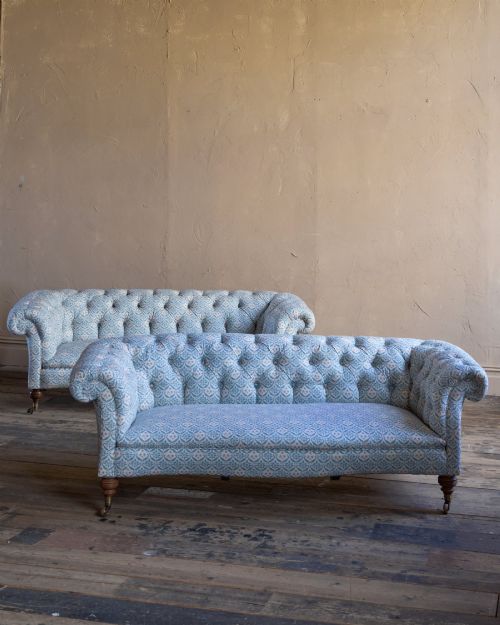
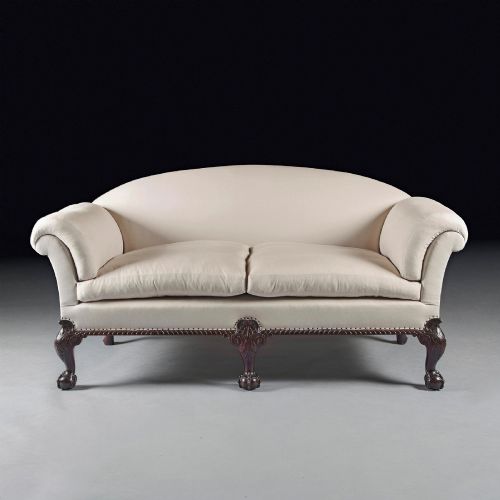
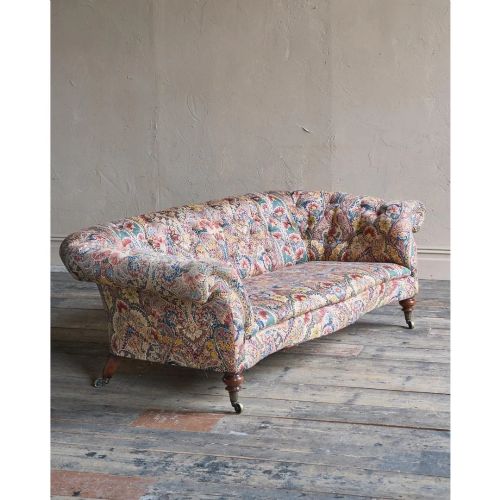
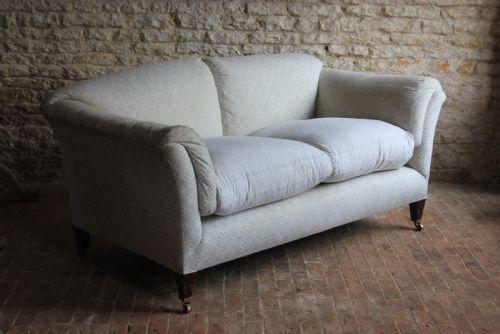
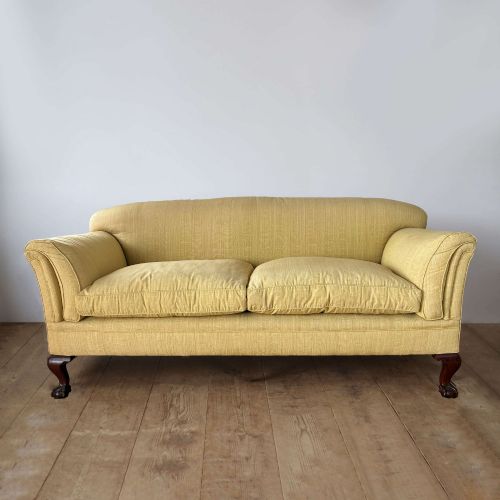


Howard Style Deep Sofa
A howard style deep sofa delivers unmatched lounging depth and English country house comfort, built for serious relaxation.
Howard Style Deep Sofa
A howard style deep sofa represents the pinnacle of nineteenth and early twentieth century English seating comfort, typically discovered in country houses and period townhouses. These pieces are characterised by generous proportions, low arms and deep seats designed for effortless lounging.
The selections available here span the nineteenth century, the Edwardian era, and the nineteen thirties, encompassing both pieces bearing maker stamps and later interpretations. Sofas, settees, and paired armchairs dominate the current offerings, alongside occasional chaise longues and open arm variants.
Makers such as Howard and Sons set the benchmark for this form, while subsequent workshops like Whytock and Reid produced notable iterations. Buyers frequently encounter nineteenth century creations alongside Edwardian country house editions upholstered in original ticking, cotton, or velvet.
Construction and Materials
The framework of a howard style deep sofa relies on robust timbers such as mahogany, beech, and walnut, ensuring structural integrity beneath the upholstery. Exposed elements often feature brass castors or distinct feet, including ball and claw configurations.
Upholstery layers traditionally utilise heavy cotton ticking, premium fabric, and plush velvet to achieve the signature depth and squab cushioning. Internal springing systems provide the resilient bounce characteristic of authentic period examples from the Victorian and Edwardian epochs.
Listings feature woods such as mahogany, walnut, and beech, paired with upholstery materials including velvet, cotton, and traditional ticking.
Assessing Quality and Authenticity
The integrity of the underlying timber frame and the survival of original upholstery materials, such as early ticking or specific cotton weaves, dictate the historical value. Finer examples retain their balanced proportions and original support systems without heavy structural alteration.
Howard and Sons·Whytock and Reid
The Howard Style Deep Sofa Glossary
- Howard style
- A design archetype defined by deep seating, low rolled arms, and exceptional internal stuffing designed for lounging. These pieces originated in the nineteenth century and remain influential in traditional interior design.
- Ticking
- A tightly woven, durable cotton or linen fabric traditionally used as the base layer for upholstery stuffing. Antique examples often showcase this striped material explicitly.
- Ball and claw
- A decorative foot style depicting a bird's talon clutching a ball, frequently carved from mahogany or walnut. This detail appears on select nineteenth and twentieth century seating.
- Serpentine
- A gently undulating curved line shaping the front rail or back of a sofa. This contour adds visual movement to heavy upholstered furniture.
- Chaise longue
- An elongated upholstered chair designed for reclining, combining the backrest of a sofa with the seat length of a daybed. These items share the padded comfort of the main seating forms.
Howard Style Deep Sofa: Frequently Asked Questions
What defines a howard style deep sofa?
These seating pieces are distinguished by low rolled arms, substantial depth, and concealed timber frames built for comfort. They emerged prominently during the Victorian period and continued through the Edwardian era.
Craftsmen engineered them with complex internal springing and hair stuffing to create a singularly relaxed sit. The aesthetic became synonymous with traditional English country house interiors.
How do I spot an authentic piece?
Authenticity is frequently confirmed through stamped markings on the wooden frame or brass castors. Maker details are often found impressed directly into the castor housing.
Construction methods using beech or mahogany frames and early cotton ticking also provide strong indicators of period manufacture. Comparing proportions against documented workshop archives helps clarify attribution.
Are these sofas suitable for daily use?
Their robust timber construction and durable upholstery materials make them well suited for everyday living. The deep proportions are specifically engineered for relaxed lounging.
Buyers often place them in sitting rooms and libraries where comfort is paramount. Periodic professional maintenance of the internal webbing ensures they withstand regular seating.
What periods do these sofas come from?
The available pieces predominantly date from the nineteenth century through the Edwardian era up to the nineteen thirties. Victorian iterations showcase early Victorian proportions and craftsmanship.
Later Edwardian and interwar examples maintain the deep-seated tradition while reflecting evolving domestic tastes. Each era brings subtle shifts in foot design and upholstery finish.