
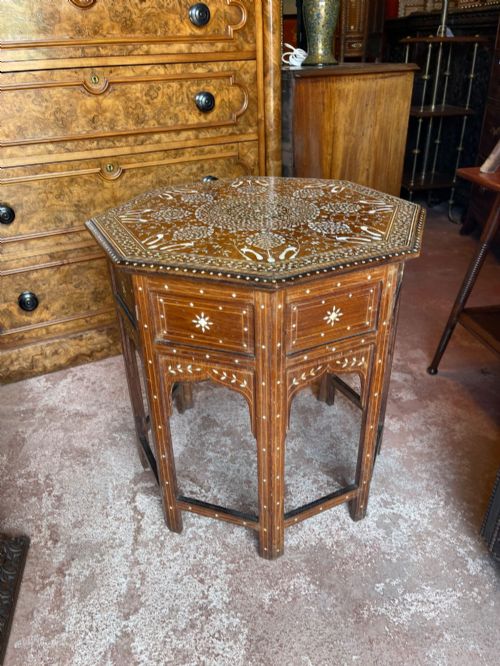
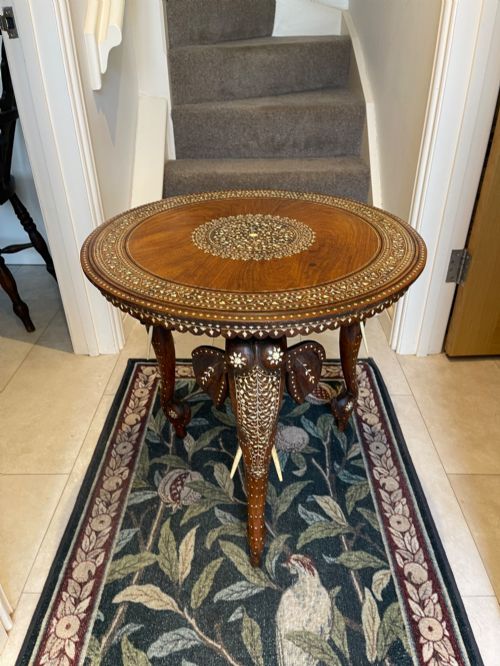
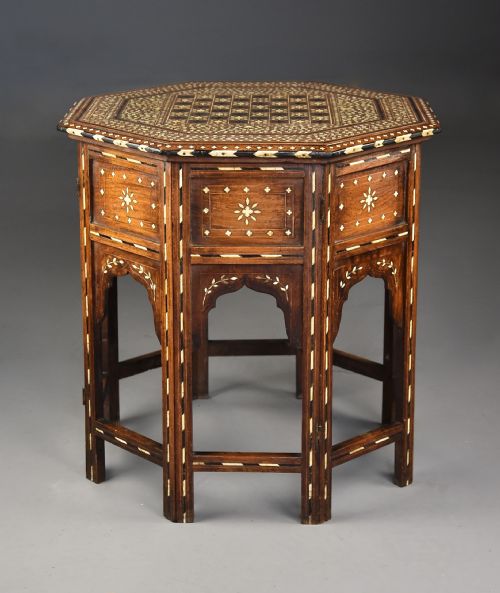
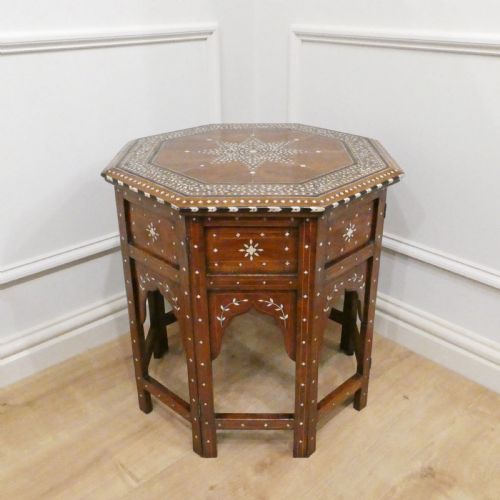
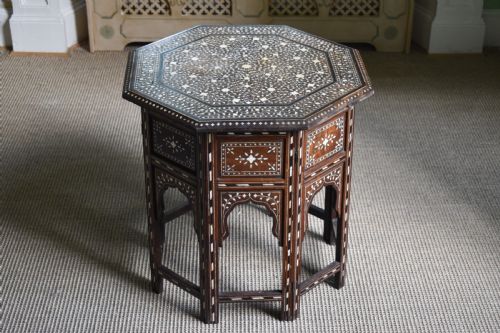


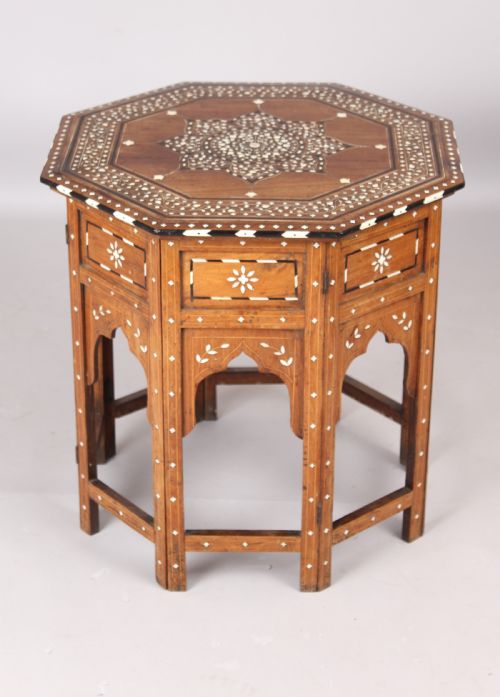


Hoshiarpur Inlay Side Table
A hoshiarpur inlay side table brings intricate geometric patterns and dense woodwork from British India directly into an interior.
Hoshiarpur Inlay Side Table
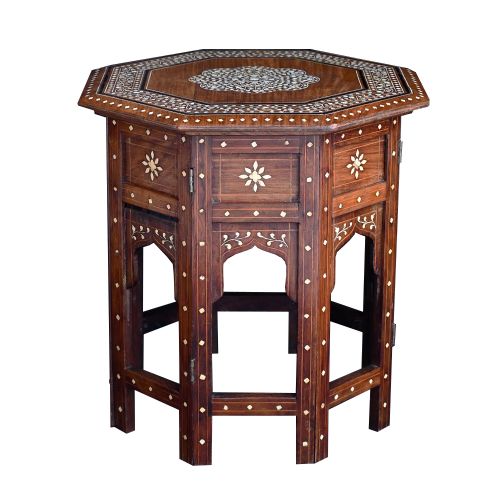
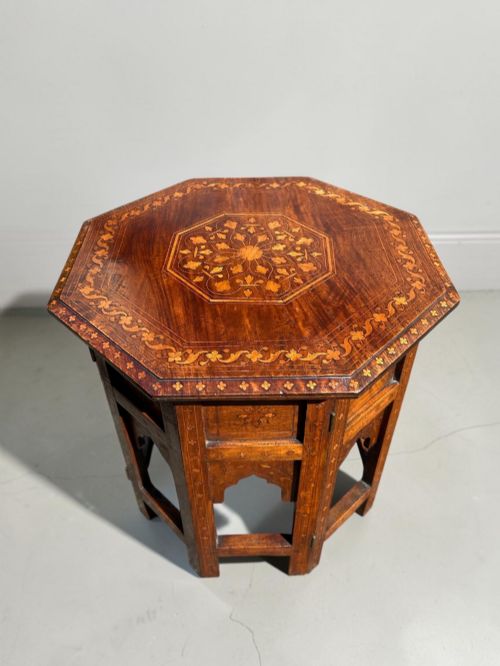
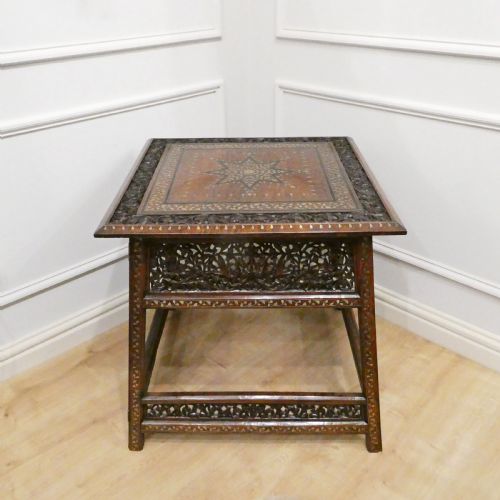
A hoshiarpur inlay side table is an occasional piece defined by elaborate surface decoration and distinct regional craftsmanship originating from the Punjab. These tables appear predominantly in octagonal and square forms, frequently constructed as folding or collapsible stands suited to versatile domestic placement. The surviving examples span the late nineteenth century into the early twentieth century, reflecting the height of Anglo-Indian taste.
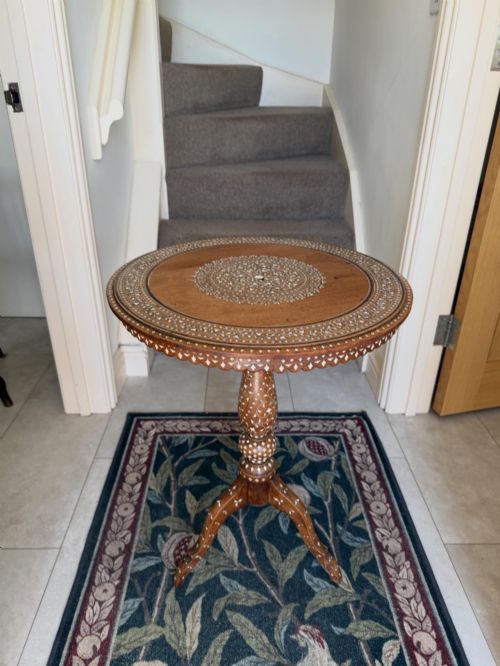
The most common formats on this page are octagonal occasional tables, often featuring intricate star motifs or figurative elements such as elephants. Buyers encounter both pedestal bases and tripod supports alongside standard folding frames. These pieces merge traditional Indian woodworking techniques with British colonial furnishing requirements.
How they were made
These tables rely on dense hardwoods such as teak, rosewood, sandalwood, and padauk as the primary structural foundation. Artisans carve the wooden surfaces deeply before setting intricate details into the matrix.
Bone inlay and brass wire or sheet provide the striking contrasting patterns characteristic of the style. The components are frequently built to be collapsible, utilising clever hinges and interlocking panels without permanent metal fixings.
Listings feature woods including rosewood, teak, sandalwood, and padauk combined with bone and brass inlay.
What varies in quality
The fineness of the carving and the density of the inlay separate exceptional pieces from standard production. Superior examples maintain crisp geometric alignment across every panel without missing bone or brass elements.
Timber selection also dictates the grade of the piece, with fragrant sandalwood and richly grained rosewood commanding greater visual depth than simpler hardwoods. The complexity of the structural form, such as figural elephant supports or multi-tiered pedestal bases, further elevates the execution.
The Hoshiarpur Inlay Side Table Glossary
- Bone inlay
- A decorative technique where small pieces of shaped bone are pressed and glued into carved recesses within the wooden surface. This method creates stark white patterns against dark timber.
- Anglo-Indian
- A stylistic term describing decorative arts and furniture produced in India under British colonial rule, combining local craftsmanship with Western furniture forms. These items often catered to expatriate households and the European market.
- Octagonal
- A geometric shape possessing eight sides, which forms the predominant tabletop plan for these tables. This configuration allows for symmetrical star and geometric patterns.
- Tripod
- A three-legged support structure utilised on certain occasional tables to ensure stability on uneven floors. These bases frequently connect to folding mechanisms.
- Padauk
- A dense, heavy tropical hardwood displaying reddish-brown tones, occasionally utilised for collapsible occasional tables in the evidence. It offers both structural durability and a fine surface for carving.
Hoshiarpur Inlay Side Table: Frequently Asked Questions
What is a hoshiarpur inlay side table?
A hoshiarpur inlay side table is a decorative occasional furnishing featuring intricate carved woodwork and contrasting bone or brass inlay work. These pieces originate from the Hoshiarpur district in Punjab and date primarily from the late nineteenth and early twentieth centuries.
They were produced during the colonial period to satisfy both local markets and British demand for exotic furnishings. Their characteristic surface patterns draw upon traditional geometric and floral motifs.
How were these tables used originally?
These tables served as occasional stands for lamps, decorative objects, or tea service within nineteenth-century drawing rooms and parlours. Many were designed to be collapsible, allowing households to store or move them easily.
Their portable nature made them practical for British colonial officers and families moving between residences. Today, they function well as compact accent tables in living spaces.
How do I live with a hoshiarpur inlay side table?
Living with a hoshiarpur inlay side table involves placing it in a low-traffic area where its detailed surface remains protected from heavy wear. Natural timber and bone components respond best to stable indoor humidity away from direct heat sources.
Dusting the carved recesses regularly with a soft brush keeps the intricate patterns clear. Avoid using liquid polishes that might discolour the bone or brass elements.
How do I date a hoshiarpur inlay side table?
Dating these tables relies on examining the construction methods, timber choices, and stylistic markers recorded across the nineteenth and early twentieth centuries. Pieces from the late nineteenth century frequently incorporate dense sandalwood or teak with complex geometric bone inlay.
Later examples from the early twentieth century sometimes show shifts in scale or simpler folding mechanisms. Comparing the joinery and the integration of the brass elements helps clarify the period of production.