


Hooped Back Windsor Chairs
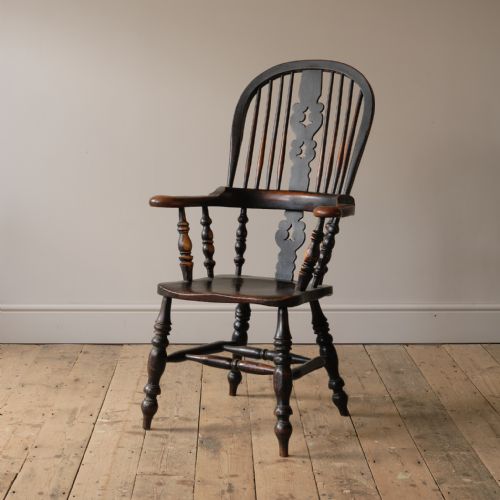
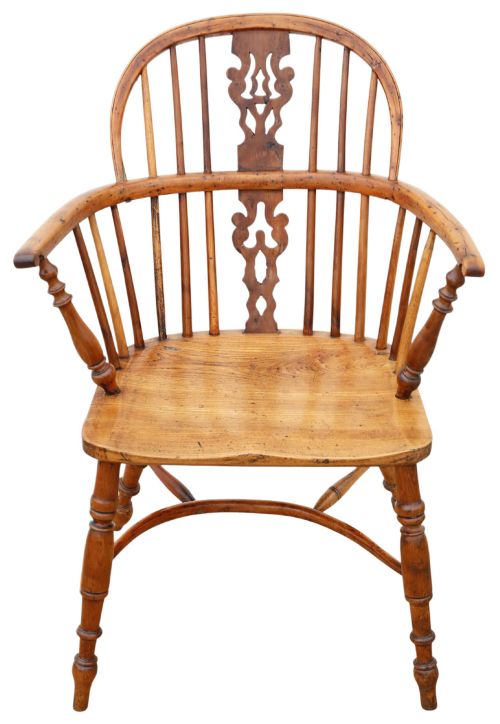
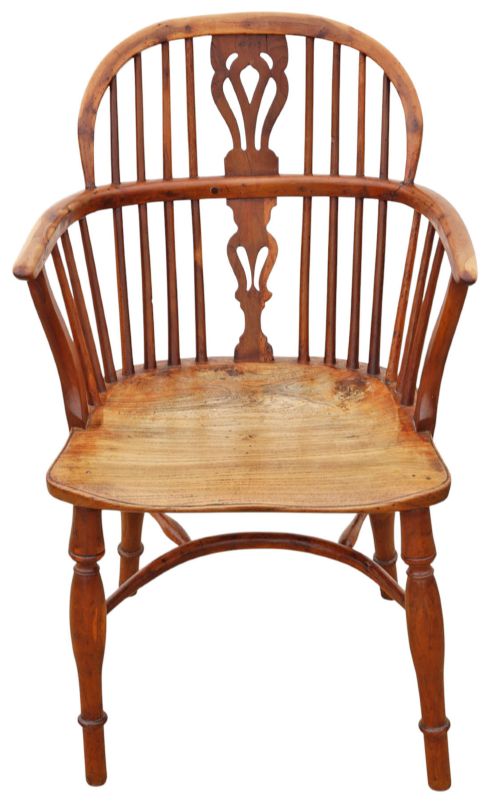
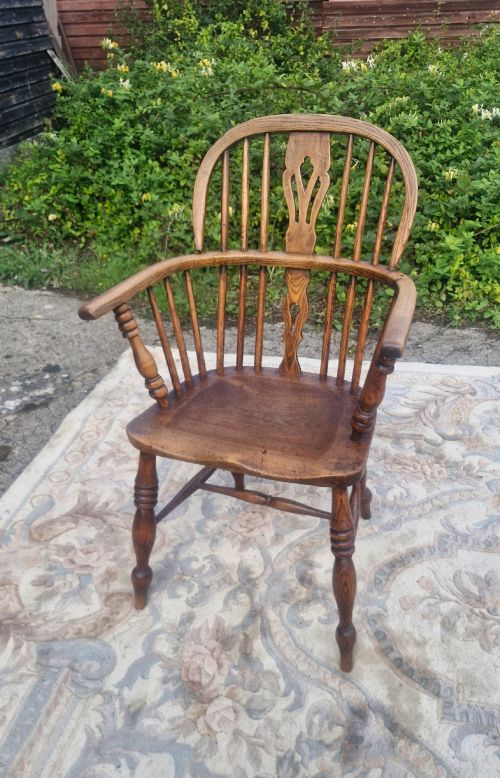
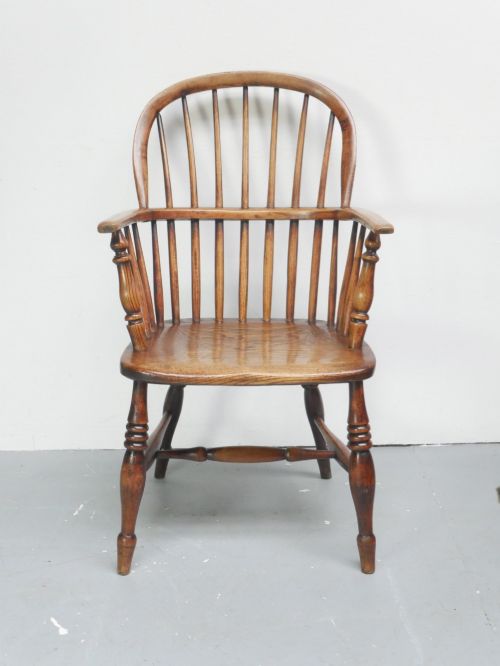
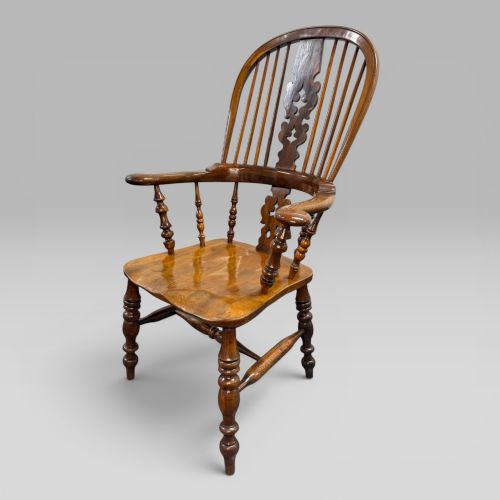
These hooped back windsor chairs combine solid wood seats with bentwood frames, offering enduring structural strength and vernacular English character.
Hooped Back Windsor Chairs
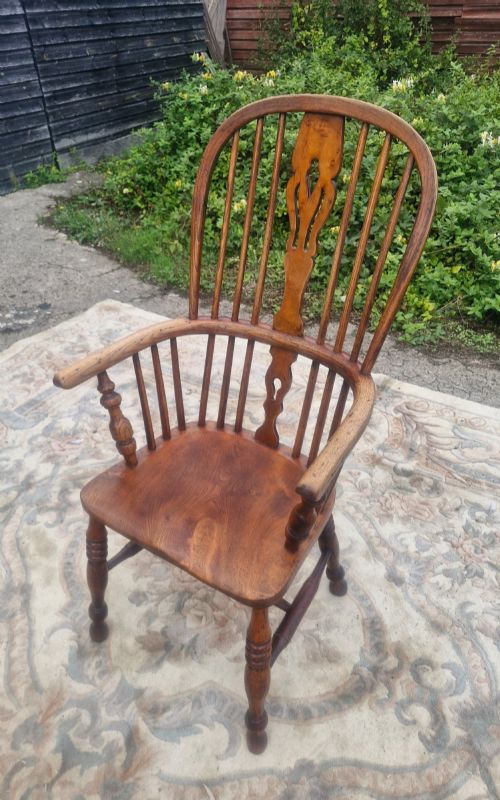
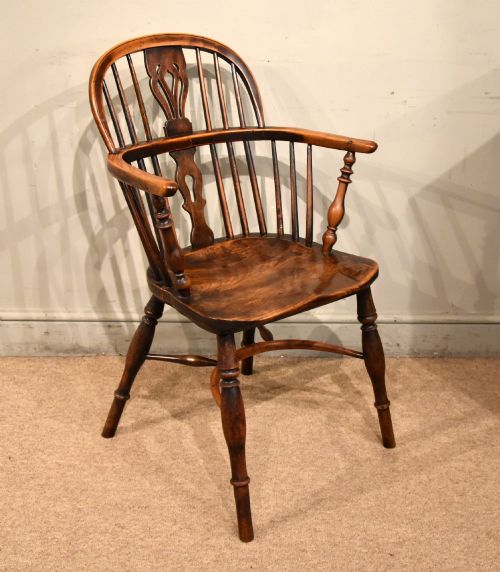
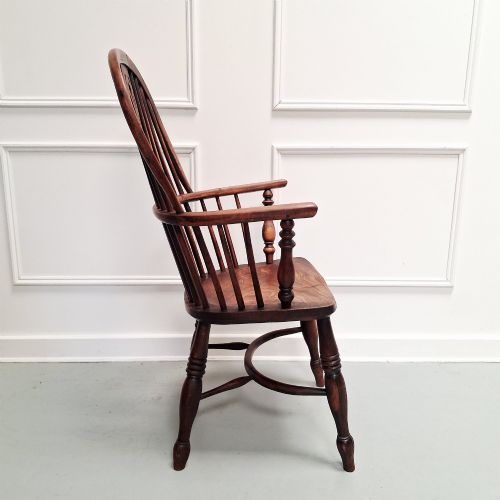
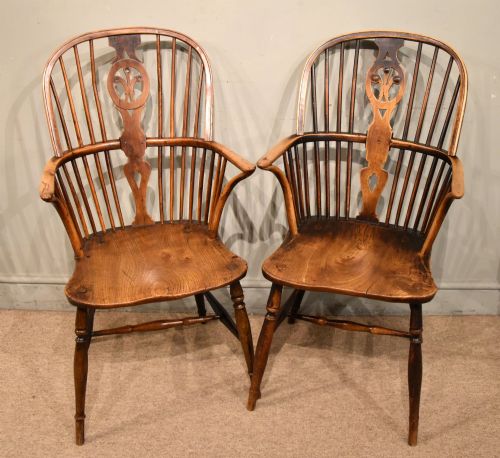
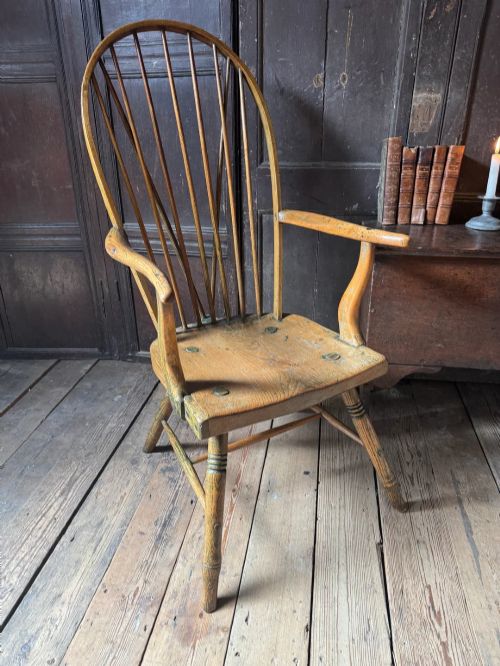
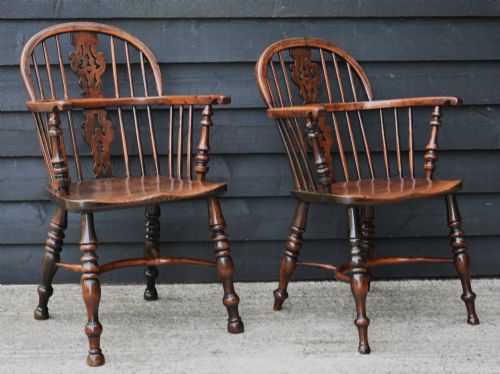
Hooped back windsor chairs comprise traditional seating forms shaped by regional makers across the eighteenth and nineteenth centuries. These chairs primarily take the form of armchairs, carvers, and kitchen dining sets designed for domestic utility.
The versions met most frequently on this page span the Victorian era and the nineteenth century, alongside examples from the Georgian period. Common regional variations include pieces identified with specific areas such as the West Country, Lincolnshire, Scotland, and Wales.
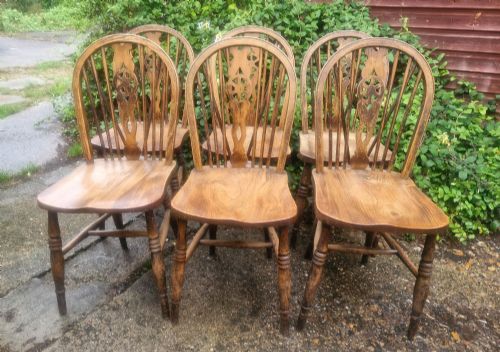
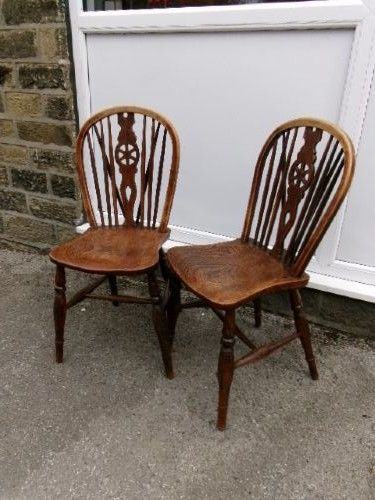
Makers utilised familiar domestic forms, producing low back, high back, and broad arm configurations. Sets of kitchen dining chairs appear alongside individual armchairs and matched pairs.
How they were made
Construction relies on a combination of contrasting timbers, most commonly elm seats paired with ash, yew, or beech for the framework and spindles. Elm provided a tough, non-splitting surface for the carved saddle seat, while ash or yew offered the necessary flexibility for steam-bent hoops.
Makers turned legs and stretchers on a lathe before wedging them directly into bored holes in the solid wooden seat. Spindle backs, wheel backs, and hooped rails were secured using traditional joinery methods that distributed weight evenly through the underframe.
What varies in quality
Quality rests in the selection of timbers and the harmony of the turning. Pieces employing figured yew wood alongside well-sculpted elm seats display superior materials handled by skilled regional joiners.
Proportion and the grace of the bentwood hoop dictate visual success. Chairs retaining matching stretchers, such as crinoline underframes, and balanced spindle arrangements demonstrate higher craftsmanship than standard utility variants.
J SPENCER
The Hooped Back Windsor Chairs Glossary
- Hoop back
- A continuous bentwood bow forming the backrest and arm rail of the chair. This steam-bent member joins directly into the solid wooden seat.
- Saddle seat
- A thick wooden seat, usually carved from elm, shaped with depressions for comfort. The upper surface is sculpted to resemble a horse saddle.
- Crinoline stretcher
- An arched or bowed underframe connecting the legs of a Windsor chair. It provides lateral stability and frequently incorporates outward-curving spindles.
- Wheel back
- A decorative splat pierced in the shape of a cartwheel, fitted centrally into the back of the chair. This motif appears frequently on nineteenth-century kitchen dining sets.
- Carver
- An armchair designed to match a set of dining chairs, typically featuring open arms and a wider seat. These chairs often sat at the head of a dining table.
Hooped Back Windsor Chairs: Frequently Asked Questions
What is a hooped back windsor chair?
A hooped back windsor chair is a traditional seating form defined by a steam-bent bow that forms the upper backrest. This bow anchors directly into a solid carved wooden seat alongside vertical spindles.
These chairs developed through vernacular English traditions, utilising local hardwoods to create sturdy, practical seating for domestic and kitchen use.
How do you date a windsor chair?
Dating relies on observing construction methods, timber choices, and design styles characteristic of specific periods. Georgian examples often feature figured yew and crinoline stretchers, while later Victorian versions frequently incorporate wheel backs or beech framing.
Changes in seat sculpting and leg turning further help place chairs within the eighteenth or nineteenth centuries.
Were these chairs used for dining?
Yes, many examples were produced as sets for kitchens and dining rooms. These sets typically included matching side chairs alongside complementary armchairs or carvers.
Sturdy timber construction made them suitable for daily domestic use around the household table.
What woods were used to make them?
Makers selected different woods for specific parts of the chair based on their structural properties. Elm was universally chosen for the solid seat because its interlocking grain resisted splitting.
Ash, yew, beech, and fruitwood were utilised for the bent hoops, turned legs, and delicate spindles due to their strength and flexibility.