

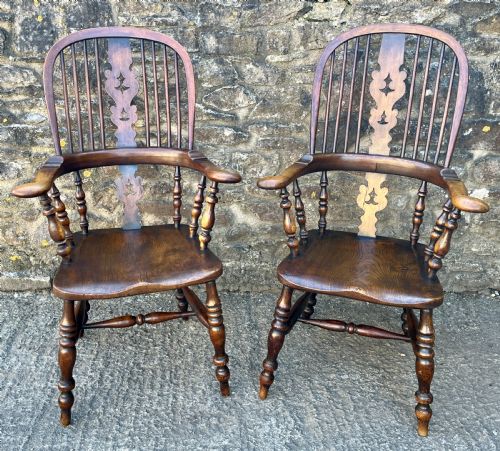


Yew Windsor Carvers
These yew windsor carvers combine sturdy English timbers with graceful country craftsmanship, offering substantial seating suited to daily use.
Yew Windsor Carvers
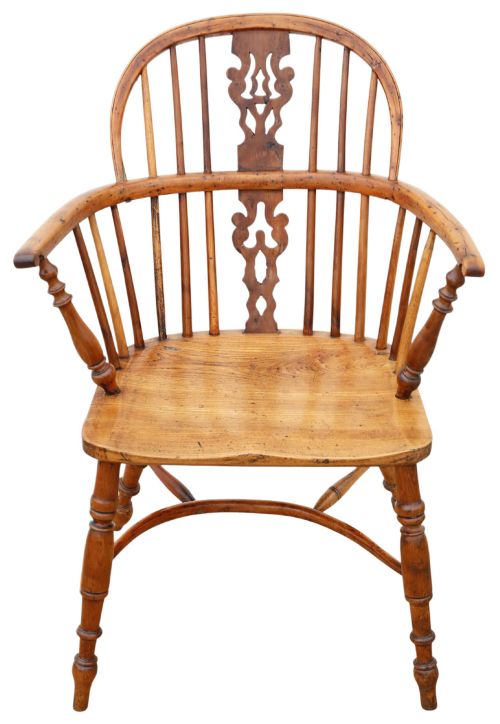
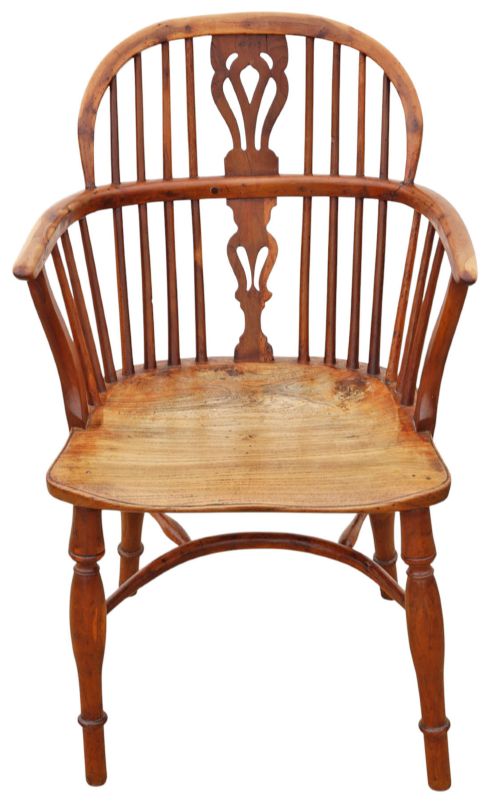
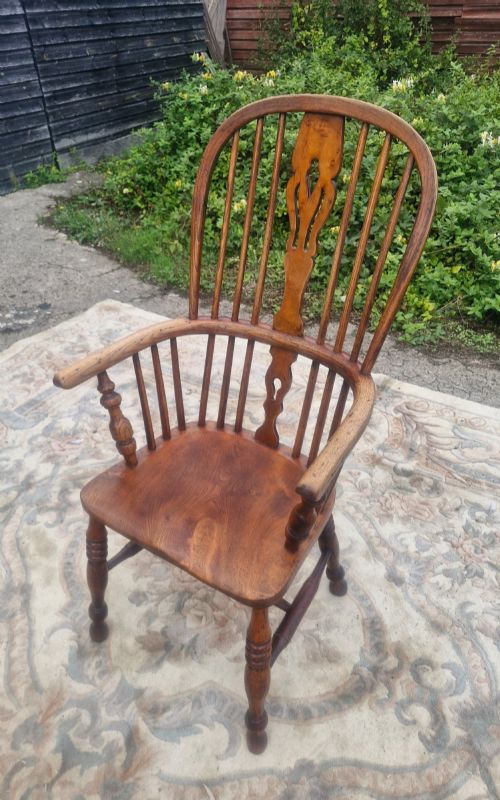
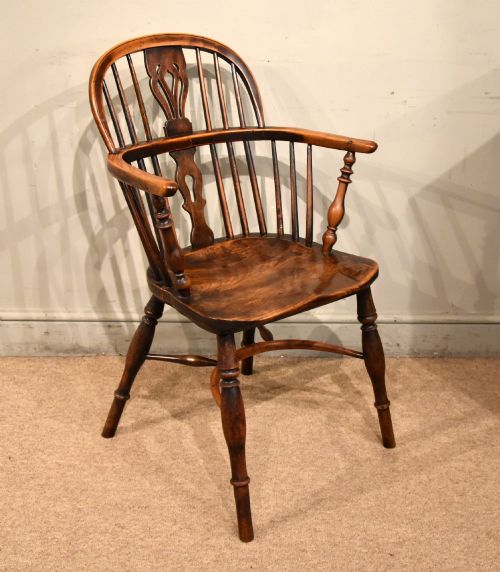
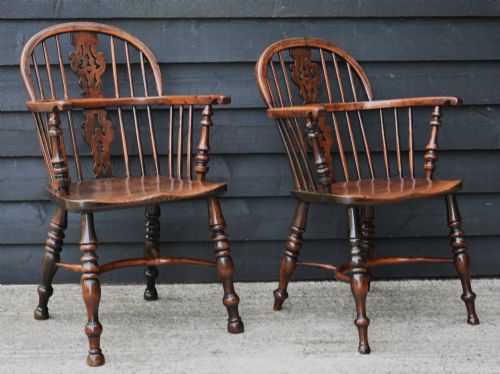
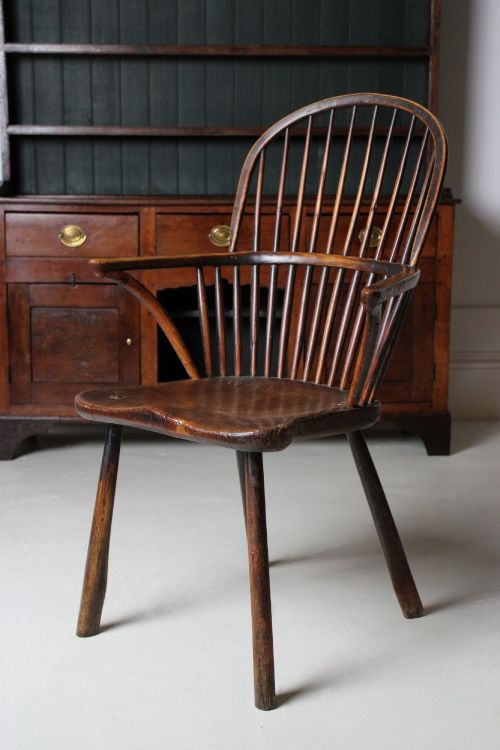
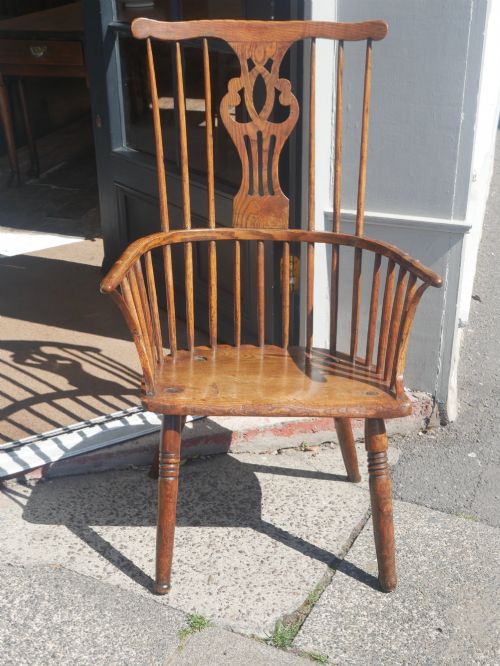
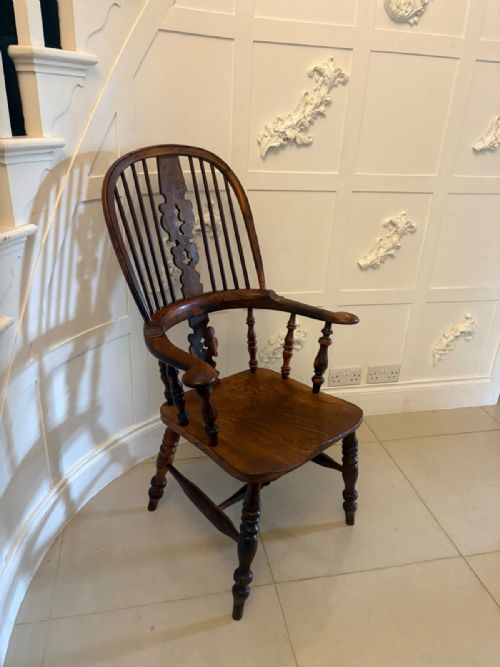
Yew windsor carvers represent a specialised form of wooden seating developed across English rural workshops during the eighteenth and nineteenth centuries. These armchairs typically combine richly grained yew wood with contrasting timbers such as elm for seats and ash for spindles.
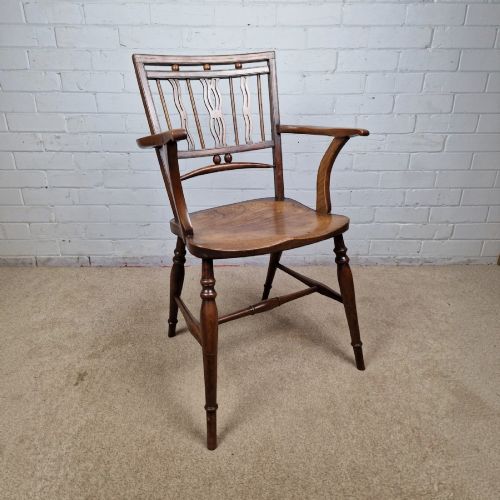
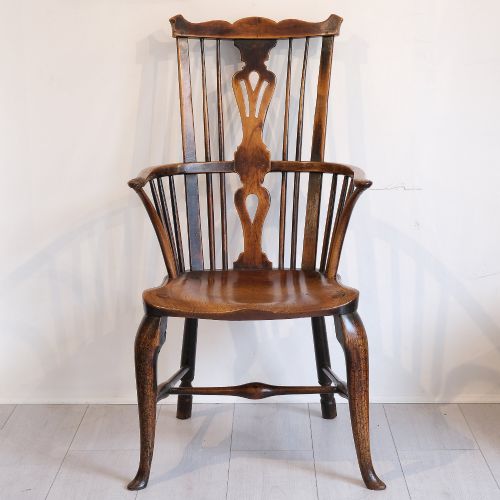
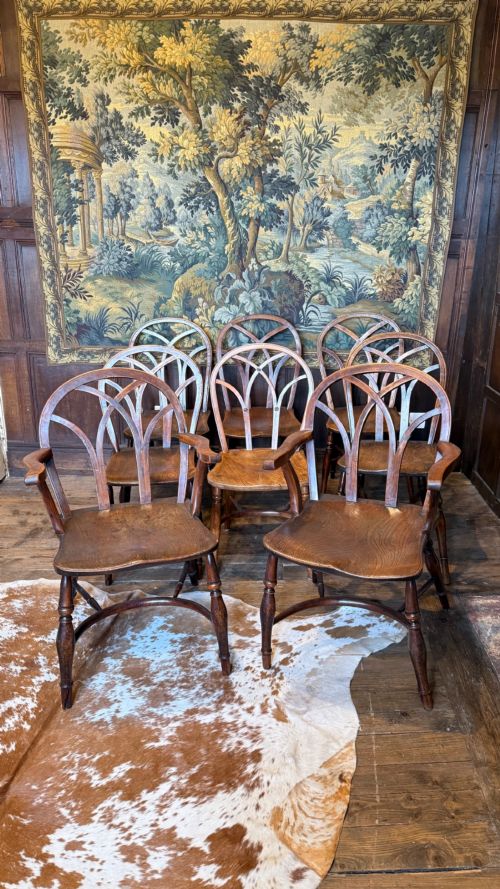
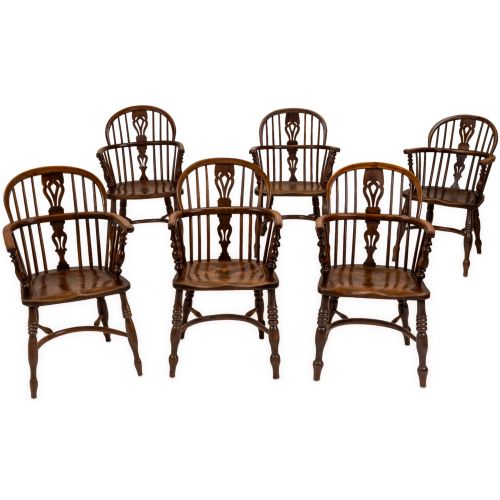
Most examples encountered on this page date from the Georgian and Victorian eras, spanning high back profiles, comb backs, and broad arm variants. Regional interpretations such as Mendlesham and Thames Valley designs appear alongside Gothic Revival pieces and matched pairs or sets.
Materials and construction methods
Chair makers utilised a combination of native timbers, selecting yew wood for its striking figure and strength in the bow and arms. Elm wood provided a tough, interlocking grain suitable for heavy-duty saddle seats that resisted splitting under pressure.
Framing components like spindles and legs frequently incorporated ash, beech, or fruitwood turned on lathes. Joinery relied on traditional stick-construction techniques where turned legs and back spindles locked directly into bored holes within the solid wooden seat.
Some chairs include built-in writing surfaces on broad arms, proving that working from home is an eighteenth-century concept.
Judging quality and character
Quality separates standard utilitarian seating from superior examples through the selection of timber and the complexity of the turning work. Finer chairs display rich figuring in the yew wood and well-defined grain patterns across the elm seat.
Proportion and structural elaboration dictate distinction, seen in comb backs, crinoline stretchers, or broad arms rather than plain hoop backs. The depth of the patina developed over centuries of handling also marks the standing of an individual piece.
John Moss Worksop
The Yew Windsor Carvers Glossary
- Carver
- An armchair designed with scrolling arms, traditionally used at the head of a dining table or as a desk chair. These pieces match the timber and style of simpler side chairs in a set.
- Comb back
- A Windsor chair style where the central spindles extend upward into a horizontal top rail resembling a traditional hair comb. This construction offers additional head and upper back support.
- Crinoline stretcher
- A curved under-framing brace linking the legs of a Windsor chair in a continuous hoop. This architectural feature strengthens the lower structure while referencing earlier furniture designs.
- Pad arm
- A wider wooden armrest finished with a rounded, padded-looking profile carved directly into the timber. This variation provides a more substantial rest for the arms than standard spindle supports.
- Broadarm
- A Windsor chair variation featuring exceptionally wide flat wooden arms designed to serve as a writing surface or extra rest. These heavy arms require robust bracing beneath the seat.
Yew Windsor Carvers: Frequently Asked Questions
What is a yew windsor carver?
A yew windsor carver is a sturdy wooden armchair featuring stick-built construction, a saddled seat, and distinctive grain patterns in the yew timber.
These chairs served practical functions in English country houses and farmhouses before becoming sought-after decorative antiques.
How do I date a windsor chair?
Dating relies on stylistic shifts such as comb backs, high back heights, or regional turning details recorded across the eighteenth and nineteenth centuries.
Changes in timber selection and evidence of hand tools also assist in placing a chair within the Georgian or Victorian periods.
How should I care for yew wood?
Protect antique yew wood by keeping it away from direct heat sources and sudden humidity changes that might cause timber movement.
Applying a traditional beeswax polish maintains the surface finish and preserves the natural patina developed over generations.