




Hongmu Wood Furniture
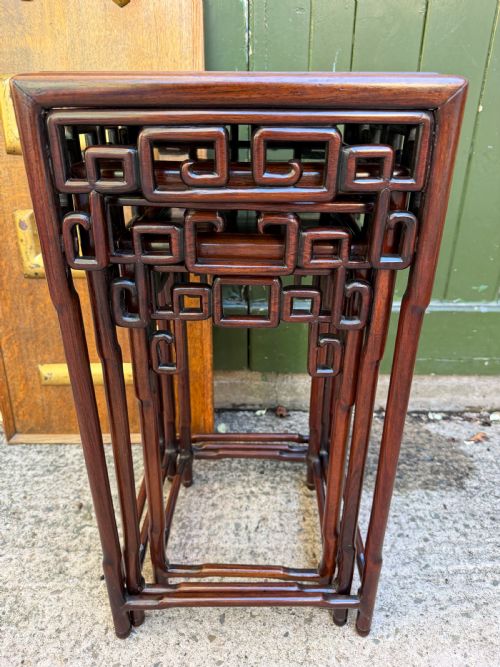
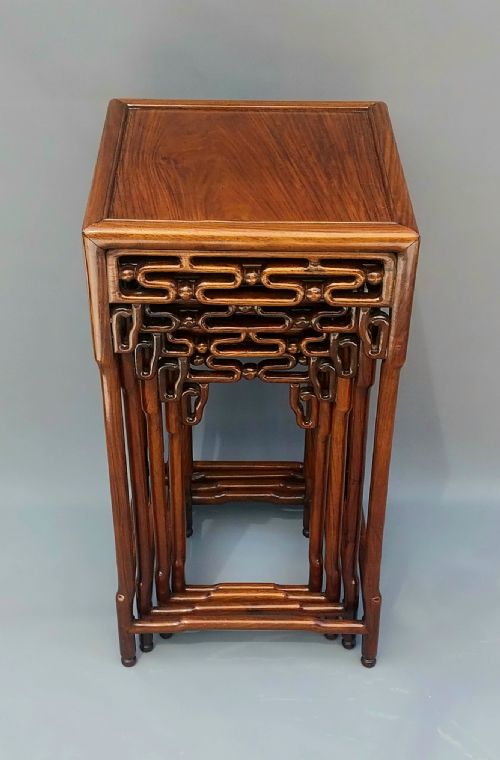
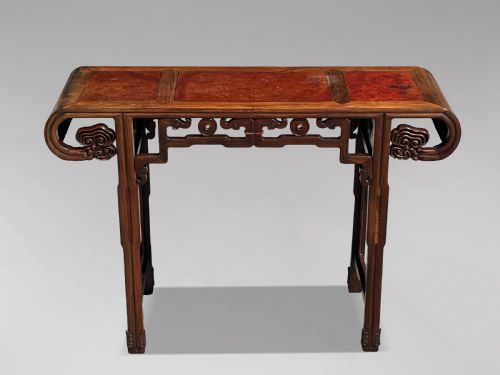
Hongmu wood furniture comprises dense Asian hardwoods shaped into nests of tables, altar tables and plant stands.
Hongmu Wood Furniture
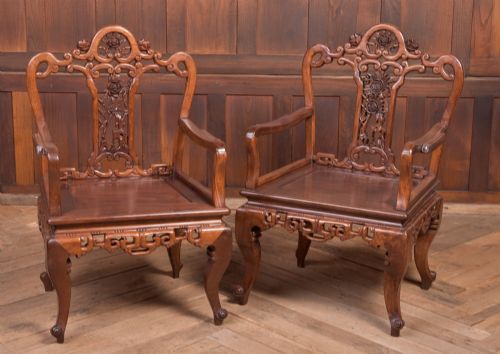
Hongmu wood furniture spans forms such as nests of tables, altar tables, side tables, plant stands, armchairs, stools and travelling boxes. These objects originate mainly from the nineteenth century, including the Victorian era, through to the early twentieth century.
Buyers most frequently encounter nested tables and plant stands constructed during the Qing Dynasty and the Chinese Republic Period. These pieces display traditional Chinese styling alongside Chinese export designs suited to Western interiors.
What varies in quality
Quality rests upon the selection of timber and the crispness of the carved ornament. Dense hongmu and rosewood exhibit finer grain patterns and heavier weight than simpler hardwood variants.
Construction fidelity distinguishes standard production from superior examples. Well-executed joinery in nesting tables and folding pieces ensures smooth movement and structural stability.
Hongmu Wood Furniture Retail Price Guide 2026
Typical asking prices for hongmu wood furniture among the pieces listed under this phrase on Sellingantiques today, from the lower quarter to the upper quarter. They describe what is for sale here now, not the wider market.
Object forms span nests of tables, altar tables, armchairs, stools, travelling boxes and plant stands created during the Qing Dynasty.
The Hongmu Wood Furniture Glossary
- Hongmu
- A traditional Chinese term denoting dense, fragrant hardwoods used for fine furniture. It translates literally as red wood.
- Nest of tables
- A set of graduated tables designed to fit one beneath another to save floor space. They appear frequently in sets of three or four.
- Altar table
- A long, narrow table with upturned flange ends historically placed against walls for ritual use. Surviving examples function as side or console tables.
- Marble top
- A polished stone insert fitted into the surface of a stand or table. This feature provides a cool, durable surface resistant to heat and moisture.
Hongmu Wood Furniture: Frequently Asked Questions
What is hongmu wood?
Hongmu is a collective term used in China for a category of dense, durable hardwoods. These timbers include various species of rosewood known for their rich colour and heavy weight.
Craftsmen favoured these woods for high-status furnishings because the material accepts intricate carving and takes a high natural polish.
How were nests of tables used?
Nesting tables provided versatile surfaces for serving tea or displaying small objects within a room. Servants could bring out the smaller tables as required and stack them compactly when not in use.
This practical design made them popular in both Chinese households and later Western export markets during the nineteenth century.
Where should I place a plant stand?
Plant stands and pedestals suit corners or narrow wall spaces where height is required to balance a room. Their small footprint allows them to hold porcelain vessels, urns or decorative plants.
Many nineteenth-century examples feature inset marble tops designed to withstand moisture from watering plants.
How do I date these pieces?
Dating relies upon stylistic markers associated with the Qing Dynasty, Chinese export periods and the early twentieth century. Construction methods and timber characteristics also indicate the era of manufacture.
Most items seen today date from the late nineteenth century through to the nineteen-twenties.