
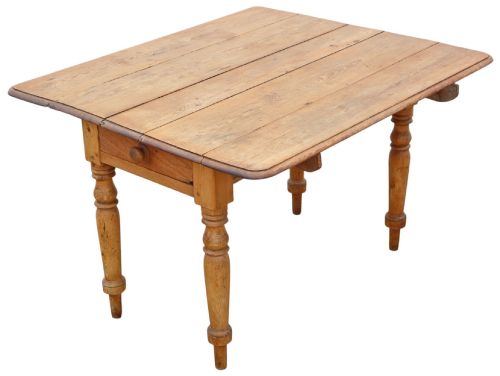
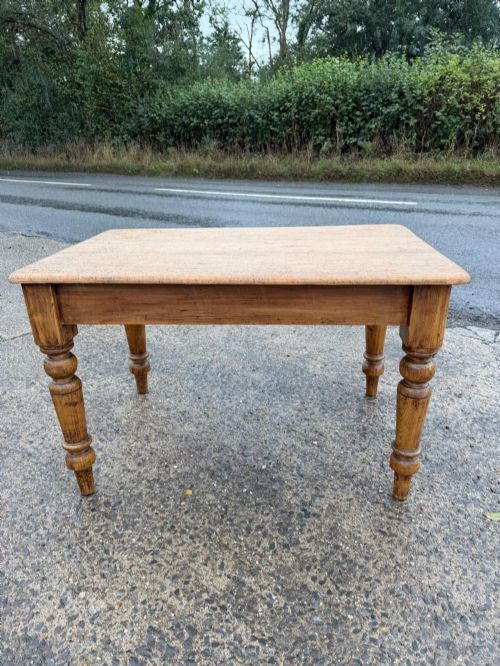
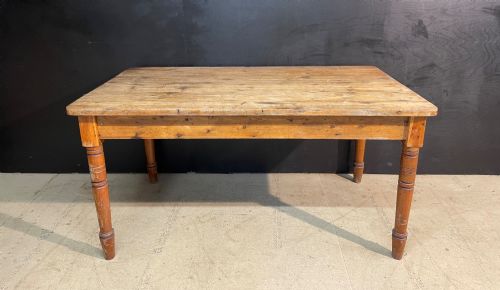
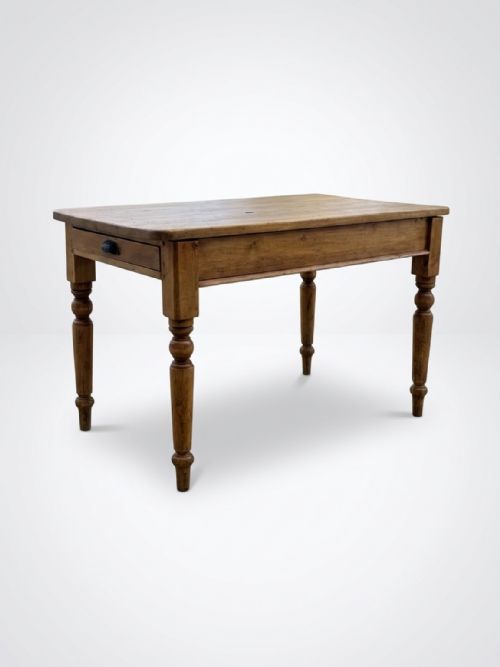
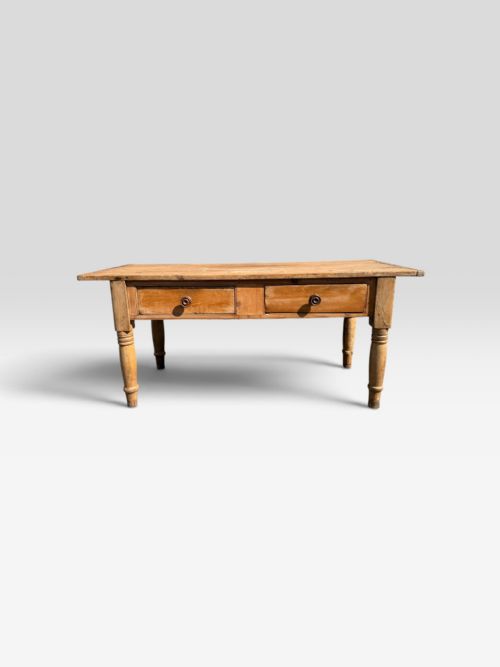
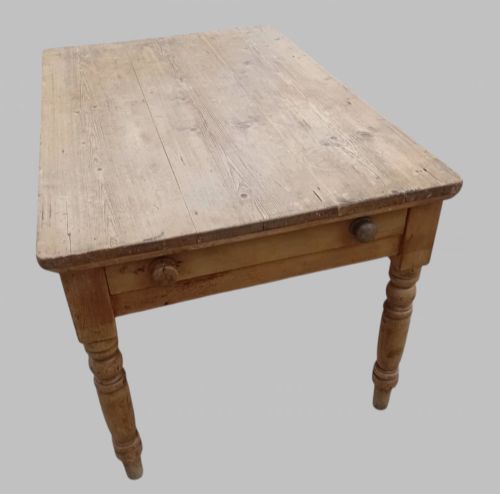
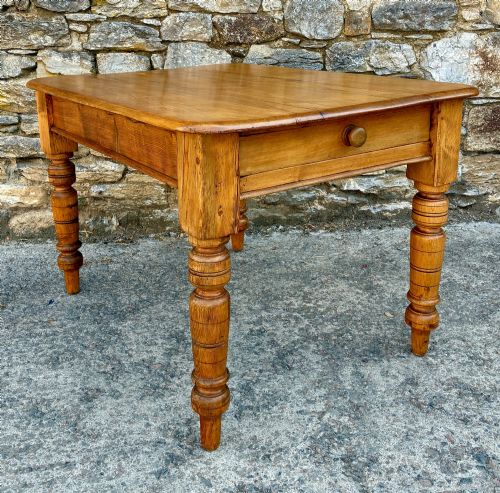
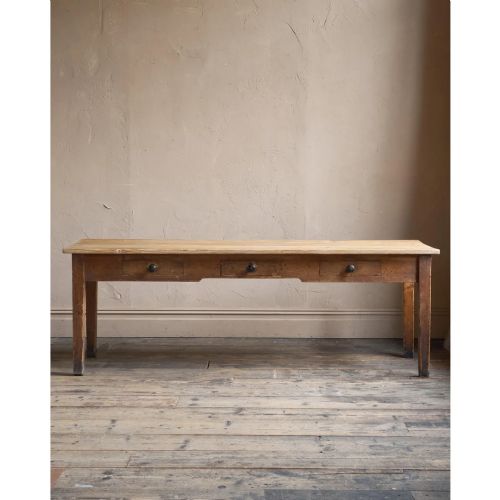
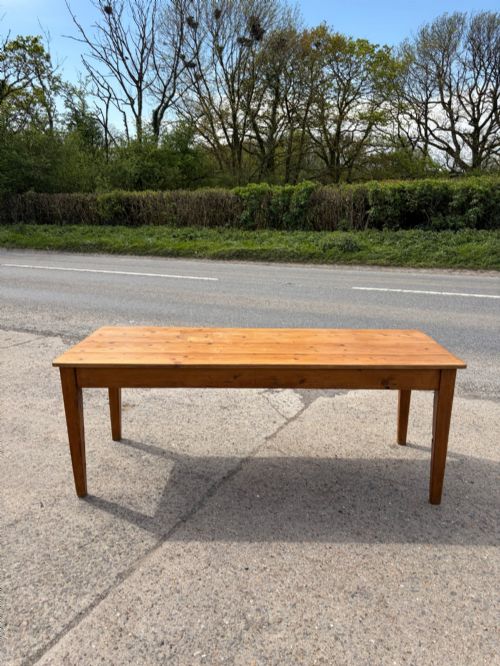
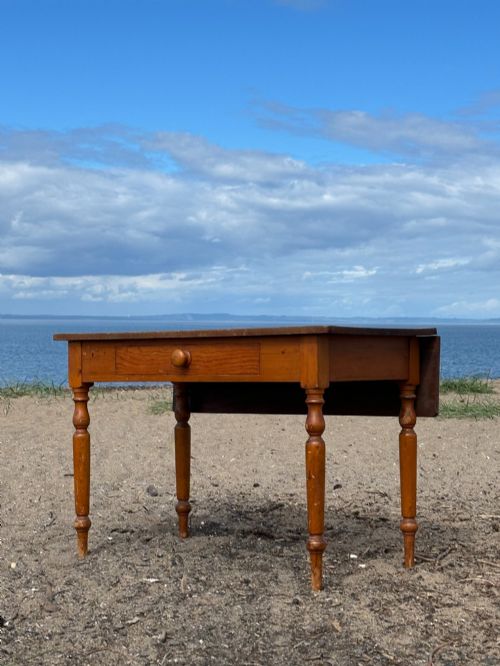
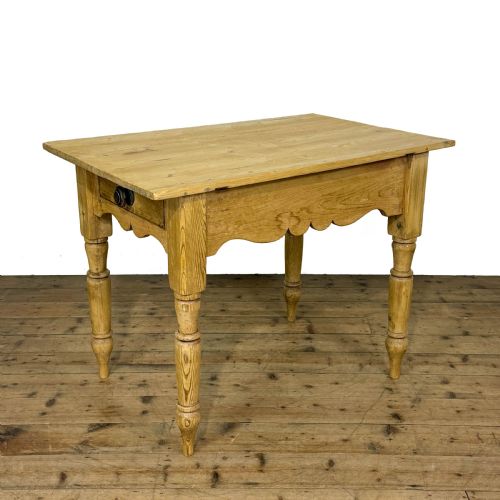
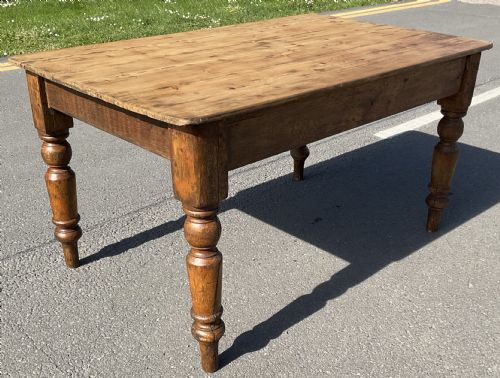
Honey Pine Prep Table
A honey pine prep table is a hardworking domestic timber surface built for practical utility and valued for its warm golden patina.
Honey Pine Prep Table
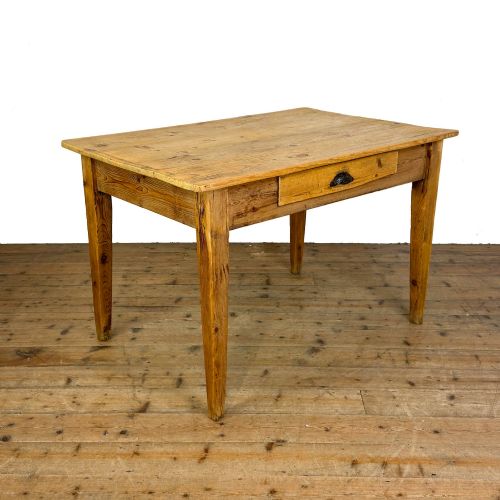
A honey pine prep table functions as a sturdy work surface designed for domestic food preparation, scullery tasks, and farmhouse kitchens. These pieces serve daily culinary needs through generous timber tops and functional frieze drawers.
The honey pine prep table versions met most frequently on this page date from the Victorian period and the nineteenth century. These items appear in regional British, Irish, and French provincial styles, often configured as kitchen tables or scullery tables.
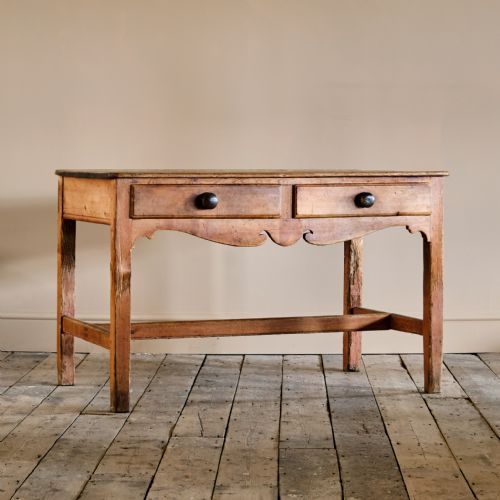
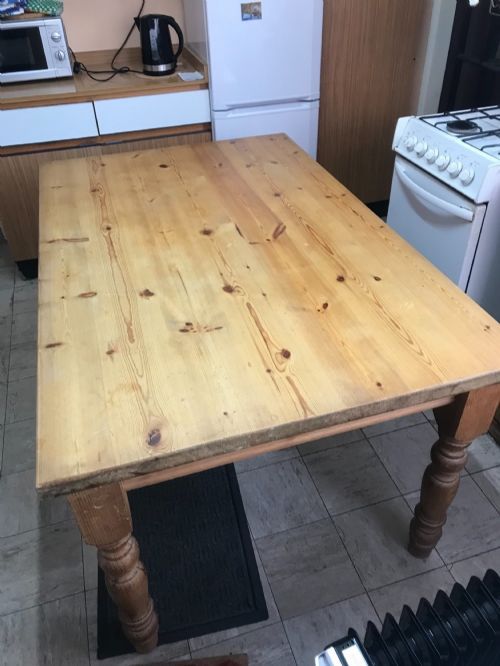
Common forms range from small side tables and drop-leaf folding designs to large farmhouse dining tables and dresser bases with pot shelves. Buyers encounter solid timber construction intended for heavy household use rather than purely decorative display.
What varies in quality
Timber selection and board thickness distinguish sturdier examples from lighter utility pieces, with dense pitch pine offering superior resilience. The quality of the original frame construction dictates how well the table bears weight across extended spans.
Hardware integrity, such as original brass fittings and the smooth operation of single or multiple frieze drawers, influences the overall standard. The depth and warmth of the natural pine patina reflect the history of domestic care and exposure.
Current listings feature pieces spanning the Victorian era through the nineteen-thirties, constructed primarily from pine, pitch pine, and beech.
The Honey Pine Prep Table Glossary
- Pitch pine
- A dense, resinous variety of pine known for its durability and prominent grain patterns. This material was frequently chosen for heavy-duty furniture exposed to moisture.
- Frieze drawer
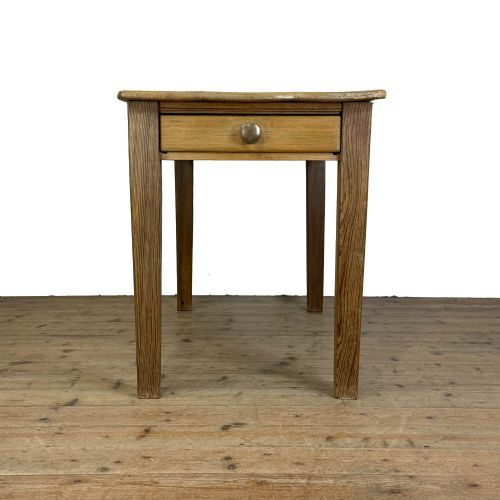
- A storage compartment integrated into the horizontal band directly beneath the table top. These drawers typically store culinary utensils and small kitchen tools.
- Dresser base
- A low cabinetry unit featuring a solid top and lower storage shelves or potboards. These pieces served as primary workspace and crockery storage in sculleries.
- Drop-leaf
- A hinged table leaf that folds down to save space when not in use. This mechanism allows the table footprint to adapt to smaller kitchen layouts.
- Pot shelf
- An open lower tier fitted between the legs of a table or dresser base. Cooks utilised this board to store heavy pots, pans, and mixing bowls within reach.
Honey Pine Prep Table: Frequently Asked Questions
How do I care for a pine prep table?
Clean the surface regularly using a damp cloth and mild soap, avoiding harsh chemical cleaners that strip the finish. Apply natural wax occasionally to nourish the timber and maintain water resistance.
Protect the wood from excessive heat and standing moisture by using trivets and mats. Allowing the timber to breathe preserves the historic patina developed over generations of use.
Can I use a prep table for dining?
These tables adapt readily to daily dining, offering ample legroom and generous surface area for seating family and guests. Their robust construction handles everyday meals just as effectively as food preparation.
Pairing the table with mismatched chairs or benches complements the rustic aesthetic common to these pieces. The warm timber tones create a welcoming centrepiece for kitchen-diners.
How do I identify a Victorian prep table?
Examine the timber for the characteristic warm hues, hand-planed surfaces, and signs of genuine utilitarian wear associated with the nineteenth century. Frieze drawers often feature hand-cut dovetail joints and original wooden or brass pulls.
Construction details such as pegged mortise and tenon joints indicate traditional period craftsmanship. Regional variations in proportion and wood selection further point to nineteenth-century domestic origins.
Are pitch pine tables different from standard pine?
Pitch pine contains a higher resin content than ordinary white or yellow pine, yielding a heavier weight and a harder surface. This resin makes the timber naturally resistant to moisture and scuffing.
The grain on pitch pine typically appears tighter and more prominent than standard pine varieties. Furniture makers selected this dense wood for demanding environments like sculleries and butcher shops.