




Historical Ship Artwork
Historical ship artwork captures the drama and craft of maritime history through oil on canvas, watercolours, and engravings from the eighteenth century onwards.
Historical Ship Artwork
Historical ship artwork encompasses oil paintings, watercolours, lithographs, and engravings depicting naval engagements, merchant vessels, and coastal scenes. Buyers searching this phrase look for authentic maritime records spanning the eighteenth, nineteenth, and early twentieth centuries.
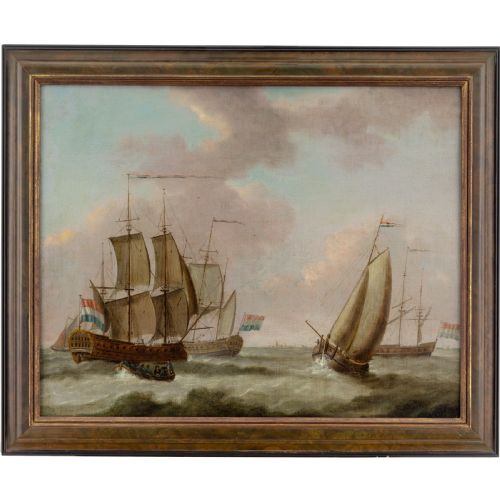
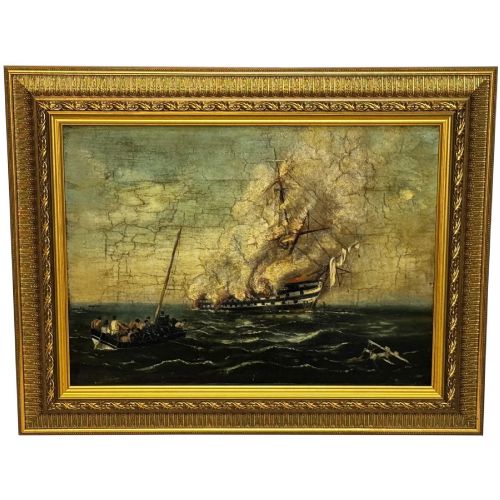
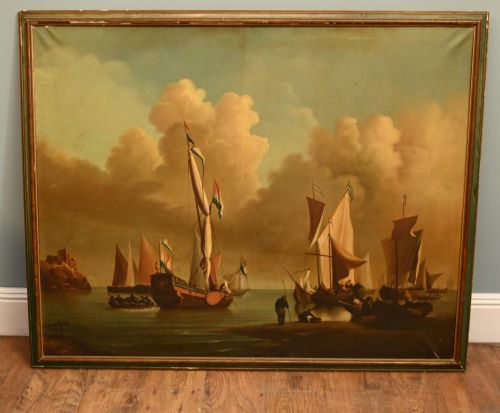
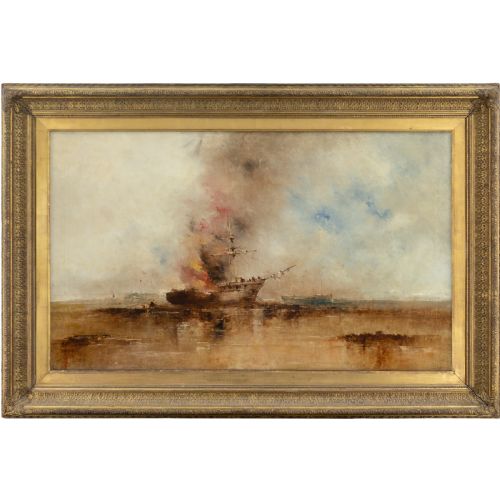
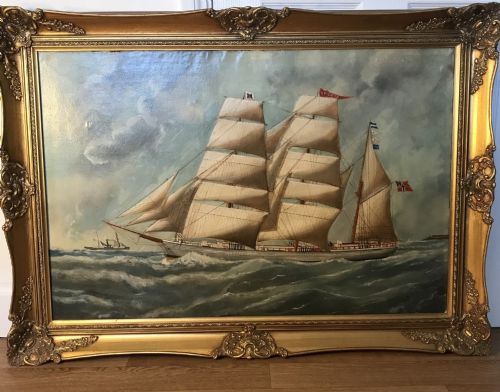
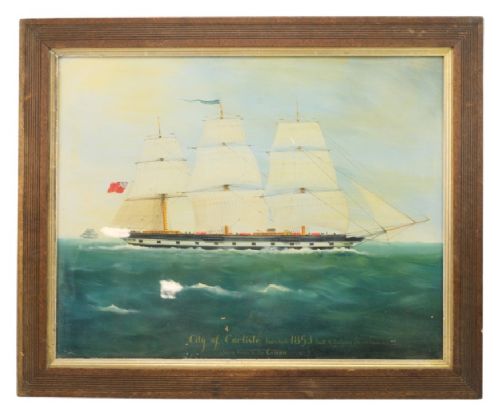
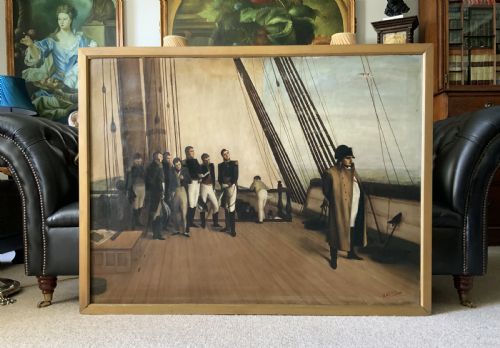
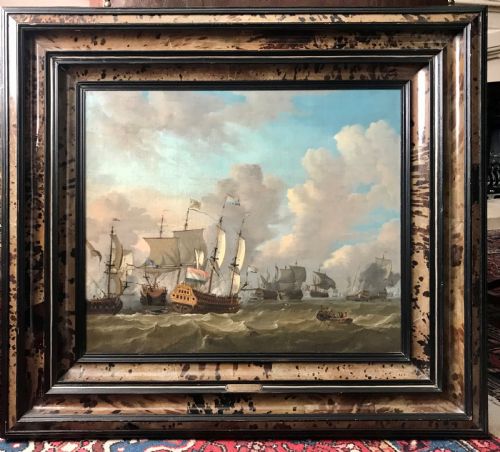
The most common pieces on this page are nineteenth-century oil paintings on canvas, alongside framed watercolours and Victorian marine art depicting specific ships, ports, and sea battles.
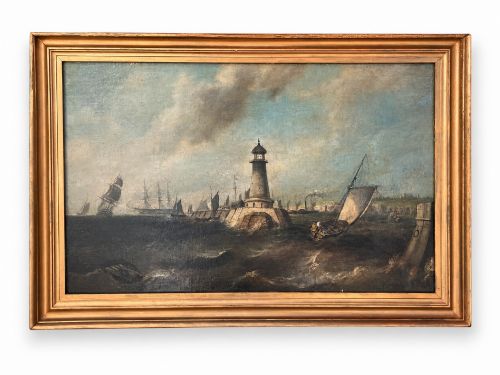
Subjects range from grand warship encounters and Arctic expeditions to quiet harbour scenes and steamships navigating rough waters, reflecting Britain's deep seafaring heritage.
Materials and Techniques
Artists painted primarily with oil paint on canvas or applied watercolour to paper, often framing works behind glass within gold leaf or wooden mouldings. Canvases stretch over timber frames to support heavy layers of pigment depicting turbulent waves and billowing sails.
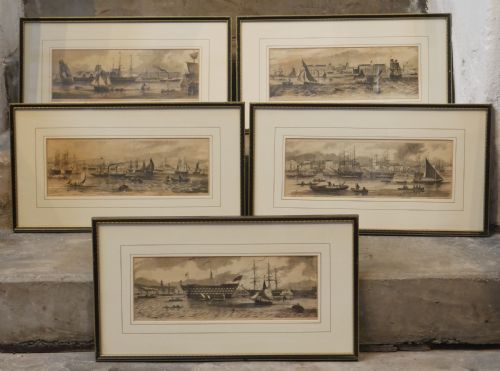
Engravings and lithographs utilise inked plates pressed onto paper to reproduce detailed naval scenes and dock views in multiple impressions. These works combine meticulous draughtsmanship with tonal washes to capture the atmosphere of sea and sky.
Historical Ship Artwork Retail Price Guide 2026
Typical asking prices for historical ship artwork among the pieces listed under this phrase on Sellingantiques today, from the lower quarter to the upper quarter. They describe what is for sale here now, not the wider market.
Royal messengers occasionally wait near three-masted schooners, reminding us that important dispatches once travelled by wind and canvas.
Evaluating Quality
Quality rests upon the artist's command of maritime architecture, rigging accuracy, and the natural movement of water and wind. Superior works display confident brushwork and precise topographical or nautical detail rather than formulaic waves and stiff hulls.
The handling of light and atmospheric depth distinguishes accomplished marine art from simpler decorative records. Strong compositions balance the bulk of vessels against expansive skies and coastal backdrops.
William McAlpine·Nicholas Condy·Vincenzo D’Esposito·George Shaw·Samuel Owen·William Wyld·Richard Brydges Beechey·Frank Wood·Paul Jean Clays·Edward Fletcher·Frank Wasley·Richard Ball Spencer·Arthur David McCormick·Hubert Thornley·Bertram Priestman·James Hardy·Abraham Storck
The Historical Ship Artwork Glossary
- Oil on Canvas
- Pigment mixed with drying oil applied to stretched fabric. This technique allowed artists to build rich textures for crashing waves and billowing sails.
- Watercolour
- Pigments suspended in a water-soluble vehicle applied to paper. It produces translucent washes ideal for atmospheric coastal light.
- Engraving
- An image cut into a metal plate with a sharp tool to hold ink. Prints pull multiple impressions on paper.
- Lithography
- A planographic printing process using stone or metal plates. It enables detailed tonal reproduction of maritime drawings.
- Barque
- A sailing vessel with three or more masts. The sternmast is rigged fore and aft while the others are square-rigged.
Historical Ship Artwork: Frequently Asked Questions
How do I date historical ship art?
Dates rely on costume details, ship riggings, and artist signatures recorded in the listing titles and periods. Nineteenth-century pieces often show specific naval uniforms or steam-and-sail transitions.
Examining the canvas preparation, framing materials, and stretcher construction provides further confirmation of the historical era.
What is the difference between an oil painting and a watercolour?
Oil paintings use thick pigments on canvas, offering rich textures and deep tones suited to dramatic sea battles and stormy waters. Watercolours apply translucent washes to paper, capturing bright coastal light and subtle atmospheric haze.
Both mediums held prominent places in maritime art throughout the Victorian and Edwardian periods.
How should I hang maritime artwork at home?
Keep historical ship art away from direct sunlight and damp environments to protect nineteenth-century canvases and paper watercolours. Proper wall placement preserves the integrity of the gold leaf frames and oil pigments.
Pairing pieces with similar wooden or gilded frames creates a cohesive display in studies or living spaces.
What subjects appear most often in these maritime scenes?
The listings feature naval engagements, merchant barques entering ports, polar expeditions, and coastal harbour views. Royal Navy reviews and dockyard scenes also recur frequently across the nineteenth-century works.
Artists documented both heroic naval history and everyday commercial shipping along British and European coasts.