



Historical Ship Art
Historical ship art captures the drama of naval warfare and merchant voyages across centuries of maritime heritage.
Historical Ship Art
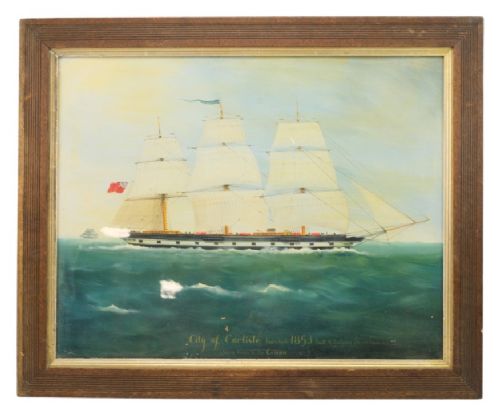
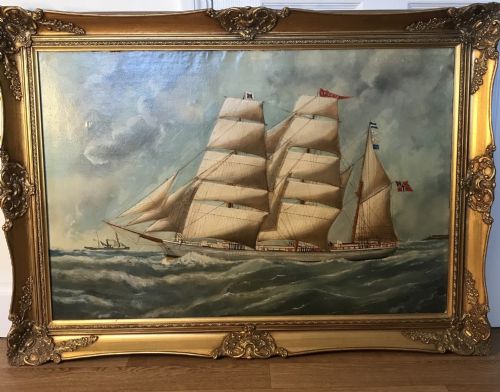
When you search for historical ship art, you encounter oil paintings, watercolours, engravings, and lithographs depicting vessels from the seventeenth century through to the early twentieth century. These works record specific naval engagements, harbour scenes, and coastal shipping, providing a visual chronicle of seafaring life.
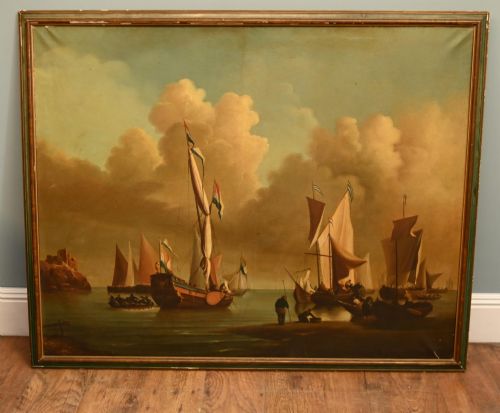
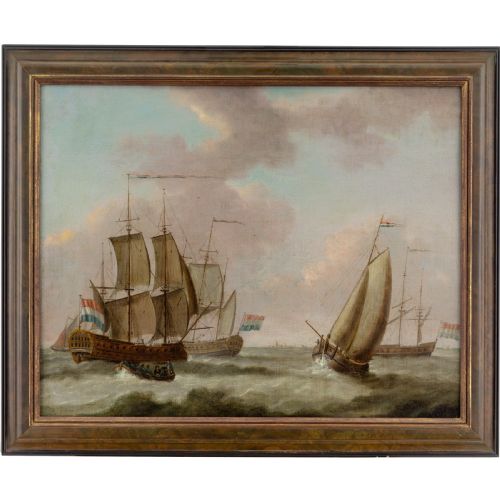
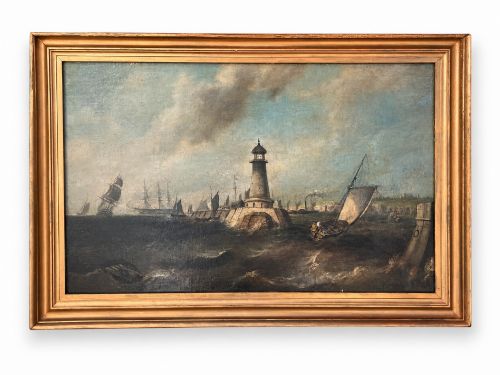
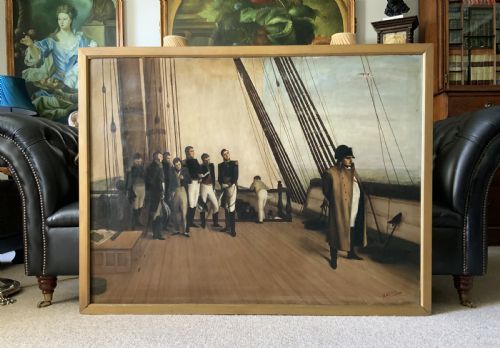
The pieces on this page lean heavily towards nineteenth-century British and Dutch marine works executed in oil on canvas. You will find depictions ranging from large three-masted schooners and royal warships to local fishing boats and merchant vessels navigating coastal waters.
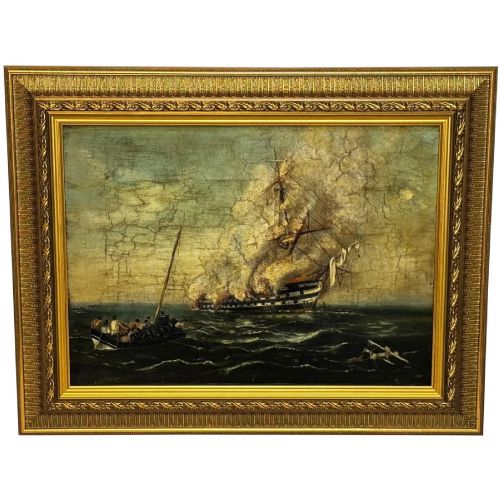
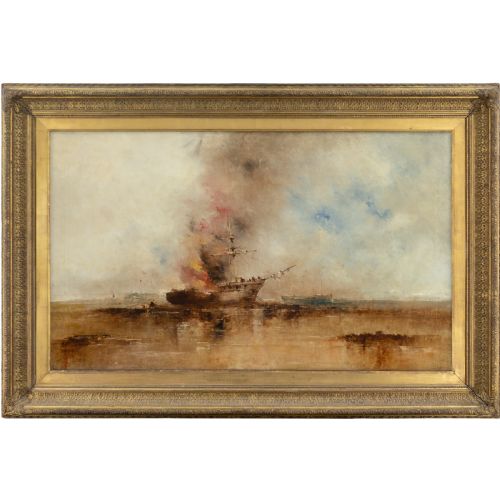
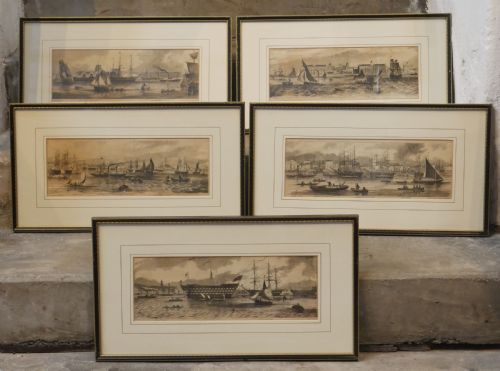
Subjects often reference documented events, such as the burning of specific warships, fleet reviews at Spithead, or harbour approaches like Portsmouth and the Pool of London. Alongside finished oils, the selection includes preparatory watercolours and period prints that bring maritime history into domestic interiors.
How they were made
Artists working on historical ship art relied primarily on oil paint applied to stretched canvas, often building up glazes to render the translucent qualities of water and the dense smoke of naval battles. Watercolour on paper served for lighter, more immediate studies of coastal light and weather.
Frames play a crucial role in presentation, with many works housed in period giltwood frames that complement the tonal depth of the maritime scenes. Print works utilise engraving and lithography techniques to reproduce detailed ship designs for broader distribution.
Historical Ship Art Retail Price Guide 2026
Typical asking prices for historical ship art among the pieces listed under this phrase on Sellingantiques today, from the lower quarter to the upper quarter. They describe what is for sale here now, not the wider market.
Several canvases manage to include billowing smoke, cannon fire, and distant onlookers without losing sight of the main vessel.
What varies in quality
The distinction between ordinary and exceptional historical ship art lies in the artist's grasp of maritime architecture and rigging. Superior works display a precise understanding of how vessels sit in the water and how wind interacts with canvas sails.
Atmospheric control separates standard decorative pieces from accomplished fine art. The finest paintings capture the turbulent motion of rolling seas and the specific quality of coastal light rather than simply rendering a ship as an isolated object.
William McAlpine·Vincenzo D’Esposito·George Shaw·Samuel Owen·William Wyld·Paul Jean Clays·Edward Fletcher·Frank Wasley·Richard Ball Spencer·Arthur David McCormick·Hubert Thornley·Bertram Priestman·James Hardy
The Historical Ship Art Glossary
- Marine art
- Paintings, drawings, or prints that depict ships, sea battles, coastal views, and harbour scenes. This broad category encompasses everything from calm river estuaries to violent sea engagements.
- Dutch School
- A stylistic tradition originating in the Netherlands that prioritises realistic depictions of shipping, low horizons, and dramatic cloud formations. Artists in this lineage heavily influenced later marine painting across Europe.
- Giltwood
- Wood that has been covered with a thin layer of gold leaf, commonly used for traditional picture frames. These frames enhance the visual weight and period context of oil paintings.
- Engraving
- A printmaking process where an artist cuts lines into a metal plate to hold ink. This technique allows for the reproduction of fine details in ship designs and rigging.
Historical Ship Art: Frequently Asked Questions
What subjects appear in historical ship art?
These works depict naval engagements, merchant shipping, specific named vessels, and coastal harbour scenes.
Common subjects include royal fleets, fishing vessels in choppy waters, and historical ships entering ports like Portsmouth or London.
How do I date a marine painting?
Dating relies on the ship types, uniform styles, and riggings shown in the composition, alongside any artist signatures.
Frame styles and stretcher construction on the reverse of the canvas also provide reliable clues to the period of creation.
Where were these paintings displayed originally?
Maritime art typically hung in the homes of naval officers, shipowners, merchants, and those with connections to trade.
Large oil paintings often decorated the reception rooms of grand coastal residences, while smaller watercolours suited studies and parlours.
How should I care for oil on canvas?
Keep paintings away from direct sunlight and sources of extreme temperature fluctuation to protect the canvas and paint layers.
Dust the surface gently with a soft, dry brush and avoid using liquid cleaners on either the canvas or the frame.