





Historical Seascape
Historical seascape oil paintings and watercolours capture maritime engagements, coastal shipping and naval battles across the eighteenth and nineteenth centuries.
Historical Seascape
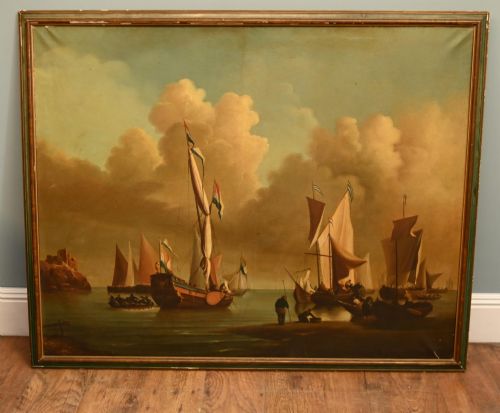
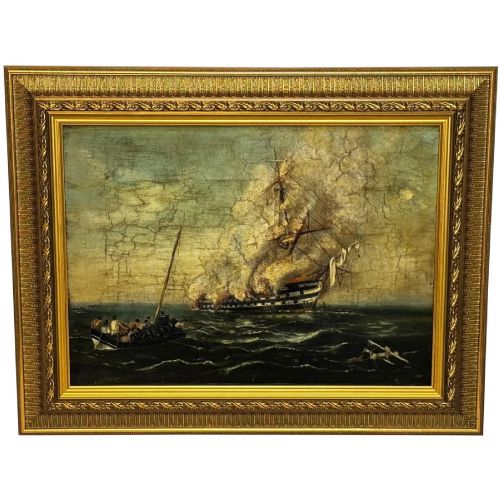
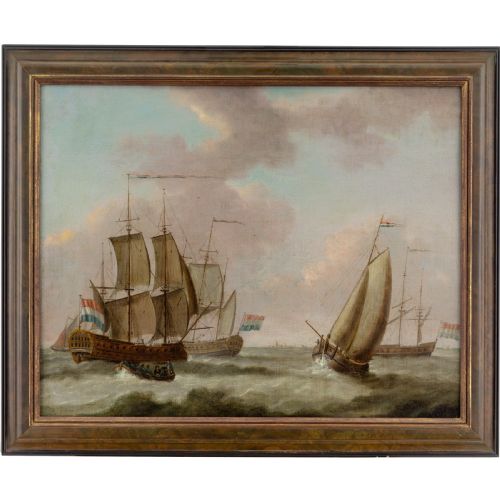
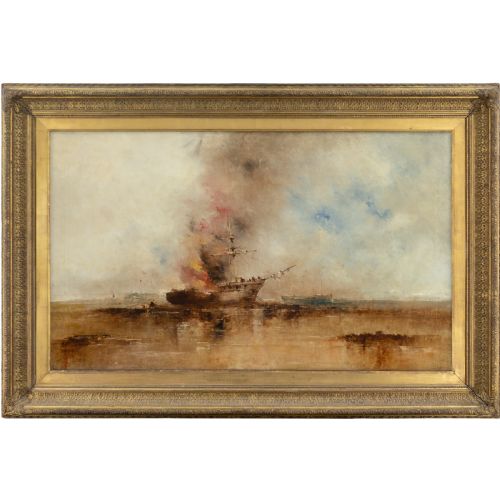
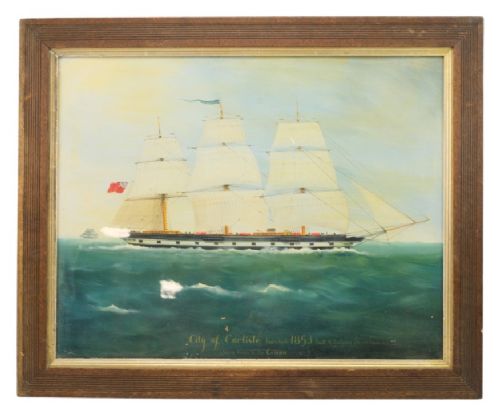
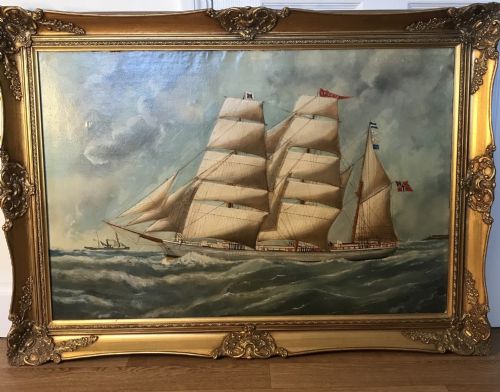
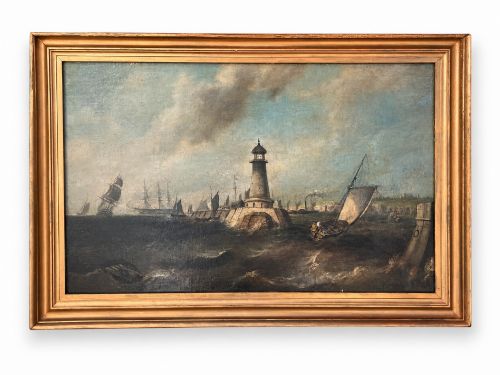
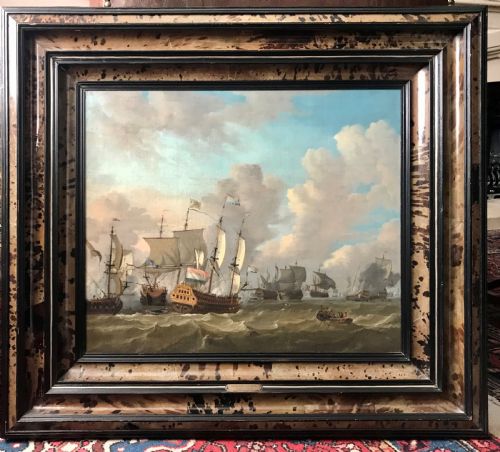
A historical seascape presents maritime subjects ranging from Dutch shipping in rolling seas and naval engagements with warships to coastal harbour scenes and vessels navigating British or foreign waters. These works document specific nautical events, such as the burning of ships or troop movements, executed during periods spanning the seventeenth to the early twentieth century.
Buyers encounter oil paintings on canvas alongside watercolours on paper, often housed within period frames like giltwood. The examples on this page reflect schools such as the Dutch School and Victorian marine art, capturing sailing ships, schooners, and steam vessels in various maritime settings.
How They Were Made
These works utilise oil paint or watercolour applied to canvas, wood, or paper substrates. Painters built up maritime scenes through layered pigments to depict rolling waves, billowing sails, and atmospheric coastal light.
Framing forms an integral part of the construction, with many pieces set into carved and gilded wooden frames that complement the period aesthetic of the canvas or paper artwork.
Historical Seascape Retail Price Guide 2026
Typical asking prices for historical seascape among the pieces listed under this phrase on Sellingantiques today, from the lower quarter to the upper quarter. They describe what is for sale here now, not the wider market.
Ships brave canvas tempests with cannon smoke lingering indefinitely.
What Varies in Quality
Quality rests in the precision of the maritime draughtsmanship, particularly in the rigging of ships, the perspective of hulls, and the convincing movement of water in rolling seas. Works attributed to known marine artists or distinct regional schools often display superior handling of light and atmospheric depth compared to unsigned vernacular pieces.
The integrity of the canvas or paper surface alongside the preservation of the original giltwood frame influences the standing of a piece. Finer examples maintain crisp brushwork and clear narrative detail regarding the naval vessels or coastal topography depicted.
William McAlpine·Charles Napier Hemy·Vincenzo D’Esposito·George SHAW·George Morland·Samuel Owen·Frank Wood·Paul Jean Clays·FRANK WASLEY·Richard Ball Spencer·Hubert Thornley·Bertram Priestman·James Hardy·Abraham Storck
The Historical Seascape Glossary
- Giltwood
- Wood carved and coated with gold leaf or gold paint, frequently utilised for decorative period picture frames.
- Dutch School
- A grouping of artists working in or influenced by the traditions of the Netherlands, known for detailed maritime and shipping scenes.
- Oil on Canvas
- A painting technique using pigments bound in a drying oil medium applied to a stretched fabric surface.
- Watercolour
- A painting method where fine pigment powders are suspended in a water-soluble binder, typically worked upon paper.
- Marine Art
- Artistic works that depict or draw their main inspiration from the sea, ships, naval battles, and coastal environments.
Historical Seascape: Frequently Asked Questions
What subjects appear in a historical seascape?
These artworks depict ships at sea, naval battles with warships, harbour scenes, and coastal views. Vessels range from three-masted schooners and frigates to steam and sail ships.
Specific historical events and military engagements also form core subjects within this genre.
Which periods do these marine paintings date from?
The pieces span from the late seventeenth century through the eighteenth and nineteenth centuries into the early twentieth century. Victorian and Regency periods are particularly well represented.
Dates often align with specific naval actions or the working lives of documented marine artists.
What materials were used for these artworks?
Artists utilised oil paint on canvas or wood panels, alongside watercolour on paper. Canvases are frequently housed in period giltwood frames.
Substrates vary from stretched canvas to heavy paper sheets depending on whether the medium is oil or watercolour.
How do I identify the style of a maritime painting?
Styles include Dutch Marine, Victorian Maritime, and Georgian school traditions. Examining the rendering of the rigging, hull construction, and water helps assign a piece to a specific school.
Attributions to circles of known painters or specific nationalities provide further contextual clues.