


Historical Military Print
A historical military print captures commanders, regiments and campaigns through centuries of ink, paper and engraving.
Historical Military Print
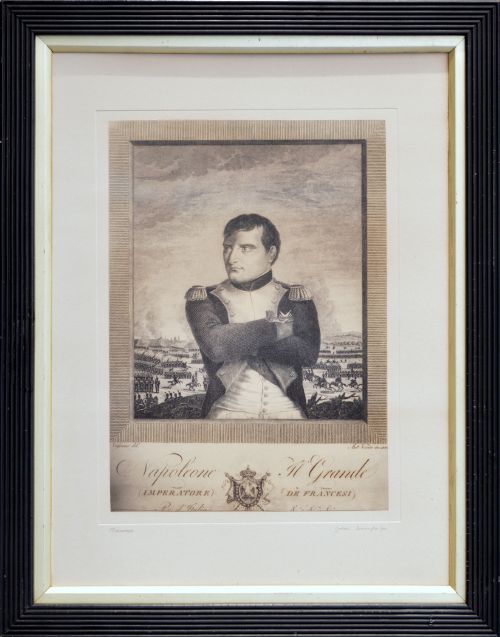
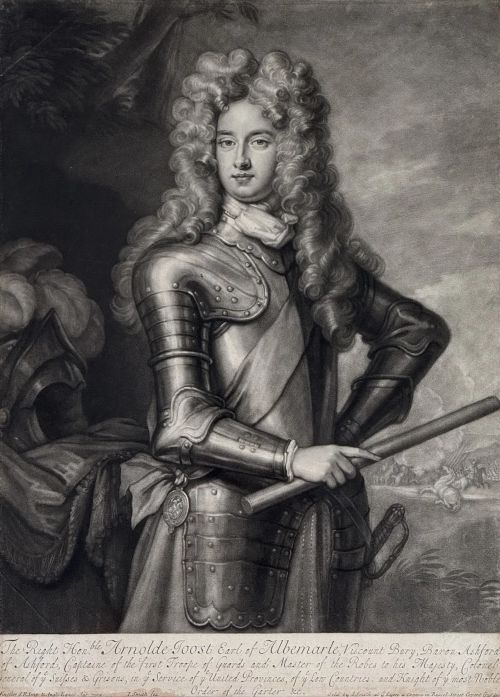
When you search for a historical military print, you are looking at framed artwork, wall art and engravings that record officers, battles and army formations. The pieces span from the seventeenth century through the Georgian and Victorian eras into the twentieth century.
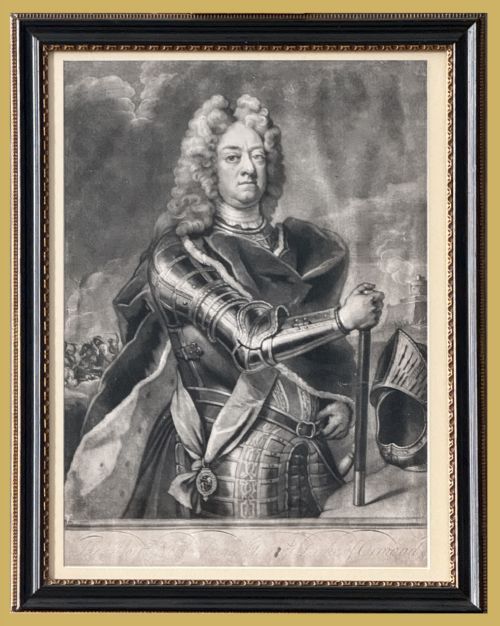
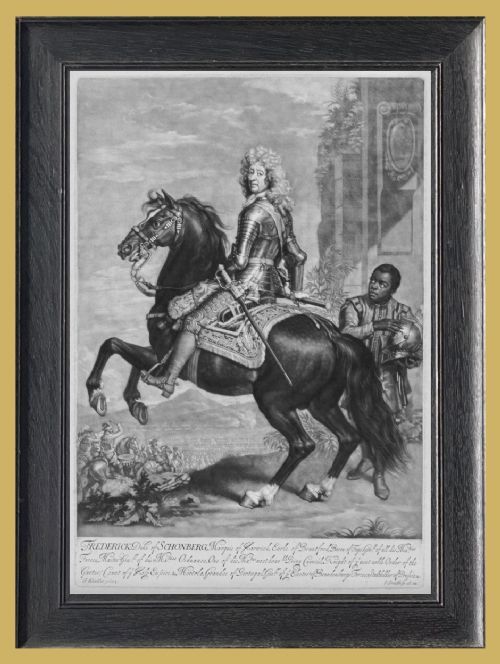
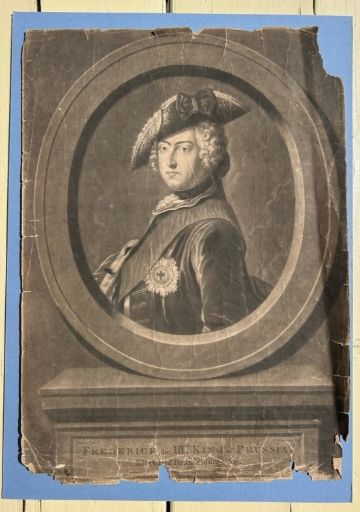
You are most likely to meet mezzotint portraits of notable commanders, wood engravings of colonial marches, and nineteenth century battle scenes. These works appear framed in wood and glass, often utilising mahogany or giltwood frames that suit their age.
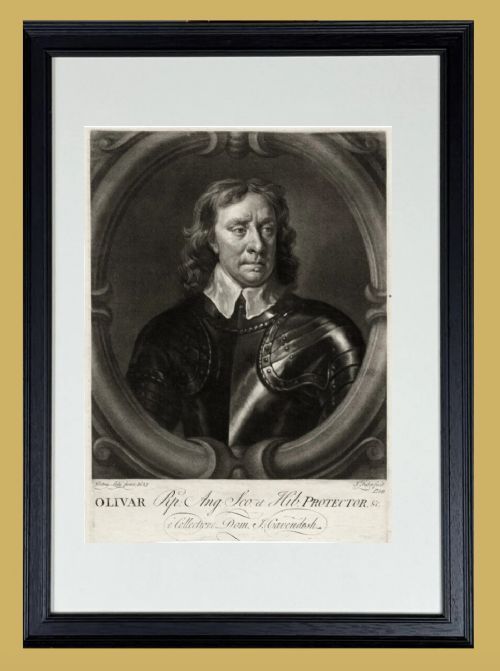
The selection ranges from early eighteenth century portraits after painters like Sir Godfrey Kneller to Victorian prints of royal reviews and twentieth century caricatures. Each item brings a specific campaign or portrait into focus.
Methods and materials of the works
The pieces rely primarily on paper treated with ink, watercolour and wash, shaped through mezzotint, wood engraving and etching techniques. Artisans worked from portraits by painters such as Sir Peter Lely or Antoine Pesne to produce these printed plates.
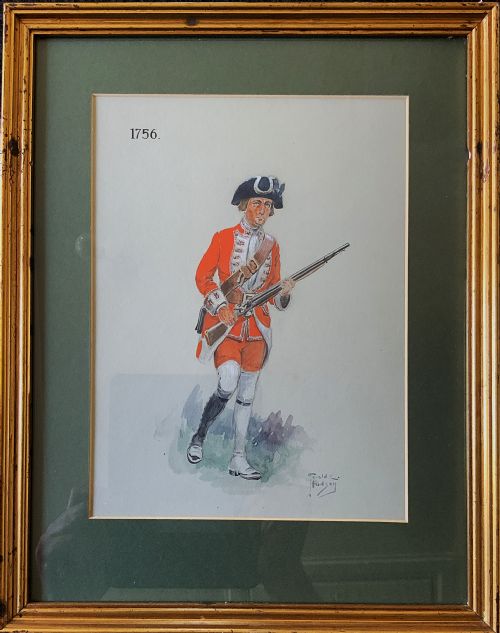
Frames employ wood, giltwood, mahogany and gold leaf, paired with glass to protect the fragile paper sheets within. Pen and ink drawings on paper also appear alongside the engraved and printed items.
The listings feature paper, ink, watercolour, glass, wood, mahogany, giltwood and gold leaf across multiple centuries.
Distinctions across the range
The distinction between items rests on the sharpness of the ink impression and the fidelity of the plate work after the original painter. Early mezzotints show deep tonal gradations, while later wood engravings offer crisp line work depicting troop movements and uniforms.
Framing materials also set pieces apart, with period giltwood, mahogany and gold leaf housings providing appropriate contemporary context for the paper artwork inside.
John Simon·John Smith·Joseph Sympson·Richard Houston·David Wilkie
The Historical Military Print Glossary
- Mezzotint
- A printmaking process where the copper plate is roughened to achieve dark tones and scraped to create light areas. This technique allows for subtle tonal gradations in portraiture.
- Wood engraving
- A relief printing method where the artist cuts into the end grain of a hard block of wood. It produces fine, detailed lines suitable for illustrating complex military scenes.
- Etching
- A method where lines are bitten into a metal plate with acid before ink is applied for printing. This process creates precise and expressive graphic lines.
- Giltwood
- Wood that has been coated with a thin layer of gold leaf or gilt powder. It is frequently found on eighteenth and nineteenth century frames.
- Wash
- A thin layer of diluted watercolour applied evenly across paper. It provides atmospheric background tones in drawings.
Historical Military Print: Frequently Asked Questions
What periods do these prints cover?
The listings span from the seventeenth century through the Georgian and Victorian periods up to the early twentieth century. This includes works dated around seventeen-fifty alongside nineteenth century prints and twentieth century pieces.
Earlier examples often focus on individual commanders, while later pieces capture specific battles, marches and military reviews.
How were these artworks framed?
Many pieces are housed in frames made of wood, mahogany, giltwood or gold leaf, protected by glass. These materials match the traditional presentation methods expected for antique paper works.
The framing styles reflect their respective periods, from Baroque and Georgian designs to Victorian and early twentieth century examples.
What subjects appear in the prints?
Subjects range from seventeenth and eighteenth century military portraits of commanders and generals to nineteenth century battle scenes and troop formations. Naval officers and historical campaigns also feature prominently.
You will find depictions of specific events, such as the Second Anglo-Afghan War or the Waterloo Dispatch, alongside caricatures of military figures.
Are these items original prints?
The listings include original mezzotint engravings, wood engravings, etchings and pen and ink drawings from their respective centuries. Techniques such as watercolour and wash are also used in original works.
Each piece reflects the reproduction methods and artistic styles of its period of origin.