


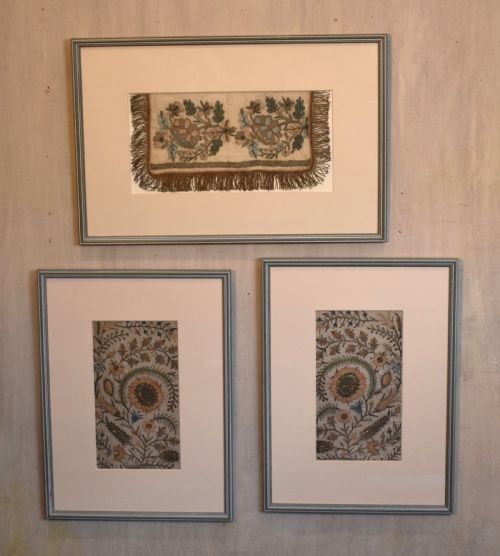


Historic Textile Picture
A historic textile picture brings centuries of needlework, tapestry and silk embroidery directly to your walls in period frames.
Historic Textile Picture
A historic textile picture represents centuries of decorative needlework, tapestry and embroidery mounted for display on the wall. When you search for this phrase, you encounter framed works originating from the seventeenth, eighteenth and nineteenth centuries.
The versions most commonly met on this page include detailed silk embroideries, Italian needlepoint tapestries, and traditional needlework samplers. These pieces often arrive in period frames of giltwood, walnut or oak.
Makers range from anonymous schoolgirls completing nineteenth-century samplers to skilled Italian artisans producing courtly scenes and noble portraits. Each piece preserves textile techniques across Georgian and Victorian periods.
Materials and construction
These works rely on natural fibres such as silk, wool and linen, worked with silk thread and wool yarns on supportive ground fabrics. Artisans stitched intricate patterns, figures and landscapes using specialised embroidery and tapestry techniques.
Finished textiles were stretched and mounted within protective wooden frames, frequently utilising glass, giltwood mouldings, carved oak or walnut. The integration of textile and frame ensured these fragile panels survived across centuries.
Historic Textile Picture Retail Price Guide 2026
Typical asking prices for historic textile picture among the pieces listed under this phrase on Sellingantiques today, from the lower quarter to the upper quarter. They describe what is for sale here now, not the wider market.
Listings here span the 17th, 18th and 19th centuries, featuring materials such as silk thread, wool, linen, glass, giltwood, walnut and oak.
Assessing quality
Quality rests in the complexity of the needlework, the precision of the silk or wool thread execution, and the integrity of the textile surface. Finer works display intricate pictorial detail, expressive figures and sophisticated composition.
The calibre of the surrounding frame contributes significantly, with original period giltwood, walnut or oak housings elevating the piece. Condition also plays a role, distinguishing well-preserved panels from those with heavy losses to the fabric.
The Historic Textile Picture Glossary
- Needlework sampler
- A piece of textile art created to demonstrate a maker's proficiency in various stitches and patterns. These often include alphabets, dates and maker names.
- Giltwood
- Wood that has been coated with a thin layer of gold leaf or gesso and gold paint. It frequently surrounds eighteenth and nineteenth-century picture frames.
- Tapestry
- A form of heavy textile art woven by hand on a loom or worked in needlepoint. These depict pictorial scenes, figures and heraldry.
- Silk embroidery
- Needlework executed primarily with fine silk threads on a linen or silk ground. This technique allows for subtle shading and detailed portraiture.
Historic Textile Picture: Frequently Asked Questions
How should I hang a textile picture?
Keep these works away from direct sunlight to protect delicate silk and wool threads from fading. Position them on interior walls with stable humidity.
Ensure the hanging wire and wall fixings securely support the weight of the frame and glass.
What periods do these pictures come from?
The pieces span from the seventeenth century through the Georgian and Victorian eras up to the late nineteenth century. Earlier examples often feature Italian tapestries and seventeenth-century cushion covers.
Later works frequently include nineteenth-century samplers and framed silk embroidery panels.
Are the frames original to the textiles?
Many pieces retain period frames made of giltwood, oak or walnut that complement the age of the textile. Some items have been reframed or mounted later to ensure proper preservation.
Check the listing details for specific information regarding the frame materials and origin.