




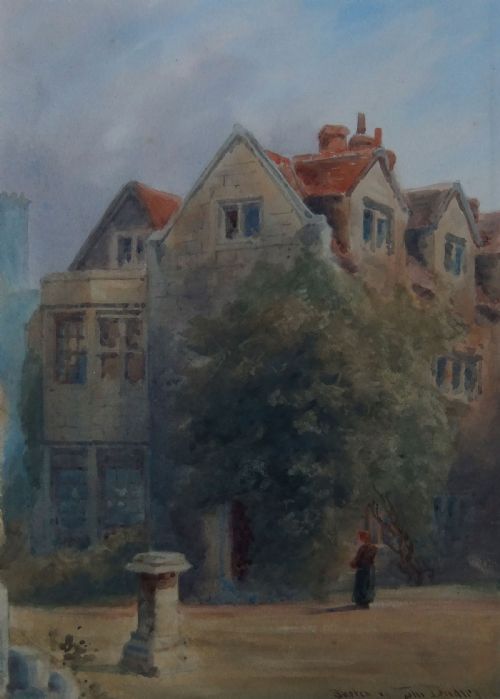


Historic Architectural Painting
Historic architectural painting captures notable buildings and interiors, offering a direct view into past craftsmanship and urban development through the eyes of earlier artists.
Historic Architectural Painting
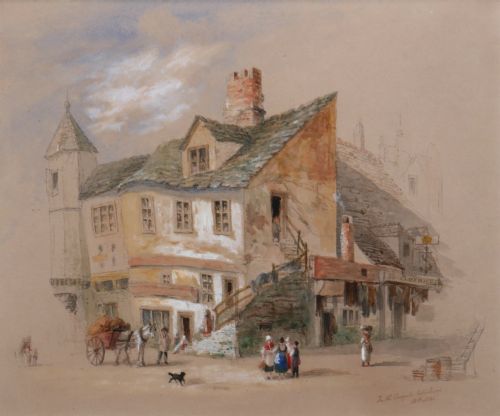
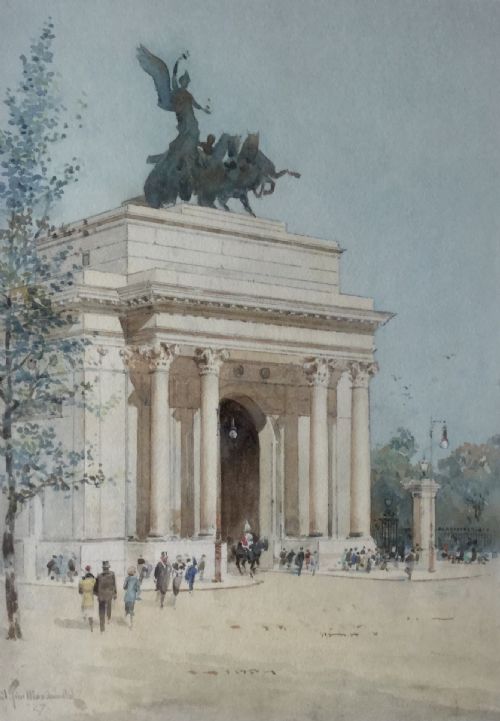
Historic architectural painting encompasses works depicting buildings, street scenes, and grand interiors from periods ranging from the Georgian era through to the mid-twentieth century. The selection leans heavily towards watercolours and oil paintings on canvas or paper, capturing cityscapes, castles, and historic street views.
Buyers will encounter various formats, from detailed pen-and-ink watercolours of Dutch facades to oil paintings of English castles and interior long galleries. Pieces span multiple eras including the Victorian and Edwardian periods, reflecting both British and European subjects.
Materials and techniques
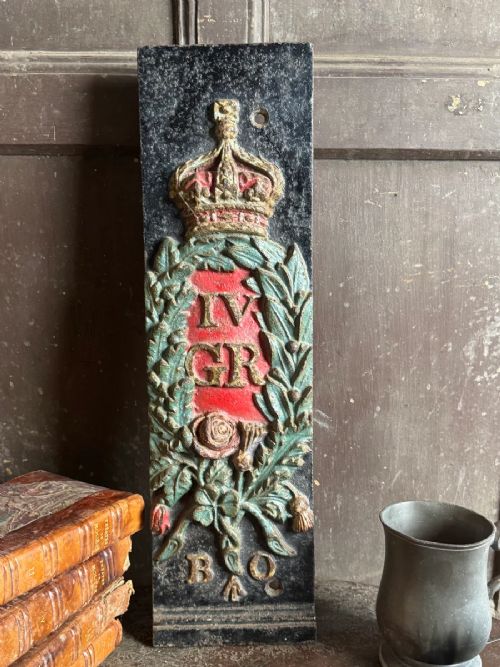
The works rely upon traditional artist materials such as watercolour, oil paint, ink, and gouache applied to paper, canvas, or prepared wooden panels. Some examples incorporate painted cast iron or carved wood plaques integrated into interior settings.
Artists employed careful drafting alongside fluid brushwork to record fine masonry details, perspective, and atmospheric light. Paper supports often received ink underdrawings before watercolour washes were layered to build up architectural form.
Historic Architectural Painting Retail Price Guide 2026
Typical asking prices for historic architectural painting among the pieces listed under this phrase on Sellingantiques today, from the lower quarter to the upper quarter. They describe what is for sale here now, not the wider market.
Several watercolours meticulously record famous London landmarks like Whitehall and Trafalgar Square on rainy days when umbrellas dominated the streets.
Factors of quality
Quality rests upon the precision of the draughtsmanship and the artist's ability to render complex perspective and structural proportions accurately. Superior examples demonstrate a confident handling of light and shadow that brings depth to stone, brick, and interior spaces.
The prominence of the subject matter and the documentary value of the scene also elevate certain pieces. Works signed by recognised practitioners or displaying meticulous detail in architectural elements command greater interest.
Rowland Henry Hill·David Small·Noel Harry Leaver·Beatrice Parsons·Tom Dudley·John Thirttle
The Historic Architectural Painting Glossary
- Overmantel
- A decorative painting, mirror, or panel placed directly above a fireplace mantelpiece. These often depict architectural scenes or landscapes designed to fit specific domestic interiors.
- Watercolour
- A painting method in which the paints are made of pigments suspended in a water-soluble vehicle. It is frequently applied on paper for architectural studies and topographical views.
- Gilt wood
- Wood that has been treated with a thin layer of gold leaf or gilt powder. It appears on frames and decorative architectural plaques from the Georgian and Victorian periods.
- Dutch Baroque
- An artistic style prevalent in the seventeenth century characterised by realistic depiction of domestic and civic architecture. Works influenced by this tradition emphasise light and shadow on masonry.
Historic Architectural Painting: Frequently Asked Questions
What is a historic architectural painting?
These works are artistic representations of buildings, streetscapes, interiors, and monuments executed in mediums like oil and watercolour. They serve as both fine art and historical records of urban and domestic development.
Created across several centuries, they document how cities, castles, and famous structures appeared to artists of the Georgian, Victorian, and later eras.
How were these paintings used?
Many were produced as finished cabinet pictures intended for display in domestic reception rooms, galleries, and studies. Others served as topographical records or preparatory studies for larger compositions.
Interior views specifically documented the grand rooms and architectural modifications of notable English country houses and civic buildings.
How do I live with these pieces?
Works on paper require protection from direct sunlight to prevent fading of the watercolour pigments and discolouration of the paper support. Framing with conservation-grade materials ensures long-term preservation in a domestic setting.
Oil paintings on canvas or panel are sturdier but benefit from stable indoor humidity and temperature away from direct heat sources.