



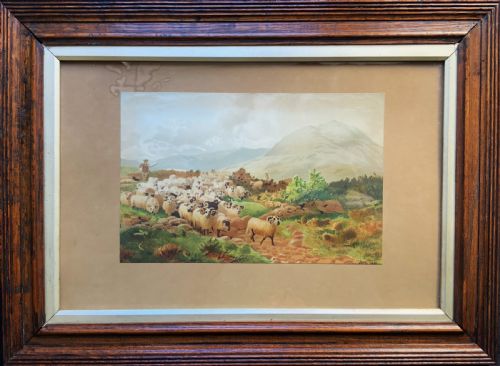

Highland Sheep Art
Highland sheep art captures the rugged scenery and pastoral life of the Scottish mountains through oil paintings.
Highland Sheep Art
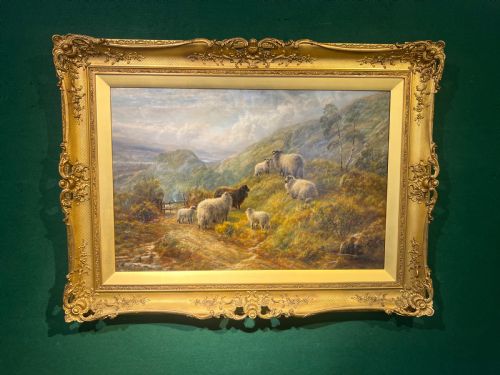
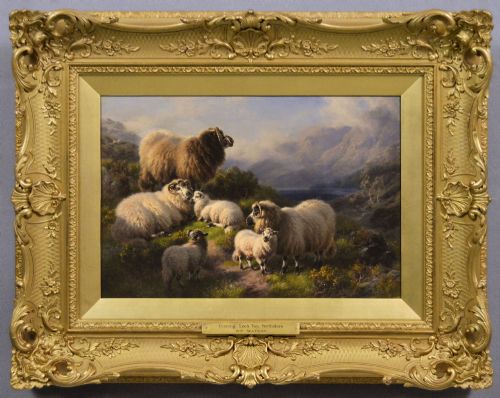
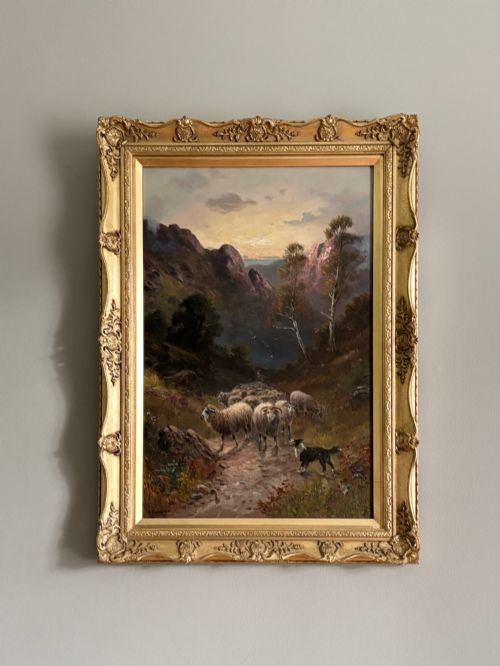
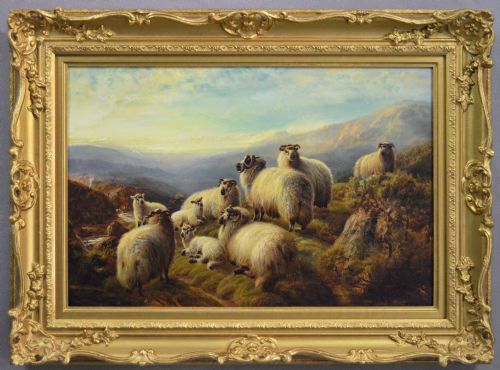
Highland sheep art presents traditional oil paintings depicting pastoral scenes, rural landscapes, and animal portraits set against Scottish backgrounds. When you search for highland sheep art, you encounter Victorian and early twentieth-century works that focus on flocks grazing in glens, near lochs, or across snowy mountain passes.
The pieces on this page span the nineteenth century and the early twentieth century, incorporating Victorian fine art, Victorian naturalism, and the Scottish School. Painters from these periods render the animals alongside shepherds, sheepdogs, or Highland cattle to create detailed narratives of rural life.
Works on this page take the form of individual oil paintings and pairs of oil paintings, executed on canvas or wood panels. Many retain their period frames of giltwood and gesso, preserving the complete presentation intended by the nineteenth-century artists.
Evaluating Quality
Quality in these oil paintings rests upon the artist's ability to render the anatomy and fleece of the sheep with naturalism while establishing a convincing spatial depth in the Scottish landscape. Works by recognised painters from the Scottish School or established nineteenth-century animal portraitists demonstrate superior brushwork and compositional balance.
The preservation of the original surface and the condition of the giltwood or gesso frame influence the overall integrity of the piece. Finer examples maintain their original canvas or wood panel supports without extensive overpaint, preserving the artist's initial touch and tonal harmony.
Materials recorded across the works include gesso, giltwood frames, and traditional oil pigments.
Tom Campbell·Robert Watson·William Watson Jnr·Douglas Cameron·William Henry Mander·Charles Jones·GW Horlor·Frederick Richard Lee·Thomas Sidney Cooper·Henry Birtles
The Highland Sheep Art Glossary
- Oil on Canvas
- A traditional painting medium where pigments suspended in oil are applied to a stretched woven fabric support. This combination provides flexibility and allows for deep, luminous colour blending.
- Wood Panel
- A rigid flat support made from timber, commonly used by nineteenth-century artists before applying oil paint. It offers a smooth, stable surface for detailed brushwork.
- Giltwood
- Wood that has been coated with a thin layer of gold leaf or gold paint. It frequently appears on nineteenth-century frames surrounding pastoral oil paintings.
- Gesso
- A plaster-like mixture applied to wooden frames as a base before gilding or painting. It allows craftsmen to carve intricate decorative moulding details.
- Scottish School
- A grouping of artists working in Scotland during the nineteenth and early twentieth centuries who focused on landscape and pastoral subjects. Their work emphasises local topography and atmospheric weather conditions.
Highland Sheep Art: Frequently Asked Questions
What periods do these paintings date from?
The listings on this page originate primarily from the nineteenth century and the early twentieth century, spanning the Victorian era up to the nineteen-twenties. These dates reflect the peak period of British pastoral painting and Scottish landscape art.
Artisans and painters of this era focused heavily on naturalistic depictions of rural life, producing works that document traditional farming practices and Highland scenery.
How should I care for an oil painting on canvas?
Keep oil paintings away from direct sunlight and stable environmental conditions with moderate humidity to protect the canvas and paint layers. Avoid using water or cleaning solutions on the painted surface.
Dust the giltwood frame gently with a soft, dry brush. Professional conservators should handle any deeper cleaning or repair of the canvas and gesso.
What subjects appear alongside sheep in these artworks?
Artists frequently place sheep within broader Scottish landscapes, including mountain passes, lochs like Loch Tay, and snowy glens. Figures such as shepherds, sheepdogs, and Highland cattle also share the canvas in many rural portraits.
These complementary elements help establish a narrative of nineteenth-century farming life and emphasise the scale of the Highland terrain.
How can I identify a Scottish School painting?
Scottish School paintings typically feature identifiable Scottish topography, such as Ben More or Highland glens, combined with atmospheric weather effects. The palette often captures the muted greens, browns, and greys of northern landscapes.
Signatures or attribution to artists active in Scotland during the nineteenth century further help identify these regional works.