






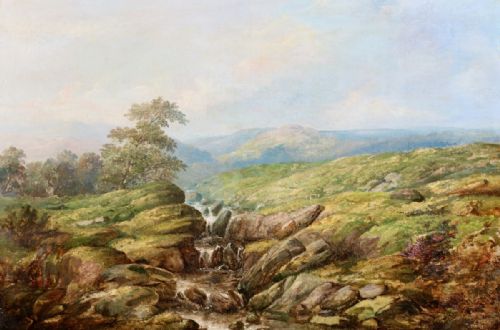


Highland River Landscape
A highland river landscape captures the vast watercourses, rugged terrain and moody atmospheric conditions of Scotland across various historical periods.
Highland River Landscape
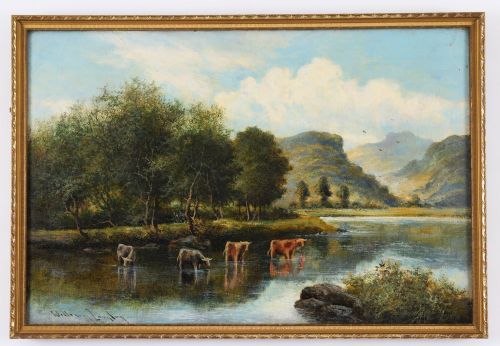
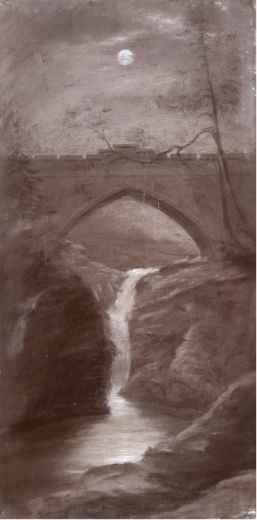
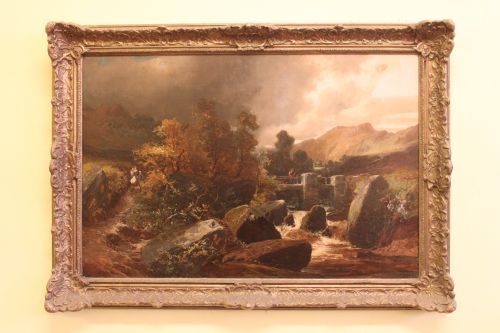
A highland river landscape depicts the dramatic scenery of Scotland, frequently featuring fast-flowing waterways, stone bridges, remote bothies, herdsmen with cattle, and mountainous backdrops. These works serve as visual records of the British countryside through the eyes of artists working in distinct regional traditions.
The pieces you encounter here span several centuries, with a strong representation of nineteenth-century Victorian output alongside Georgian watercolours and early twentieth-century canvases. Oil paintings predominate, executed on canvas, wood panel, or paper, capturing both pastoral calm and stormy highland weather.
Many of these works originate from the Scottish School or artists influenced by contemporary aesthetic movements, presenting views ranging from the Isle of Skye to Braemar. Collectors seek them out for their evocative portrayal of topography and their tangible connection to nineteenth-century landscape traditions.
How they were made
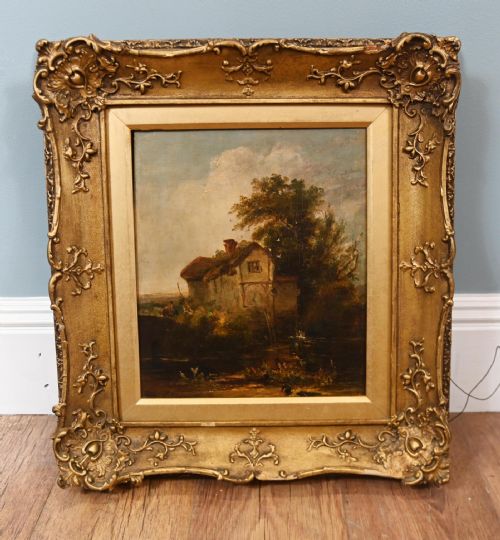
Painters applied oil paint to prepared canvas, wood panel, or paper, often building texture with thick brushwork or capturing fine detail in watercolour. Canvases were frequently housed in ornate frames finished with gesso and gold leaf to complement the composition.
The physical support dictates much of the character, with wood panels offering a stable surface for smaller plein-air studies, while larger canvases allowed artists to render sweeping mountain ranges and expansive river valleys with depth and atmospheric perspective.
Highland River Landscape Retail Price Guide 2026
Typical asking prices for highland river landscape among the pieces listed under this phrase on Sellingantiques today, from the lower quarter to the upper quarter. They describe what is for sale here now, not the wider market.
Keep an eye out for stubbornly painted Highland cattle standing knee-deep in rivers, seemingly unimpressed by the majestic mountains towering behind them.
What varies in quality
Quality rests upon the artist's command of light, atmosphere, and naturalistic proportion in rendering the Scottish terrain. Works by listed members of artistic institutions demonstrate superior brush control and compositional balance compared to anonymous studio output.
The handling of specific elements, such as moving water, distant mountain mists, and cattle, distinguishes accomplished hands. Original framing, particularly period gold leaf and gesso mouldings that match the age of the canvas, adds to the integrity of the piece.
Archibald Kay·Sidney Richard Percy·Benjamin Williams Leader·Louis Bosworth Hurt·William Langley
The Highland River Landscape Glossary
- Oil painting
- A work created using pigments bound in a drying oil medium, typically applied to canvas or wood panel. This technique allows for rich colour blending and varied surface textures.
- Gesso
- A plaster-like mixture applied to wooden frames or panels as a base for gilding or painting. It provides a smooth, prepared surface for subsequent layers of gold leaf.
- Scottish School
- A collective term for artists working in Scotland or influenced by its distinct landscape traditions during the eighteenth, nineteenth, and early twentieth centuries. It encompasses diverse individual styles sharing a common regional focus.
- Wood panel
- A rigid support used by painters instead of canvas, frequently utilised for smaller or earlier works. It offers a firm surface that preserves fine detail.
- Watercolour
- A painting method where water-soluble pigments are applied to paper. This medium produces transparent washes that capture light and atmospheric effects.
Highland River Landscape: Frequently Asked Questions
What periods do these paintings date from?
The works span from the eighteenth century through the Georgian and Victorian eras up to the early twentieth century. Most pieces belong to the nineteenth century, reflecting the height of British landscape painting.
Dating is typically confirmed through signatures, stylistic evidence, framing materials, and artist biographies where available.
What materials were used by the artists?
Artists utilised oil paint on canvas, wood panel, or paper, alongside traditional watercolour on paper. Frames were commonly constructed from wood and embellished with gesso and gold leaf.
The choice of material often corresponds to the date and intended scale of the artwork, with wood panels favouring smaller studies and large canvases reserved for sweeping vistas.
How do I identify a Scottish School painting?
Scottish School works are characterised by their specific regional subject matter, depicting recognisable locations such as Skye, Arran, and Braemar. They frequently capture local architecture, wildlife, and Highland weather patterns.
Attribution is supported by artist signatures, exhibition records, and stylistic ties to nineteenth-century British landscape traditions.
How should I display an antique oil painting?
Antique oil paintings require stable environmental conditions away from direct sunlight and excessive humidity. Maintaining consistent room temperatures protects both the canvas and the original gesso frame.
Hanging the work securely on an interior wall allows the piece to be appreciated while safeguarding the structural integrity of the wood and canvas support.