

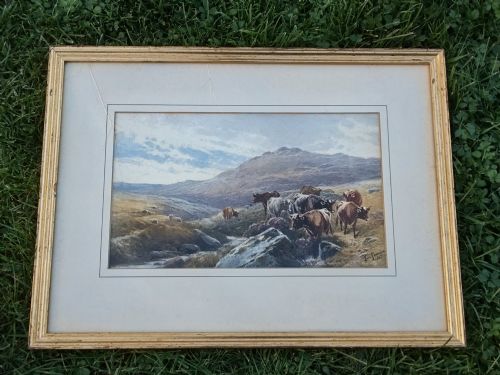
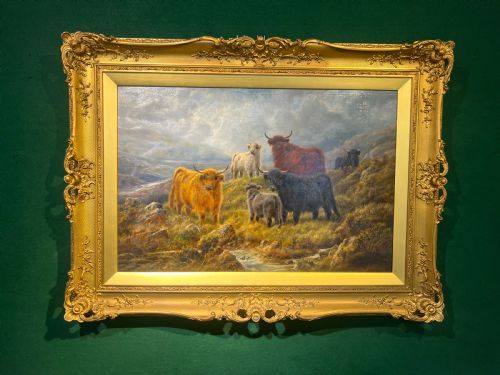


Highland Cattle Picture
A highland cattle picture brings the mist and solitude of the Scottish glens directly into your room through rich nineteenth and early twentieth century oils.
Highland Cattle Picture
When you search for a highland cattle picture, you encounter painted visions of shaggy longhorned beasts standing by quiet lochs and rushing Scottish streams. These works capture pastoral solitude during the Victorian and Edwardian eras, transporting the viewer straight to the mountainous northern landscape.
You are most likely to meet framed oil paintings on canvas depicting these hardy animals amid dramatic weather and sweeping terrain. The selection also includes hand-painted porcelain vases and wall plaques bearing similar Highland scenes.
The enduring appeal of a highland cattle picture lies in its ability to combine romanticism with naturalistic observation. Painters recorded the animals with heavy coats and gentle expressions against skies of morning mist and golden heather.
How they were made
Artists applied oil paint to stretched canvas, building up thick textures for the cattle's coats and smooth glazes for the water of the lochs. Giltwood and wood frames finished these works, providing a heavy ornamental boundary that complemented the scale of the pastoral landscape.
Pertaining to the ceramic pieces, artists worked in paint directly onto porcelain surfaces before firing, capturing identical pastoral motifs on vases and wall plaques. Glaze and glass protected these delicate painted planes while wood and gilt provided structural support for the framed works.
Highland Cattle Picture Retail Price Guide 2026
Typical asking prices for highland cattle picture among the pieces listed under this phrase on Sellingantiques today, from the lower quarter to the upper quarter. They describe what is for sale here now, not the wider market.
Listings feature oil paintings, watercolours, porcelain vases, and wall plaques from the Victorian and Edwardian periods.
What varies in quality
The distinction between ordinary and exceptional works rests upon the confidence of the brushwork in rendering the anatomy and dense hair of the cattle. Superior canvases display subtle tonal shifts in the highland sky and convincing atmospheric perspective in the distant mountains.
Framing and material preservation also separate standard examples from the finest pieces. Original giltwood frames with intact moulding and well-preserved oil paint surfaces command greater attention than compromised or heavily restored equivalents.
Robert Watson·Henry Robinson Hall·Sidney Yates Johnson·George Turner·Gustave De Brianski·Henry Birtles·Royal Worcester·Aster Richard Chilton Corbould·John W Morris
The Highland Cattle Picture Glossary
- Oil on Canvas
- Pigment mixed with drying oil applied to a woven fabric support. This was the primary medium for nineteenth century pastoral landscape painting.
- Giltwood
- Wood carved and covered with a thin layer of gold leaf. Frames executed in this technique frequently accompany Victorian and Edwardian paintings.
- Gilt
- A thin application of gold material used to decorate frames and porcelain objects. It adds a reflective border to the surrounding artwork.
- Pastoral
- A style of art concerning itself with rural life and domestic animals in natural surroundings. These scenes evoke a peaceful, idealized view of the countryside.
- Loch
- The Scottish term for a lake or sea inlet. These bodies of water form the central backdrop in many highland landscapes.
Highland Cattle Picture: Frequently Asked Questions
What periods do these paintings come from?
The available works originate primarily from the Victorian and Edwardian eras, spanning the late nineteenth and early twentieth centuries.
During this time, artists travelled extensively through Scotland to record its rugged topography and indigenous livestock.
How should I hang a large oil painting?
Large oil paintings require secure wall fixings anchored directly into structural studs or masonry. Due to the weight of the canvas and the heavy giltwood frame, professional installation ensures safety and proper balance.
Position the work away from direct sunlight and steady heat sources to protect the painted surface.
Are all these items oil paintings?
While the majority of the works consist of oil paintings on canvas, the category also includes watercolour on paper and hand-painted porcelain.
Royal Worcester vases and wall plaques represent the ceramic side of this artistic tradition.
How do I identify a Victorian pastoral scene?
Victorian pastoral scenes are characterised by naturalistic depictions of rural life, featuring soft morning mist, rolling hills, and domestic animals.
Artists of this period focused heavily on atmospheric weather and tranquil Scottish bodies of water.