
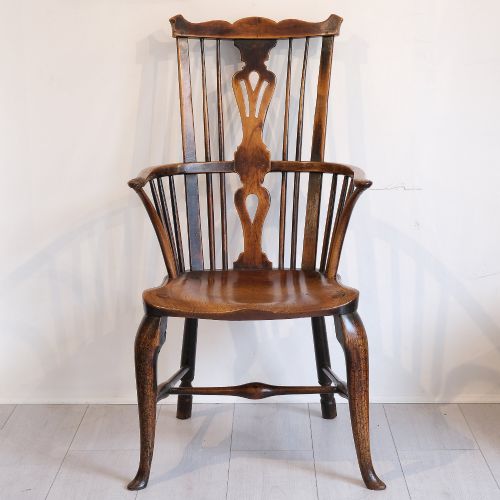
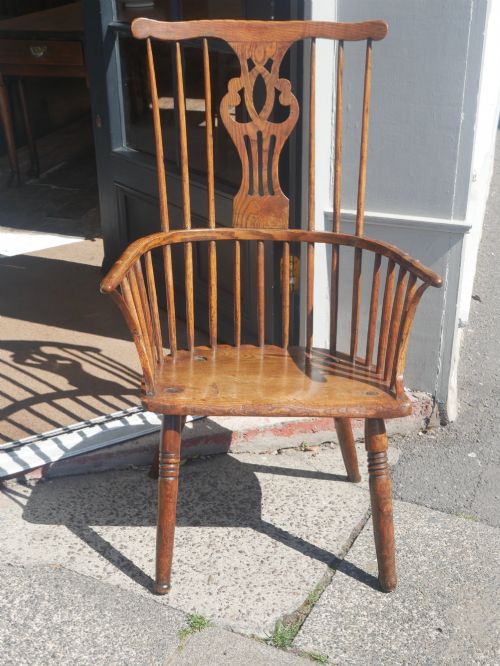
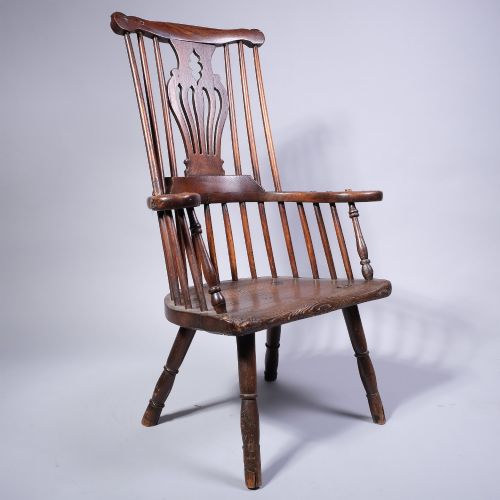
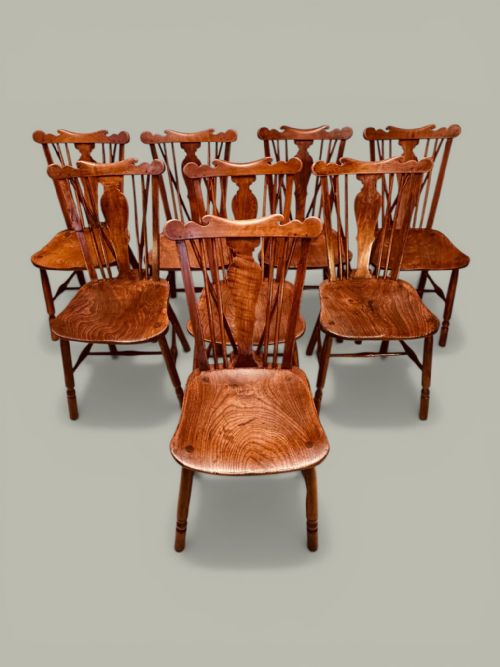


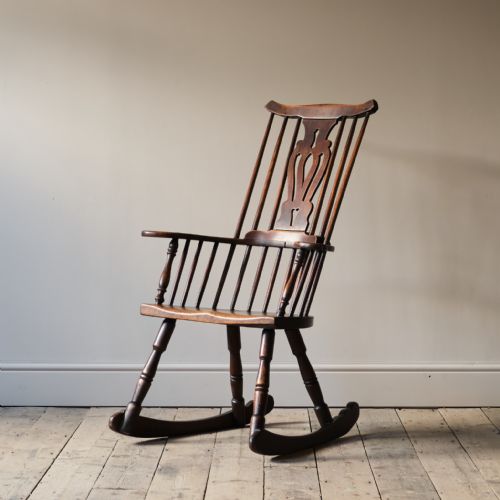


High Comb Back Chair
A high comb back chair is a country Windsor of substance, offering upright timber support and regional character for everyday sitting.
High Comb Back Chair
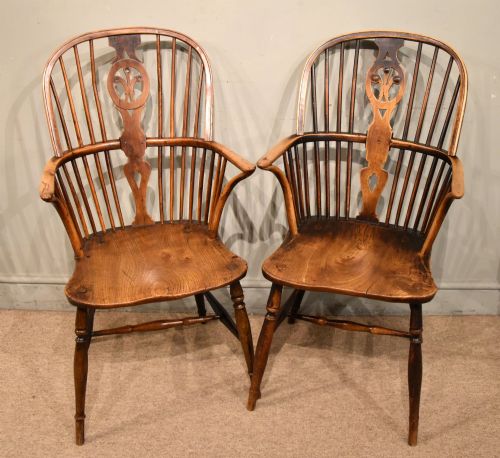
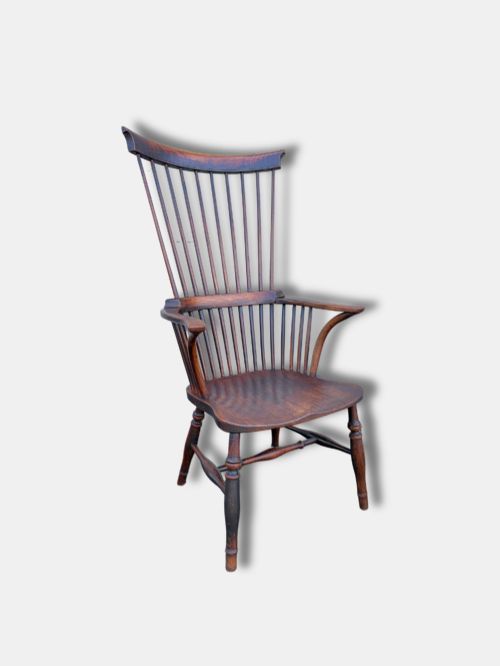
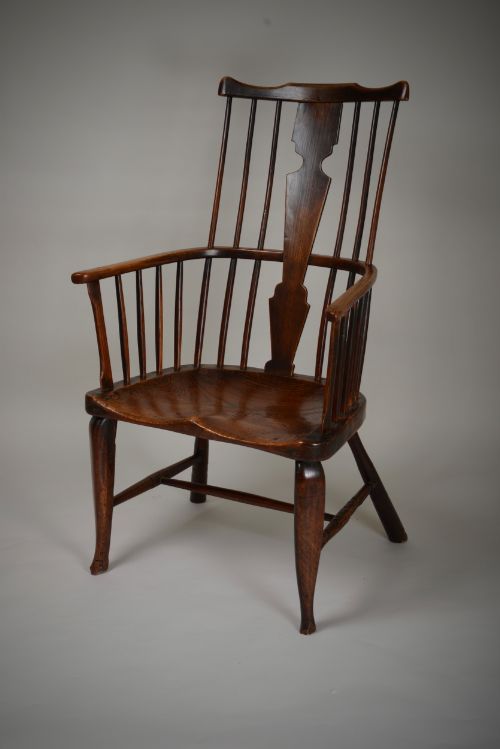
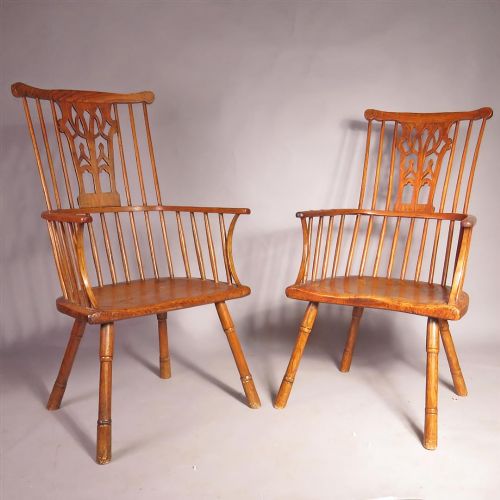
When you search for a high comb back chair, you encounter a distinct form of Windsor seating defined by an extended upright back topped with a horizontal comb piece. The pieces seen here span the eighteenth and nineteenth centuries, taking the shape of armchairs, side chairs, and rocking chairs rooted in English, Welsh, and Scottish vernacular traditions.
The regional diversity is broad, taking in Georgian country pieces alongside Victorian country interpretations and primitive country designs. Makers utilised local timber stocks, meaning the wood species often points directly to the district where the chair was shaped.
How They Were Made
Construction relies on a combination of turned spindles and solid wooden seats carved into a saddle shape for comfort. Elm serves as the traditional choice for the thick carved seat because its interlocking grain resists splitting under the stress of the legs and back.
The spindles and back bow are steam-bent or turned from hardwoods such as ash, beech, cherrywood, or fruitwood, then wedged firmly into drilled holes through the seat. Yew and yew wood also appear in certain regional bodies, valued for rich figuring and strength.
Makers shaped the vertical comb piece at the top of the back to receive the upper ends of the spindles, securing the entire framework rigidly together without the use of metal fasteners.
Listings feature elm, ash, yew, oak, fruitwood, cherrywood, and beech across Georgian, Victorian, and eighteenth-century periods.
What Varies in Quality
Quality depends upon the harmony of the timber selection and the grace of the turning in the legs and spindles. A superior example displays balanced proportions where the thickness of the comb matches the weight of the arm bow and the carriage of the legs.
The shaping of the elm seat influences value, particularly where deep saddle-carving reveals the skill of the regional carpenter. The retention of original surface patination across mixed woods such as ash and elm dictates the visual depth of the piece.
R. Tyzack·William Birch
The High Comb Back Chair Glossary
- Comb back
- A Windsor chair variation where the vertical spindles extend upward to a horizontal top rail resembling the teeth of a comb. This upper rail often has scrolled or shaped ears at the outer ends.
- Windsor chair
- A form of seating constructed with a solid wooden seat into which the legs and back spindles are directly inserted. Regional variations include high backs, hoop backs, and low backs.
- Thames Valley
- A geographical style designation associated with eighteenth-century vernacular chairs from southern England, frequently noted for refined turning and choice timbers like cherrywood or yew.
- Vernacular
- Objects made by regional craftsmen following local traditions rather than strict academic design patterns. These pieces utilise readily available native timbers.
- Saddle seat
- A wooden seat base carved into a concave contour to fit the human body. This shaping provides comfort in heavy country chairs without upholstery.
High Comb Back Chair: Frequently Asked Questions
What is a high comb back chair?
A high comb back chair is a traditional wooden Windsor seating form featuring a tall back of vertical spindles capped by a horizontal wooden comb. These pieces were built by regional joiners using mixed native timbers.
They served as sturdy household seating in farmhouses and rural cottages, combining carved wooden seats with steam-bent framework.
How do I date an old Windsor chair?
Dating relies on observing the wood species, tool marks, construction methods, and the style of the turning on the legs and arm supports. Eighteenth-century examples often display simpler, heavier turnings and distinct regional wood choices like fruitwood or cherrywood.
Nineteenth-century pieces tend to show standardised lathe work and broader availability of ash and elm combinations. Archival evidence also helps compare specific regional traits against dated examples.
How were different woods used together?
Makers selected specific woods for different parts of the chair based on their structural properties. Elm was chosen for the solid seat because its twisted grain prevents splitting when legs and spindles are wedged into it.
Ash, beech, or fruitwood were utilised for the spindles, legs, and bent bows because they take lathe turning cleanly and hold steam-bends securely.
Where were these chairs made?
These chairs were produced across various rural and regional centres in Britain, with distinct traditions appearing in England, Wales, and Scotland. Certain areas like the Thames Valley became known for refined construction and specific timber choices.
Local workshops relied on nearby forests for supplies, creating regional differences that distinguish a Welsh elm chair from a Scottish vernacular piece.
Can I use a comb back chair daily?
Comb back chairs are structurally robust and designed for active daily use, given their solid elm seats and rigid spindle construction. Placing them away from direct heat sources helps preserve the stability of the seasoned timbers.
Regular care involves dusting and allowing the natural timber oils to maintain the surface condition over time.