




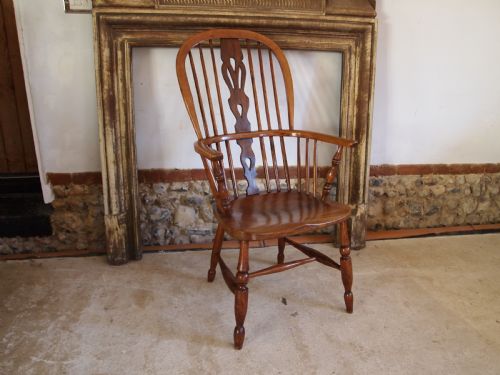
Vintage Ash Armchair
A vintage ash armchair brings enduring rustic character into a modern interior through honest vernacular design.
Vintage Ash Armchair
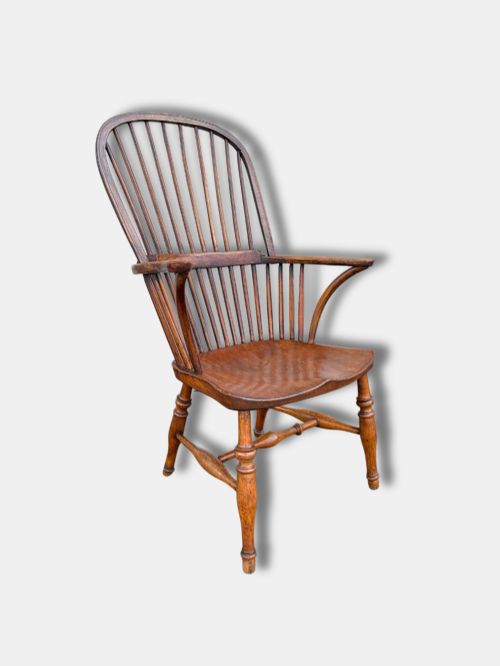
When you search for a vintage ash armchair, you enter a world of traditional British seating shaped by regional joiners and country makers. The pieces collected here span the Georgian, Regency, and Victorian periods, alongside later interwar examples.
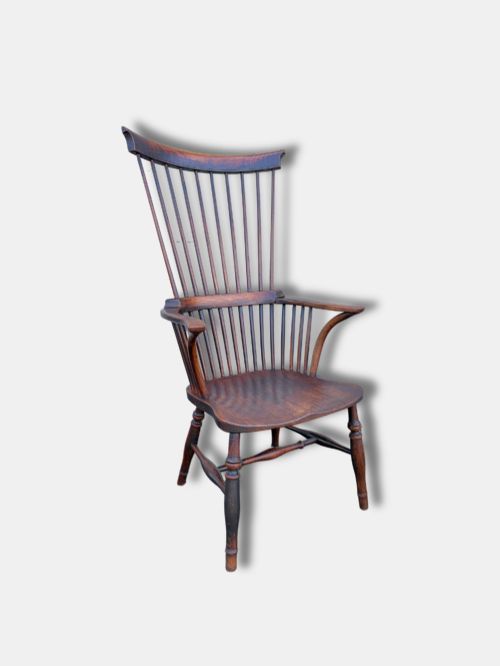
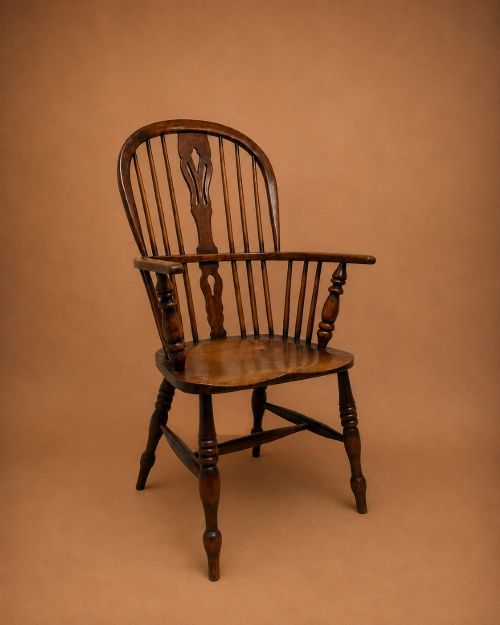
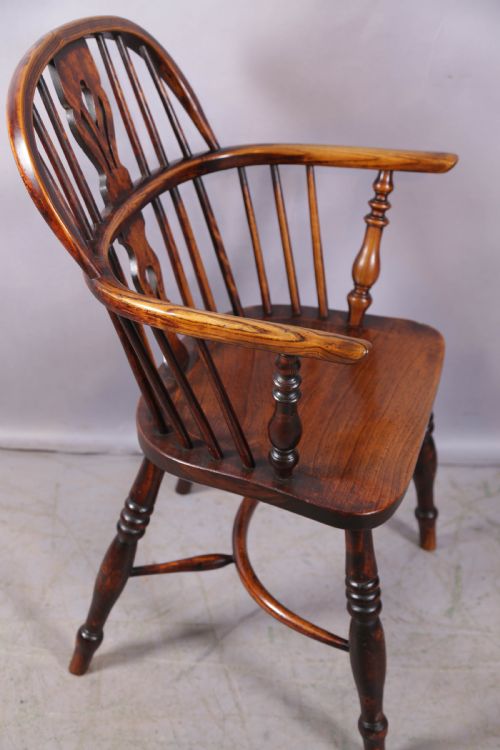
You are most likely to encounter Windsor forms, ranging from low back and high comb back designs to smokers' bows and captains' chairs. These vernacular seats served demanding roles in farmhouses, cottages, and libraries.
The selection also includes smaller children's chairs and potty chairs, demonstrating that sturdy seating was scaled for every member of the household. Each object reflects the practical needs of nineteenth-century domestic and rural life.
How they were made
Maker's choice of timber defines these chairs, relying heavily on a combination of ash for strong bent frames and spindles, paired with elm for deeply saddled solid seats. Beech, yew, and oak also appear across regional workshops for turned legs and arms.
Construction relies on traditional Windsor techniques where spindles and legs are tenoned directly into thick wooden seats without metal fasteners. Steam bending shaped the high comb backs, stick backs, and continuous bow arms characteristic of the form.
Several diminutive children's chairs and potty chairs survive to prove that toddlers once sat just as stoutly as squires.
What varies in quality
Quality rests in the sculptural sweep of the comb back, the depth of the adzed elm seat, and the crispness of the turned spindle work. Superior examples show careful balance between the sturdy undercarriage and the slender upper framing.
The distinction between ordinary utility seating and finer workshop production lies in the harmony of timber selection, such as striking grain figures in the seat planking and contrasting rich yew or ash components.
Fred Walker Rockley·Fred Walker·Darvil
The Vintage Ash Armchair Glossary
- Windsor chair
- A wooden chair constructed with a thick solid timber seat into which the legs and back spindles are separately bored and wedged.
- Smoker's bow
- A low-backed Windsor elbow chair, often used in public houses or smoking rooms, featuring a rounded continuous arm rail.
- Comb back
- A Windsor chair style where the vertical back spindles extend upward into a horizontal headpiece resembling a hair comb.
- Sticking back
- A vernacular seating format utilising numerous slender turned wooden spindles to form an open, supportive backrest.
- Carver chair
- A traditional term for an armchair, frequently used alongside dining or Windsor chairs in country settings.
Vintage Ash Armchair: Frequently Asked Questions
How do I date an ash armchair?
Dating relies on observing construction traits, timber preparation methods, and stylistic shifts between Georgian country forms and later Victorian output. Tool marks and the wear patterns on the elm seat offer further clues to age.
Makers frequently utilised regional turning patterns that evolved across the nineteenth century, moving from heavier Georgian proportions to more slender Victorian stick backs.
Were these chairs used outdoors?
These pieces were principally designed for interior domestic duties in kitchens, farmhouses, and writing rooms. Their sturdy ash and elm construction meant they stood up well to heavy daily household use.
While robust, exposure to damp weather damages the timber and loosens the wedged joints that hold the chair together.
How do I care for a vintage ash chair?
Keep the timber away from direct heat sources and sudden temperature shifts to prevent the dry ash spindles from shrinking or cracking. Occasional applications of appropriate wax help nourish the historic surface.
Avoid placing the chair in damp environments, as moisture causes the traditional unglued joints to swell and weaken.
What is a Thames Valley Windsor?
A Thames Valley Windsor refers to regional chair-making traditions associated with specific counties along the river, known for refined timbers and distinct turning. These pieces often incorporate yew alongside ash and elm.
Makers in these areas produced particularly graceful comb backs and distinctive central splats that mark them out from standard provincial farmhouse seating.