
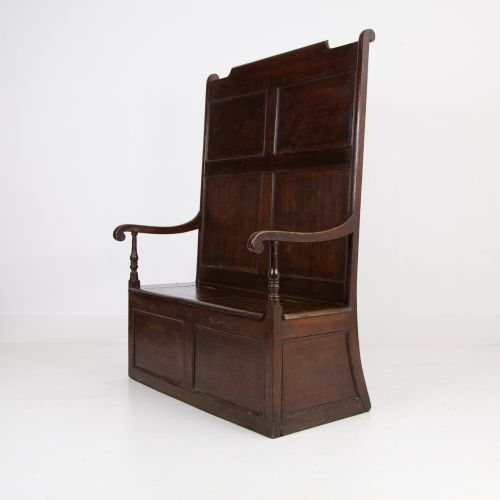
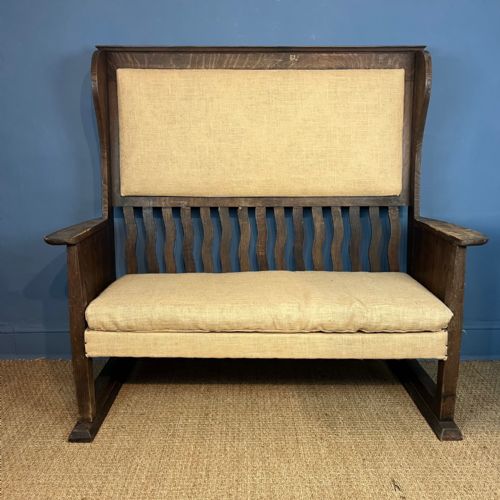


High Back Entry Bench
A high back entry bench provides a practical hall seat while blocking cold draughts with timber panelling.
High Back Entry Bench
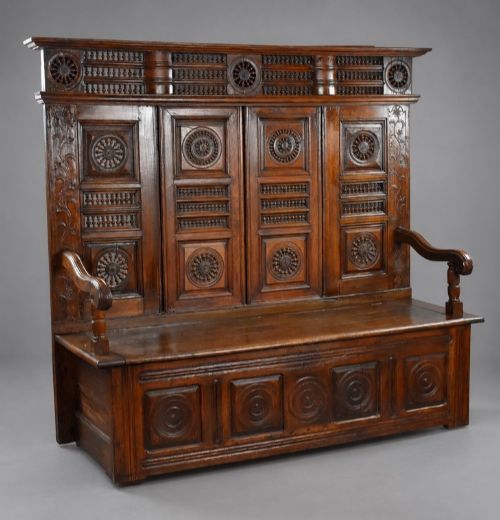
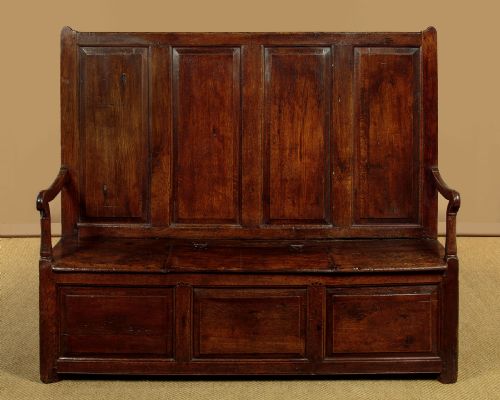
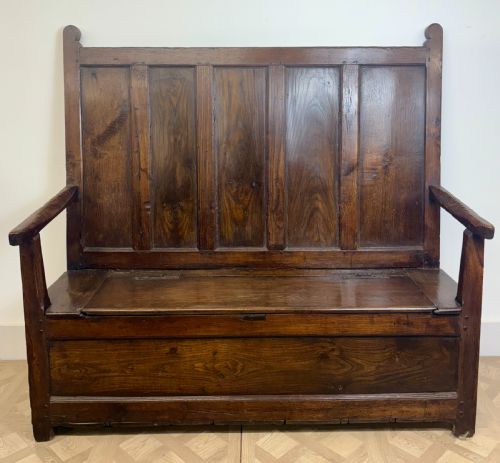
A high back entry bench forms a substantial hall seat, often catalogued as a settle, box settle, hall bench, or tavern bench. When buyers search for a high back entry bench, they encounter pieces originating from the eighteenth century, nineteenth century, and around nineteen hundred, spanning periods like the Georgian and Victorian eras.
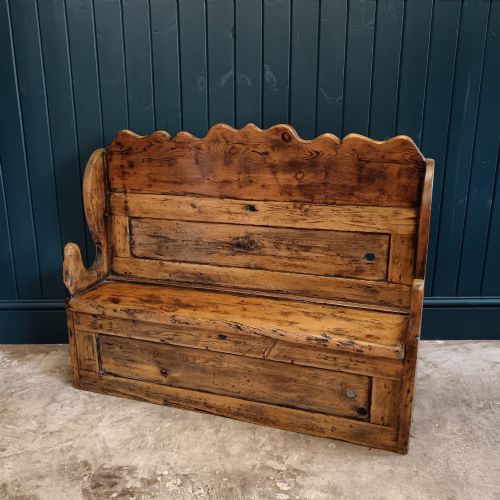
The most common examples on this page are constructed from oak, pine, elm, and ash, manifesting in styles such as Welsh Vernacular, Rustic Country, Jacobean Revival, and Arts and Crafts. These furnishings served primarily in halls and taverns to seat occupants securely while offering storage within box bases or shelter behind tall wooden backs.
Materials and construction
Construction relies heavily on solid hardwoods like oak, walnut, elm, and ash alongside softer timbers such as pine, frequently joined using traditional panelled techniques. Carved ornamentation appears on specific examples, particularly those influenced by Renaissance Revival or Flemish traditions, whilst other surfaces retain original painted finishes.
Makers utilised iron hardware alongside timber framing to construct box seats and high panelled backs designed to withstand heavy daily use in hallways and taverns. Fabric upholstery occasionally cushions the seats of later Victorian and walnut variations.
Some tall wooden versions double as bacon settlers, built with internal rails specifically designed for curing pork near the ceiling.
Assessing quality
Quality rests upon the selection of timber, the crispness of hand carving where present, and the integrity of the panelled construction. Superior examples display mature patination on woods such as oak, walnut, and elm, with tight joinery forming the box base and high back.
Simpler tavern benches and pine country pieces rely on utilitarian construction rather than decorative carving, where the charm derives from surface wear and original painted finishes rather than intricate joinery.
The High Back Entry Bench Glossary
- Settle
- A wooden bench with a high back and arms, often featuring a box compartment beneath the seat for storage. This form evolved to keep seated occupants warm by blocking cold draughts in domestic halls and taverns.
- Box settle
- A specific form of settle incorporating a hinged seat lid that opens to reveal a storage box underneath. These pieces served dual purposes as seating and chests in eighteenth and nineteenth-century interiors.
- Bacon settle
- A specialised high back settle featuring ceiling-suspended rails or hooks beneath the top cornice for curing meat. This agricultural vernacular form originates from rural farmhouses.
- Tavern bench
- A long wooden bench designed for public houses, typically constructed from pine, oak, or elm with simpler lines than domestic hall settles. These benches prioritised sturdy communal seating over decorative carving.
- Vernacular
- Regional furniture built by local craftsmen using available native woods like elm, ash, and pine rather than following strict metropolitan stylistic rules. Welsh and rustic country pieces demonstrate this practical tradition.
High Back Entry Bench: Frequently Asked Questions
What is a high back entry bench?
A high back entry bench is a traditional wooden seating form, frequently termed a settle or hall bench, designed to accommodate multiple people in a hallway or entrance space.
The tall timber back serves the practical purpose of deflecting cold draughts near doors, while many variations include a built-in box beneath the seat for storing boots and household items.
How were these benches used historically?
Historically, these benches stood in domestic entrance halls, farmhouses, and public taverns to provide sturdy communal seating.
The enclosed high backs and solid sides sheltered occupants from unheated corridors, and the integrated box storage kept blankets, cloaks, or daily supplies close to the door.
How do I distinguish eighteenth century pieces?
Eighteenth-century pieces typically exhibit heavier panelled oak construction, hand-cut joinery marks, and patinated surfaces developed over centuries of use.
Earlier examples often incorporate vernacular styling from regions like Wales, featuring pegged joints and simpler board construction rather than the revival carved details seen on later Victorian items.
Where should I place an entry bench?
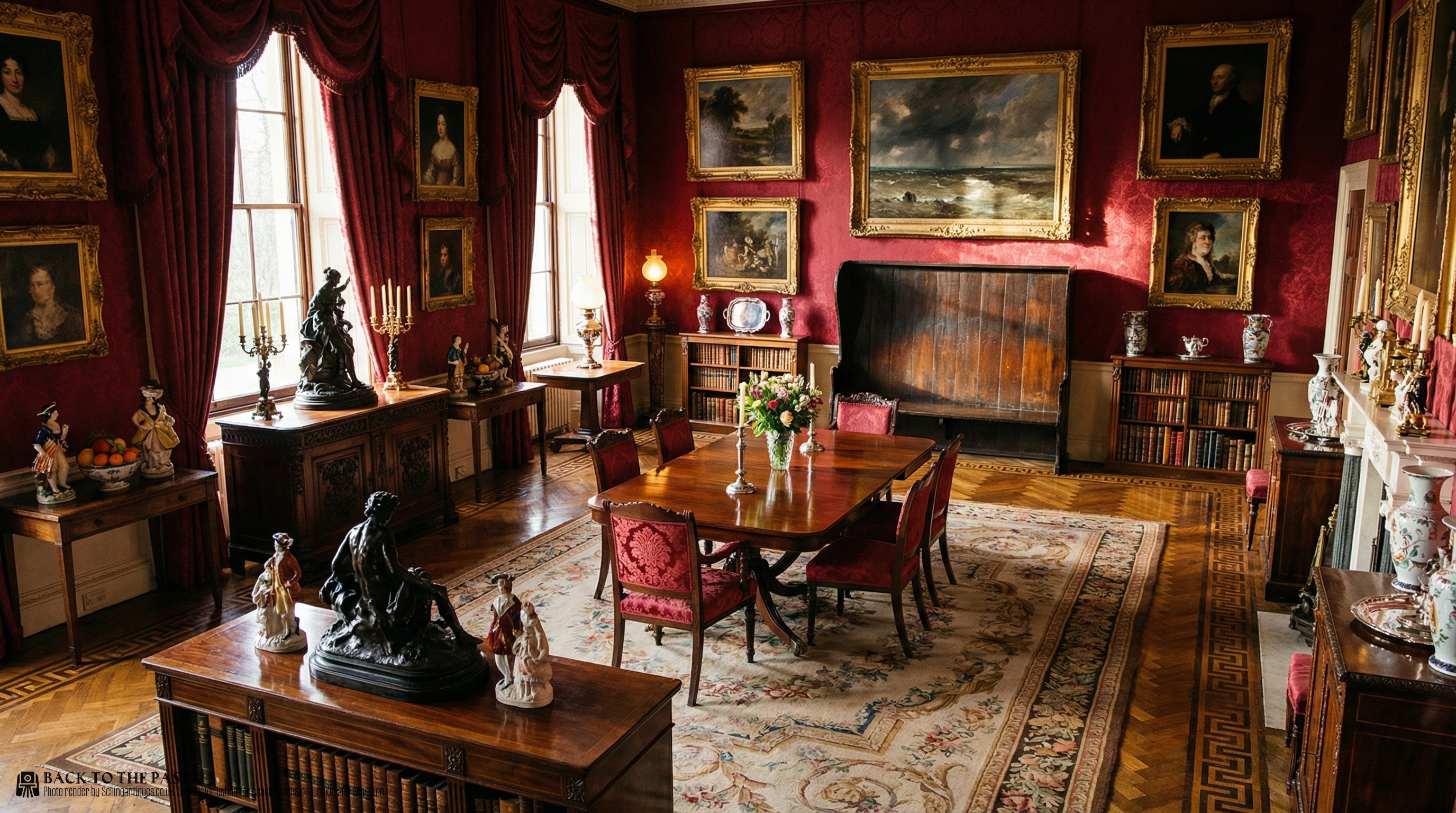
An entry bench fits well against a flat wall in a spacious hallway, mudroom, or large kitchen where the tall wooden back can anchor the room visually.
Ensure the floor space accommodates the depth of the box seat and verify that clearance allows any hinged storage lid to open fully.