


Hidden Blade Cane Stick
A hidden blade cane stick combines a support for walking with a concealed steel weapon, offering a discreet way to carry protection during the nineteenth and early twentieth centuries.
Hidden Blade Cane Stick
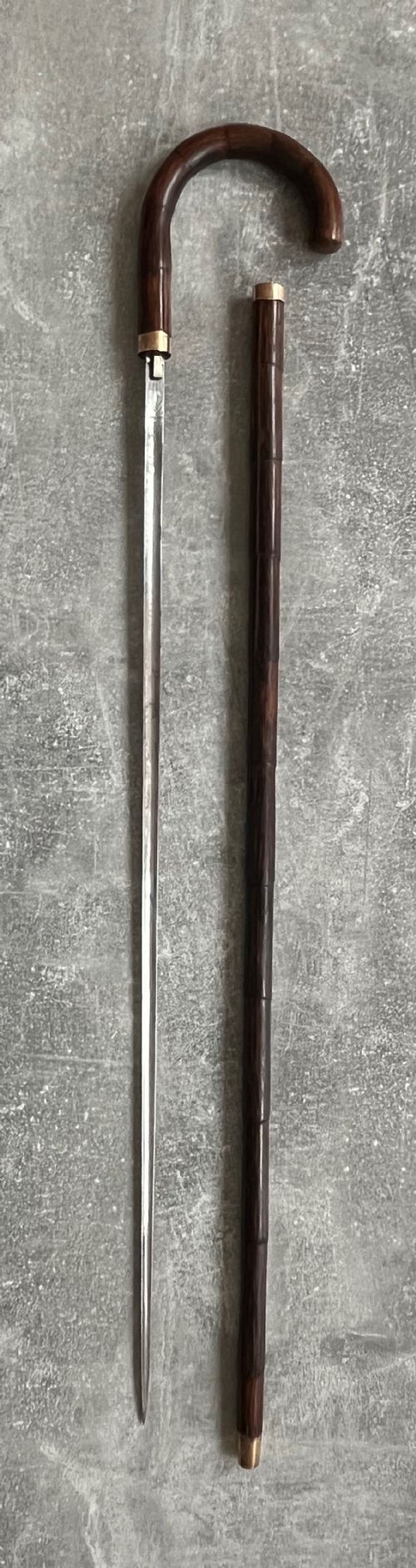
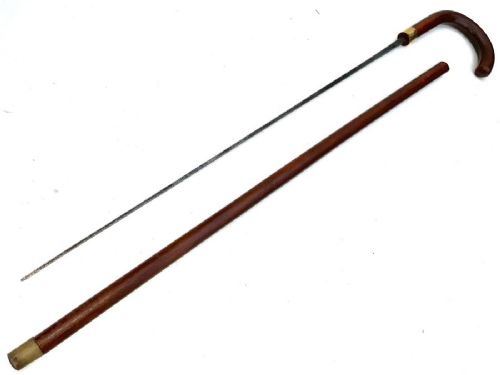
A hidden blade cane stick serves as both a traditional walking support and a protective instrument, housing a concealed metal blade within its shaft. These pieces appear frequently from the nineteenth century, including the Victorian and Edwardian eras, as well as specific 19th Century French examples.
The objects take several forms, ranging from military officers walking sticks and swagger sticks to civilian gentleman walking sticks. Handles vary considerably, featuring crook designs, silver horses head ornaments, bone pistol grips, and antler configurations.
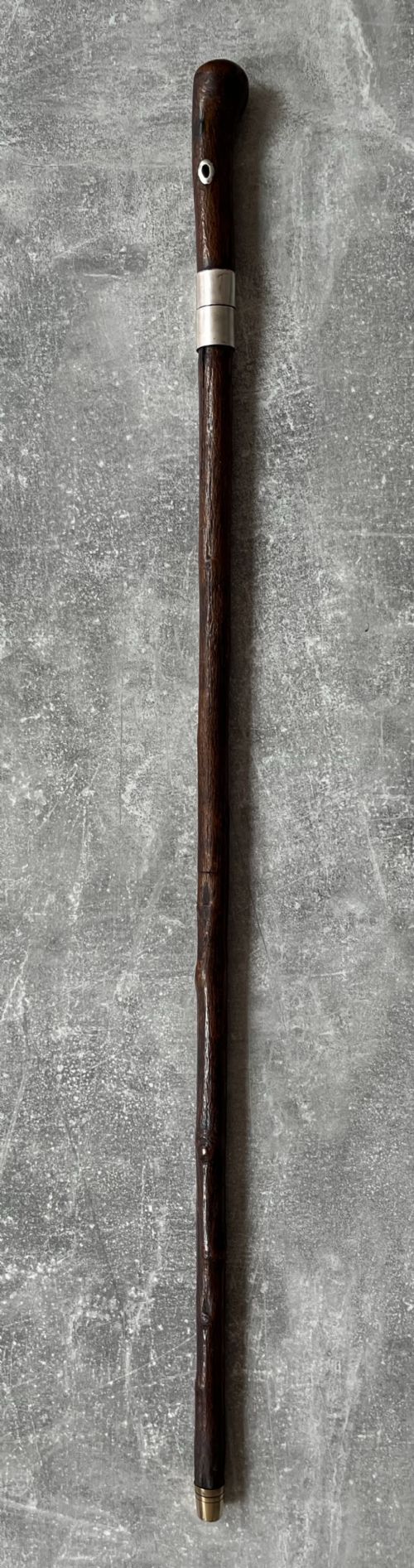
Materials for the outer shaft often replicate natural growth or use select timber, including bamboo, faux bamboo, hazel wood, malacca, and hardwood with snakeskin coverings. A button release mechanism typically secures the internal weapon until required.
How they were made
Makers constructed the exterior shafts from natural timbers and grasses such as bamboo, malacca, and hazel wood, sometimes shaping them into faux bamboo or covering the haft in snakeskin. Handles incorporated carved bone, cast silver, brass, or antler, fitted securely to the main shaft.
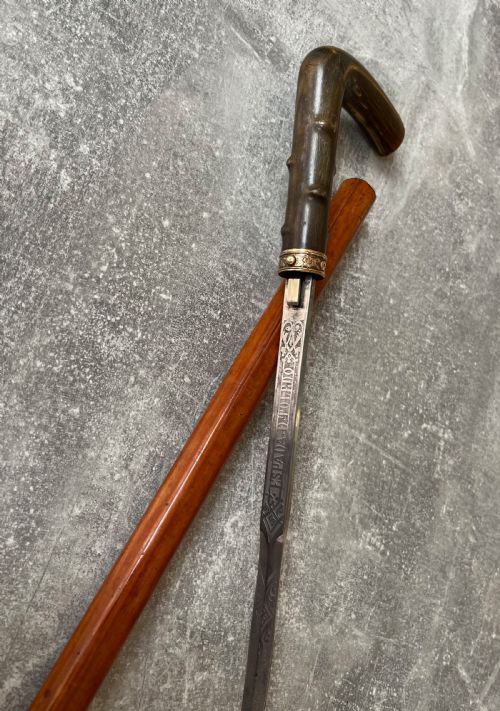
The internal components rely on steel for the blades, often featuring etched Toledo steel originating from Spain. Metal mechanisms, including button release catches, secure the hidden blade safely inside the wooden or bamboo housing until deployed.
Listings feature pieces spanning the late nineteenth century and the Edwardian era, incorporating materials like bamboo, steel, brass, bone, and snakeskin.
What varies in quality
The distinction between standard walking aids and superior pieces rests largely on the refinement of the materials and the pedigree of the blade. Etched Toledo steel blades and detailed handle sculptures, such as silver horses heads or carved bone pistol grips, elevate a piece above basic utility items.
Construction precision also dictates grade, visible in how seamlessly the wooden or bamboo sheath conceals the join and how reliably the button release mechanism operates. Fine French or military officer examples often demonstrate superior craftsmanship in both the exterior covering and the internal steel fitting.
The Hidden Blade Cane Stick Glossary
- Toledo Blade
- A steel blade originating from the historic Spanish centre of sword-making, prized for its flexibility and temper. These blades are frequently etched with decorative patterns.
- Swagger Stick
- A short, light stick carried by military officers as a symbol of authority rather than for physical support. In this category, they occasionally conceal a narrow blade.
- Malacca
- A sturdy, mottled rattan cane imported from Southeast Asia, favoured for walking sticks due to its strength and distinct joints. It forms the rigid outer housing for many concealed blades.
- Crook Handle
- A curved top shaped like a shepherd's crook, designed for hooking over the arm or hand. This ergonomic handle style appears frequently on nineteenth-century walking canes.
- Pistol Grip
- A handle shaped to resemble the grip of a handheld firearm, offering a contoured hold for the hand. Bone versions provide a solid, tactile terminal for the walking stick.
Hidden Blade Cane Stick: Frequently Asked Questions
Who carried these walking sticks?
Military officers, gentlemen, and travellers during the nineteenth and early twentieth centuries frequently carried these items for personal security. They provided a socially acceptable method of self-defence during urban walks or rural journeys.
Civilian examples range from standard bamboo sticks to refined gentleman accessories featuring decorated handles and specialised steel blades.
How do you release the hidden blade?
Most concealed blade sticks use a mechanical button release set near the top of the shaft. Pressing this button disengages the internal latch, allowing the blade and handle to slide out smoothly from the outer casing.
When closed, the join between the handle and the shaft remains largely invisible, maintaining the appearance of a standard walking cane.
What materials were used for the shafts?
Shafts were constructed from natural materials such as bamboo, faux bamboo, hazel wood, malacca, and hardwood. Some specialised pieces feature hafts covered entirely in snakeskin for distinct texture and appearance.
Handles utilised contrasting materials including carved bone, cast silver, brass, and antler, paired with steel interior components.
How do you date a sword cane?
Dating relies on stylistic clues, materials, and manufacturing signatures typical of periods like the Victorian era, Edwardian period, or late nineteenth century. Details such as etched Toledo blades and specific military associations help narrow the timeframe.
Handles shaped as horses heads or pistol grips also reflect the popular decorative aesthetics of specific decades around nineteen hundred.