



Hessian Deconstructed Armchair
A hessian deconstructed armchair strips away outer upholstery to expose the timber frame, webbing and stitching beneath, offering raw texture and historic craftsmanship.
Hessian Deconstructed Armchair
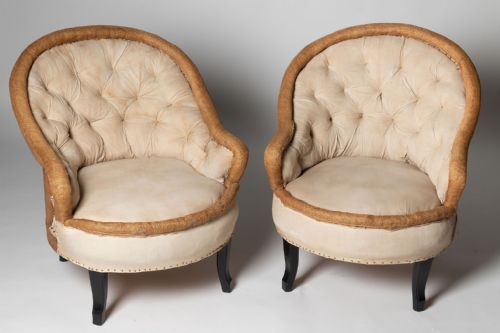
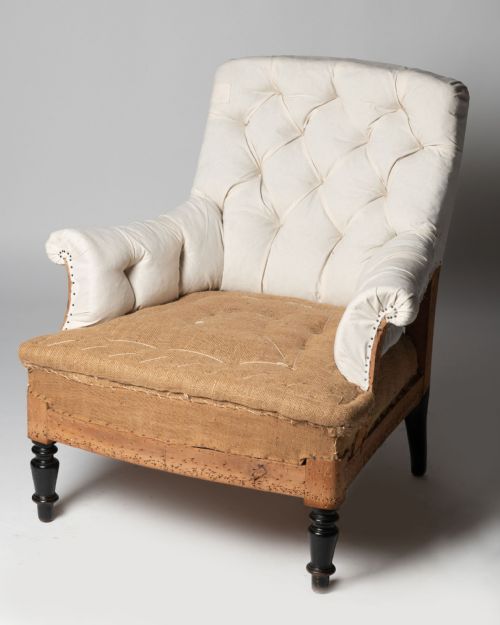
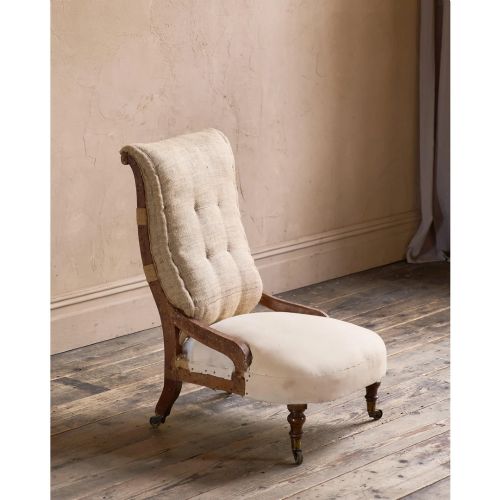
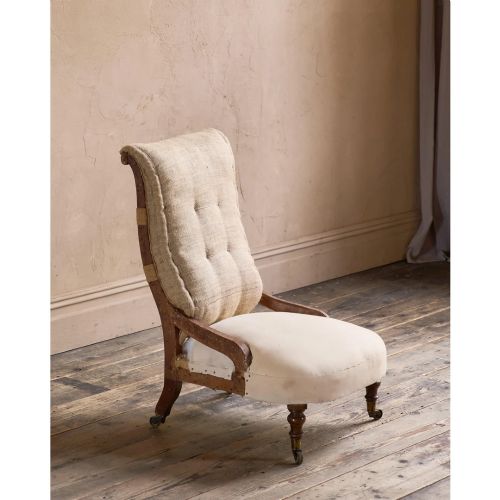
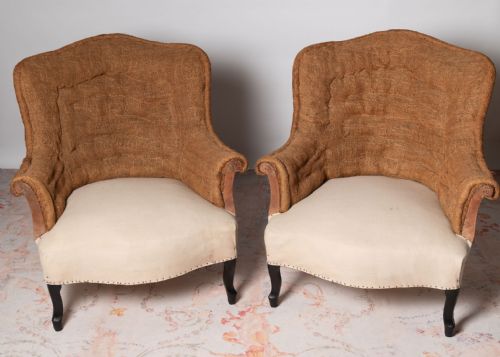
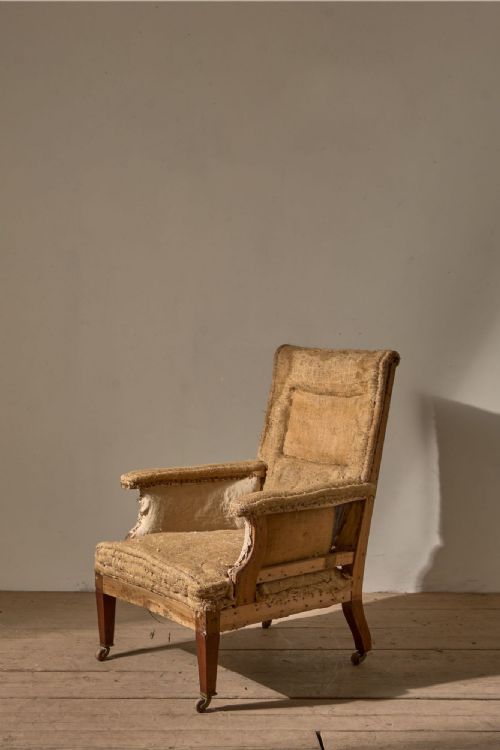
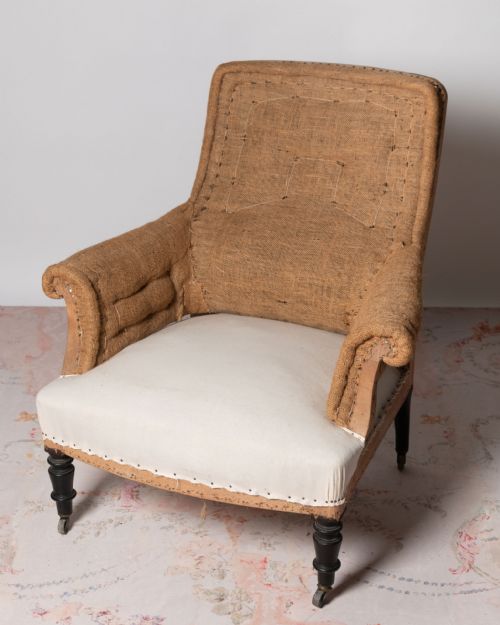
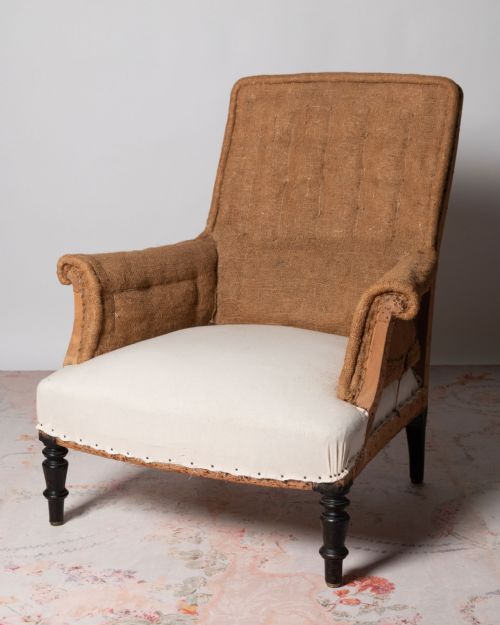
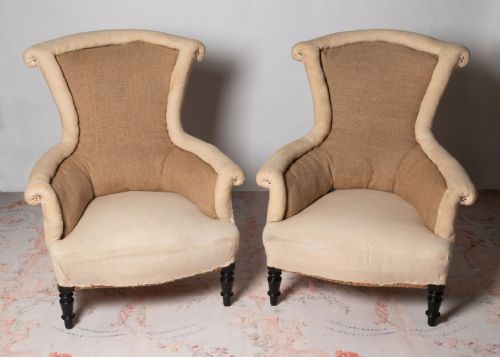
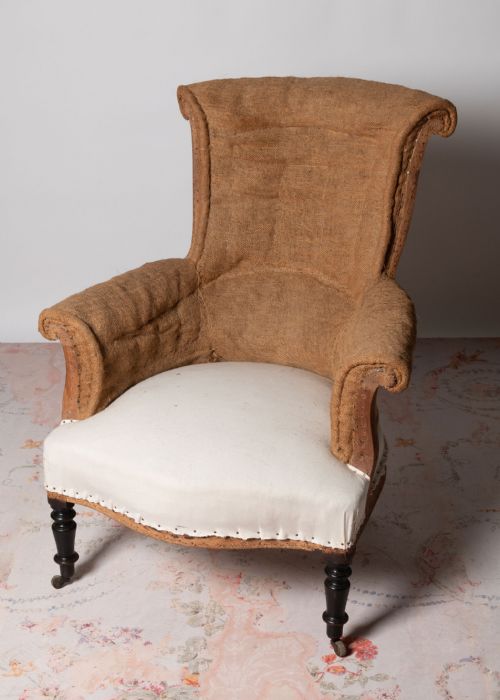
A hessian deconstructed armchair reveals the internal anatomy of traditional seat furniture, from the exposed stuffing to the bare canvas covers. These pieces expose the foundational layers that are normally hidden beneath decorative fabrics, displaying the raw construction methods of earlier decades.
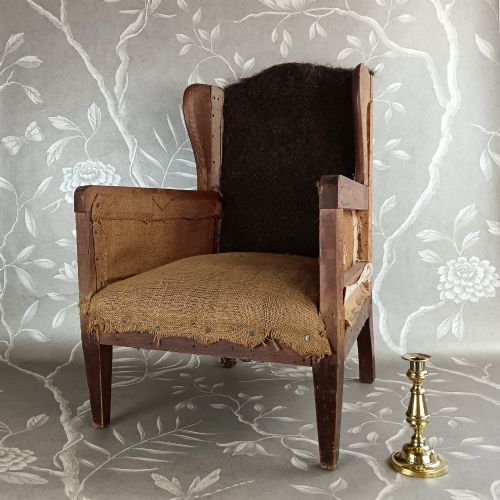
You will most frequently encounter 19th Century and Edwardian examples on this page, alongside specific French provincial and Napoleon III stylistic influences. Forms range from children's wingback chairs to large open arm library chairs and salon pairs.
The dominant aesthetic celebrates the unvarnished structure of the seat, showing the marks of past upholstery work and the natural grain of the timber frame. Buyers choose these chairs for their stark architectural lines and the honest display of historic materials.
How they were made
Makers constructed the structural frames from solid timbers such as walnut and mahogany, shaping the arms and legs according to Victorian, Edwardian or Louis XVI design traditions. These wooden skeletons provide the robust geometry that remains visible in a deconstructed finish.
Internal upholstery relies on sturdy layers of hessian and calico secured with brass tacks, holding the traditional stuffing in place without outer decorative cloth. Linen often reinforces the tension across the back and seat foundations, leaving the bare weave exposed to view.
Hessian Deconstructed Armchair Retail Price Guide 2026
Typical asking prices for hessian deconstructed armchair among the pieces listed under this phrase on Sellingantiques today, from the lower quarter to the upper quarter. They describe what is for sale here now, not the wider market.
Every deconstructed armchair wears its hidden upholstery stitches like a secret biography written in jute and brass.
What varies in quality
Quality rests primarily in the integrity of the wooden frame and the precision of the original joinery, which dictates whether a chair stands firmly without modern reinforcement. Finer pieces demonstrate skilful carving on walnut or mahogany arm supports and well-proportioned curves.
The character of the exposed hessian and calico also defines the standard, with tightly woven original fabrics and neat rows of brass tacks holding greater aesthetic appeal. Pieces attributed to notable makers display superior balance and more refined silhouettes than standard workshop output.
Howard and Sons·Sopwith
The Hessian Deconstructed Armchair Glossary
- Hessian
- A coarse woven fabric typically made from jute fibres, used here as the primary foundation material that covers the internal stuffing of the armchair.
- Calico
- A plain-woven cotton textile employed beneath or alongside the outer coverings to maintain the shape and tension of the internal padding.
- Wingback
- An armchair featuring side panels or wings designed to shield the sitter from draughts, originating in earlier centuries and persisting into the Edwardian era.
- Napoleon III
- A French design period spanning the mid to late nineteenth century, characterised by eclectic revivals of earlier court styles adapted for comfortable domestic seating.
Hessian Deconstructed Armchair: Frequently Asked Questions
What is a deconstructed armchair?
A deconstructed armchair is a piece of antique seating where the outer decorative upholstery has been removed to expose the hessian canvas, calico lining, webbing and timber frame. This treatment highlights the raw materials and structural bones of the furniture.
Buyers choose these chairs for their minimalist aesthetic and the clear visibility of historic craftsmanship that is usually concealed beneath patterned fabrics.
How do I identify a 19th century armchair?
Nineteenth century armchairs are identified by the timber species used in the frame, such as walnut and mahogany, and the specific hand-joinery techniques visible in the exposed construction. Stylistic cues often point to Victorian or French Napoleon III design vocabulary.
Examining the type of brass tacks, the weave of the internal hessian and the overall silhouette helps confirm the period of manufacture.
Are these chairs comfortable to use?
Despite the exposed hessian and lack of plush outer velvet or damask, many deconstructed chairs retain their original sprung or stuffed padding beneath the canvas layer. They offer firm, supportive seating suited for reading or occasional use in a study or living room.
The level of comfort depends on the thickness of the retained internal stuffing and the ergonomic shape of the wooden frame.
How do I care for exposed hessian?
Exposed hessian requires gentle maintenance, primarily light surface dusting with a soft brush or low-suction vacuum to remove particulate matter from the coarse jute weave. Avoiding direct, harsh sunlight prevents the natural fibres from becoming brittle and fading.
Spills should be blotted immediately rather than rubbed, as moisture can alter the tension of the fabric stretched across the frame.