


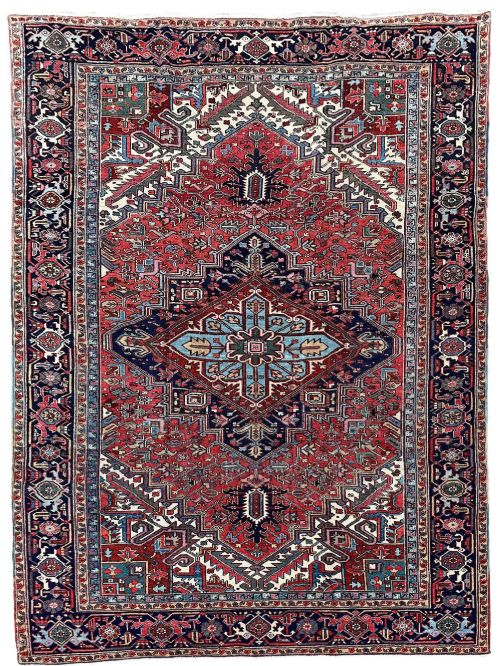


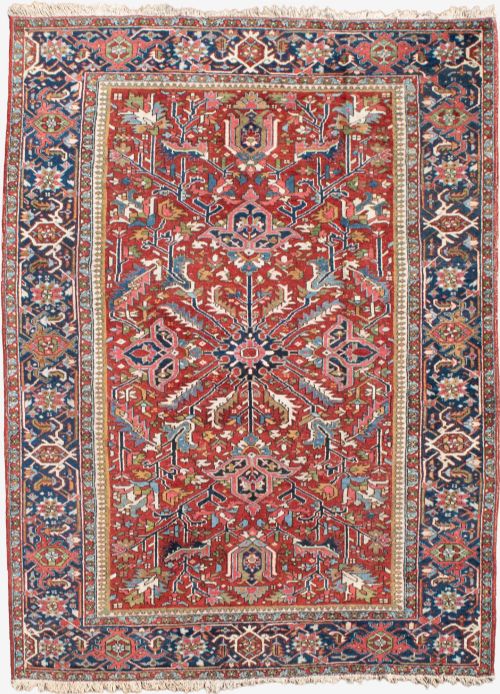
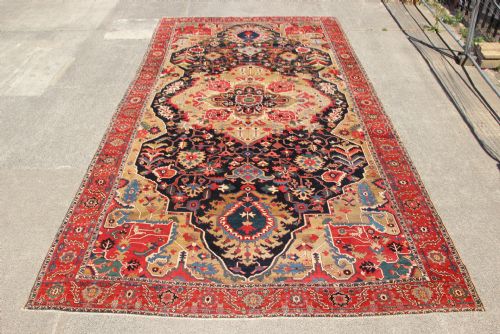

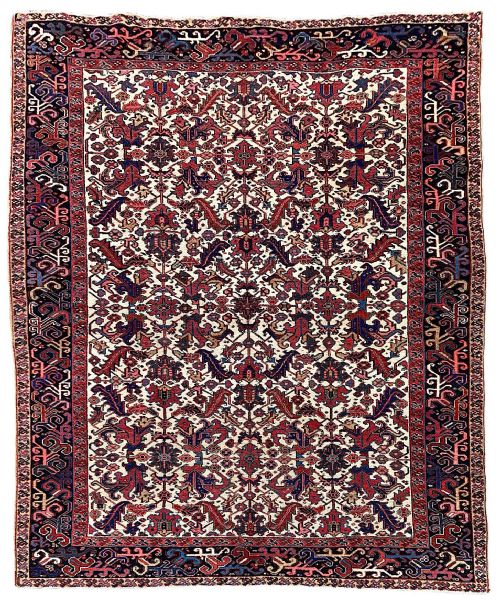
Heriz Floor Carpet
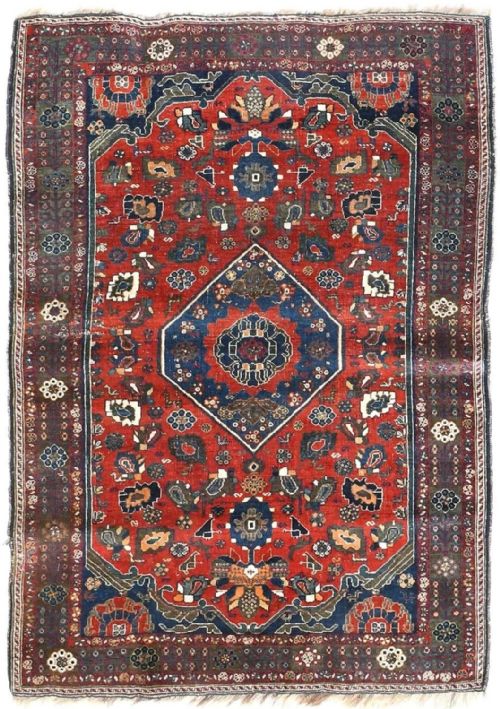
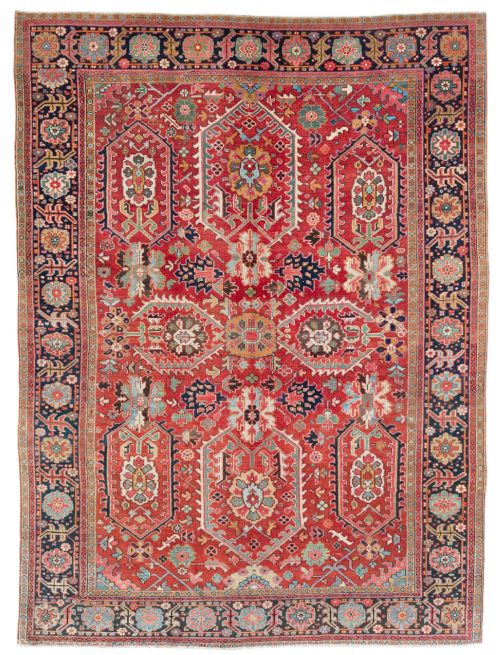
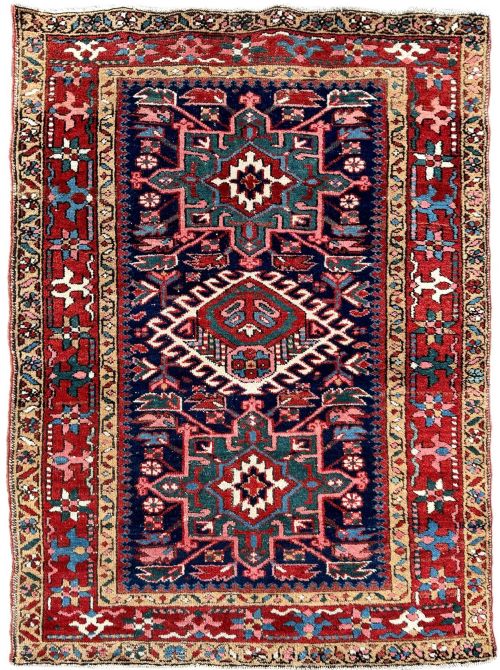
A heriz floor carpet brings bold geometric medallions and durable floor coverings into a room straight from north-west Persia.
Heriz Floor Carpet
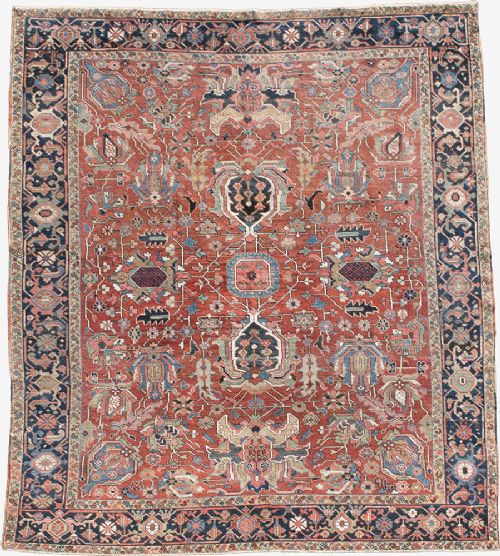
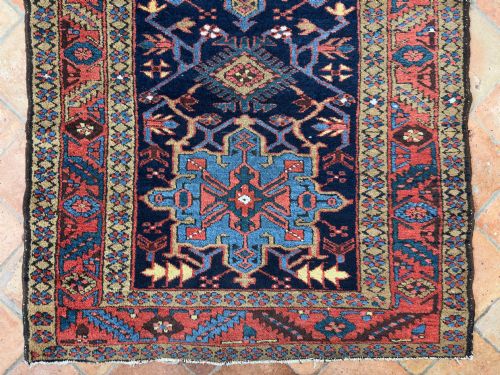
A heriz floor carpet anchors a room with substantial dimensions, typically appearing in large room-size formats alongside smaller runner and area rug variants. These woven floor coverings emerge from north-west Persia across the late nineteenth and early twentieth centuries.
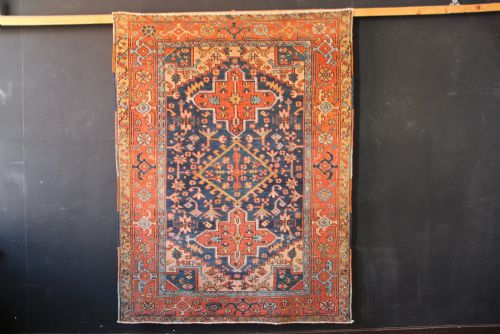
The aesthetic leans towards Persian Heriz, Persian Serapi, and traditional Persian styles, often incorporating distinct geometric layouts. Buyers encounter these floor pieces in formats ranging from compact hallway runners to expansive area carpets.
Production spans decades from the eighteen-eighties through the nineteen-thirties, connecting modern interiors directly to historic Persian weaving traditions. Most surviving examples maintain robust structural integrity suitable for active daily foot traffic.
Materials and Construction
The construction relies on sturdy wool pile knotted onto strong cotton foundations, providing the heavy weight necessary for a stable floor carpet. Hand-woven techniques bind these natural materials together to create dense surfaces designed for longevity.
Weavers in north-west Persia utilise local wool and cotton resources to build resilient foundations that withstand decades of use. The resulting textile structure balances flexibility with the rigidity required of large area carpets.
Heriz Floor Carpet Retail Price Guide 2026
Typical asking prices for heriz floor carpet among the pieces listed under this phrase on Sellingantiques today, from the lower quarter to the upper quarter. They describe what is for sale here now, not the wider market.
Current listings feature Persian Heriz and Karaja styles spanning the eighteen-eighties to the nineteen-thirties, constructed from wool and cotton.
Evaluating the Weave
Quality separates through the crispness of the geometric drawing and the subtlety of natural dye variations within the wool pile. Finer knot densities and more precise medallion execution distinguish the upper tier of these Persian carpets from simpler village productions.
The overall preservation of the original wool pile and the structural soundness of the cotton foundation dictate the longevity of the floor covering. Greater care in early weaving yields superior architectural balance across the central field and borders.
The Heriz Floor Carpet Glossary
- Heriz
- A region in north-west Persia renowned for producing durable, large-scale geometric carpets with prominent central medallions. These floor coverings bridge tribal boldness with formal city design.
- Serapi
- A sub-style associated with older Heriz carpets, typically featuring more open designs and muted palettes. Collectors prize these for their spacious compositions.
- Karaja
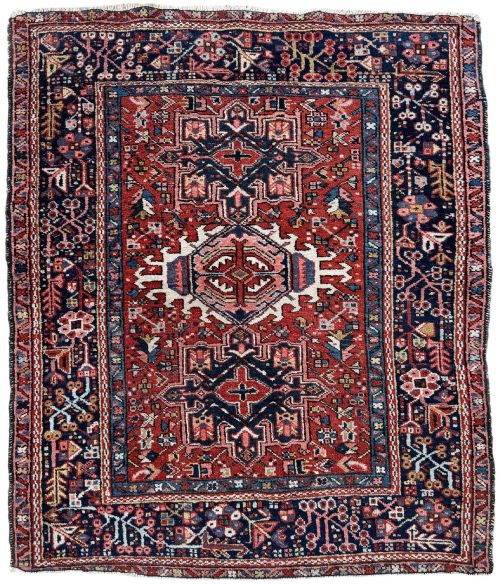
- A neighbouring weaving origin whose smaller rugs and runners frequently share design traits with Heriz production. They offer similar wool construction on cotton foundations.
- Runner
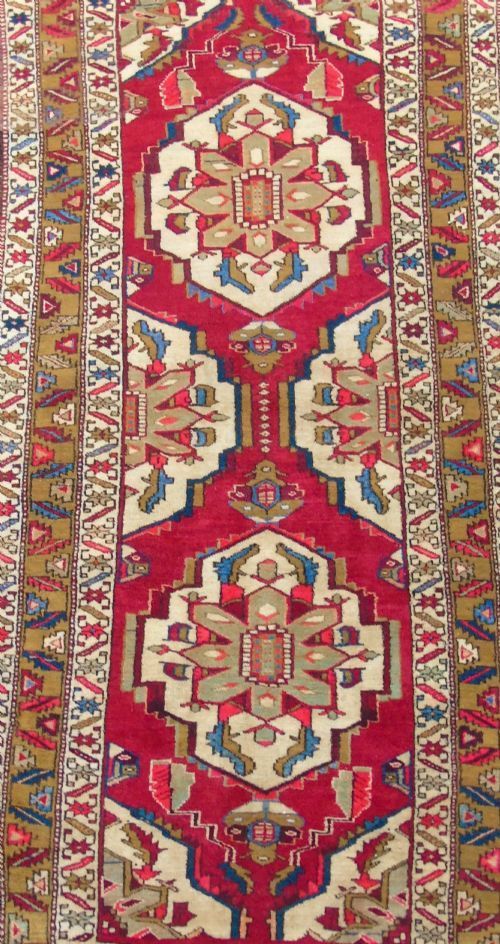
- A long, narrow carpet format designed specifically for hallways and corridors. These pieces guide movement through domestic spaces.
Heriz Floor Carpet: Frequently Asked Questions
Where were heriz floor carpets made?
These floor carpets originated in the Heriz region located within north-west Persia. Local workshops and villages produced them for domestic use and export.
The weavers utilised regional materials like wool and cotton, establishing a distinct local aesthetic that persists in nineteenth and twentieth-century examples.
How do I care for my carpet?
Vacuum the wool pile regularly using suction attachment without rotating brush rolls to protect the cotton foundation. Keep the carpet out of direct sunlight to prevent fading of the natural dyes.
Rotate the floor covering periodically to ensure even wear patterns from foot traffic and furniture placement across the room.
What size do these carpets come in?
Sizes range significantly from small square rugs and hallway runners to very large room-size area carpets exceeding four metres in length. Dimensions vary depending on whether the piece served a domestic room or a corridor.
Larger formats provide substantial floor coverage while compact versions suit smaller spaces.
Are these rugs suitable for heavy traffic?
The dense wool pile and sturdy cotton foundations make these carpets well-suited for daily use in active areas. Their robust construction handles regular foot traffic while maintaining structural integrity.
Proper padding underneath further cushions the weave and extends the working life of the textile.