


Hepplewhite Style Side Table
Hepplewhite style side table designs bring neoclassical elegance and refined serpentine lines into a room, offering both practical surface space and distinct period character.
Hepplewhite Style Side Table
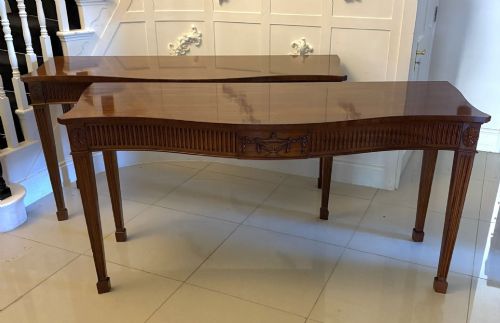
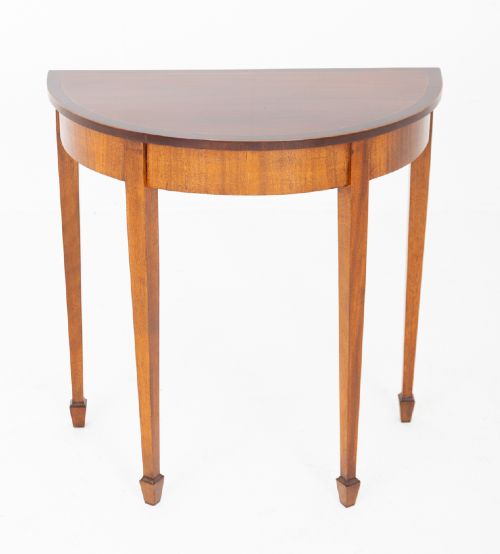
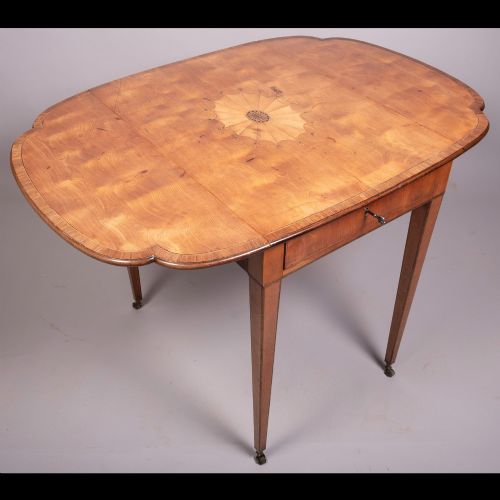
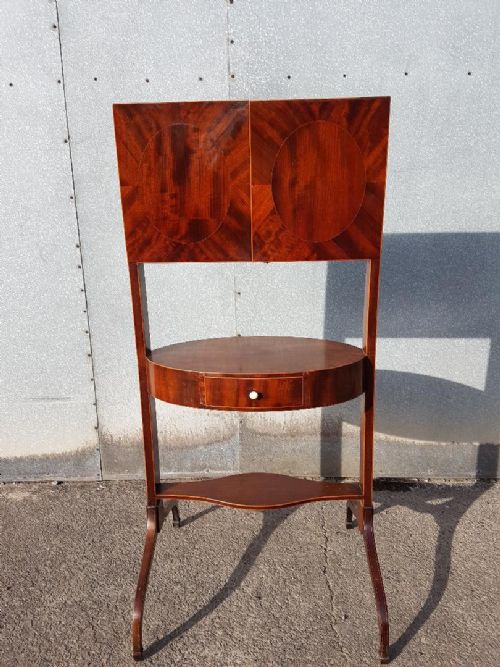
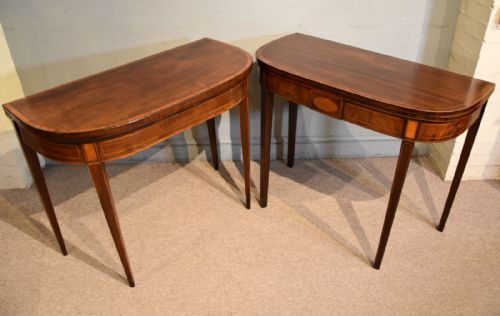
A search for a hepplewhite style side table leads to versatile wooden furniture built with graceful proportions, slender tapered legs, and subtle geometric or serpentine shaping. The pieces available here encompass authentic 18th century origins alongside later revivals from the 19th and early 20th centuries, spanning forms such as demi-lune consoles, pembroke tables, and card tables.
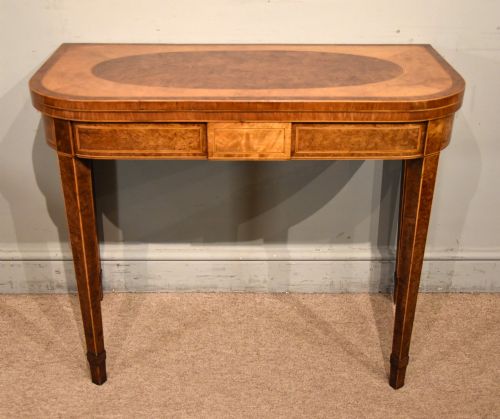
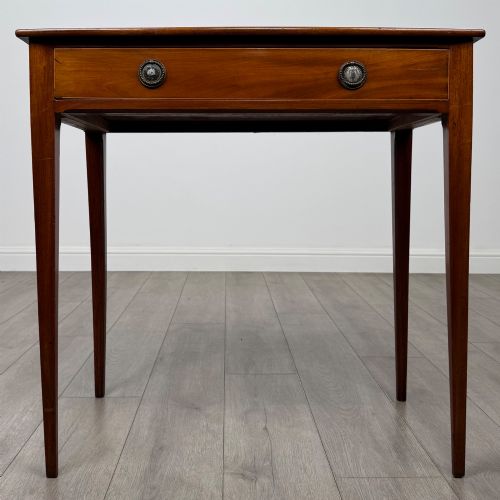
Buyers often encounter variations ranging from simple mahogany pembroke tables to elaborate satinwood pieces featuring detailed crossbanding and neoclassical inlay. These tables served historically as elegant side surfaces for drawing rooms and halls, combining utility with sophisticated design aesthetics.
Materials and construction techniques
Cabinet makers utilised dense timbers such as mahogany and exotic veneers including satinwood and burr yew, often constructing tabletops with contrasting boxwood inlay and delicate stringing. The surfaces display precise crossbanding that frames the grain of the primary timber, supported by slender legs characteristic of the period.
Joinery techniques focused on stability without bulk, employing fine framing for hinged card table leaves and fitted drawers within pembroke and writing tables. Brass hardware such as hinges and subtle handles frequently complemented the warm tones of the polished wood.
Hepplewhite Style Side Table Retail Price Guide 2026
Typical asking prices for hepplewhite style side table among the pieces listed under this phrase on Sellingantiques today, from the lower quarter to the upper quarter. They describe what is for sale here now, not the wider market.
Some card tables feature hidden compartments cunningly engineered beneath folding tops to store forgotten counters.
Distinctions in quality and execution
The distinction between standard examples and the finest pieces lies in the precision of the inlay work, the depth of the timber's grain, and the harmony of the overall proportions. Master craftsmen achieved fluid serpentine curves and balanced neoclassical motifs that appeared effortless rather than mechanical.
Superior execution is visible in the crispness of the carving, the selection of matched veneers for tabletops, and the retention of original brass fittings and polish. Lesser pieces may display heavier framing or simpler, unadorned surfaces that lack the refined lightness associated with the best workshop traditions.
Gillow
The Hepplewhite Style Side Table Glossary
- Demi-lune
- A half-moon shape commonly utilised for console and tea tables designed to stand flat against a wall. This form became particularly popular during the late 18th century for maximising floor space while retaining a decorative surface.
- Crossbanding
- A decorative border technique where veneer strips are applied around the edge of a tabletop so the grain runs perpendicular to the central panel. It creates a defined frame that highlights the natural beauty of the wood.
- Pembroke table
- A small, versatile table featuring two hinged drop leaves supported by folding brackets. It typically includes one or two small drawers and was easily moved around domestic rooms.
- Neoclassical
- A design style inspired by classical antiquity characterised by symmetry, straight lines, and restrained ornamentation such as husks, urns, and paterae. It heavily influenced furniture proportions and inlay motifs during the late Georgian period.
Hepplewhite Style Side Table: Frequently Asked Questions
What rooms suit these tables?
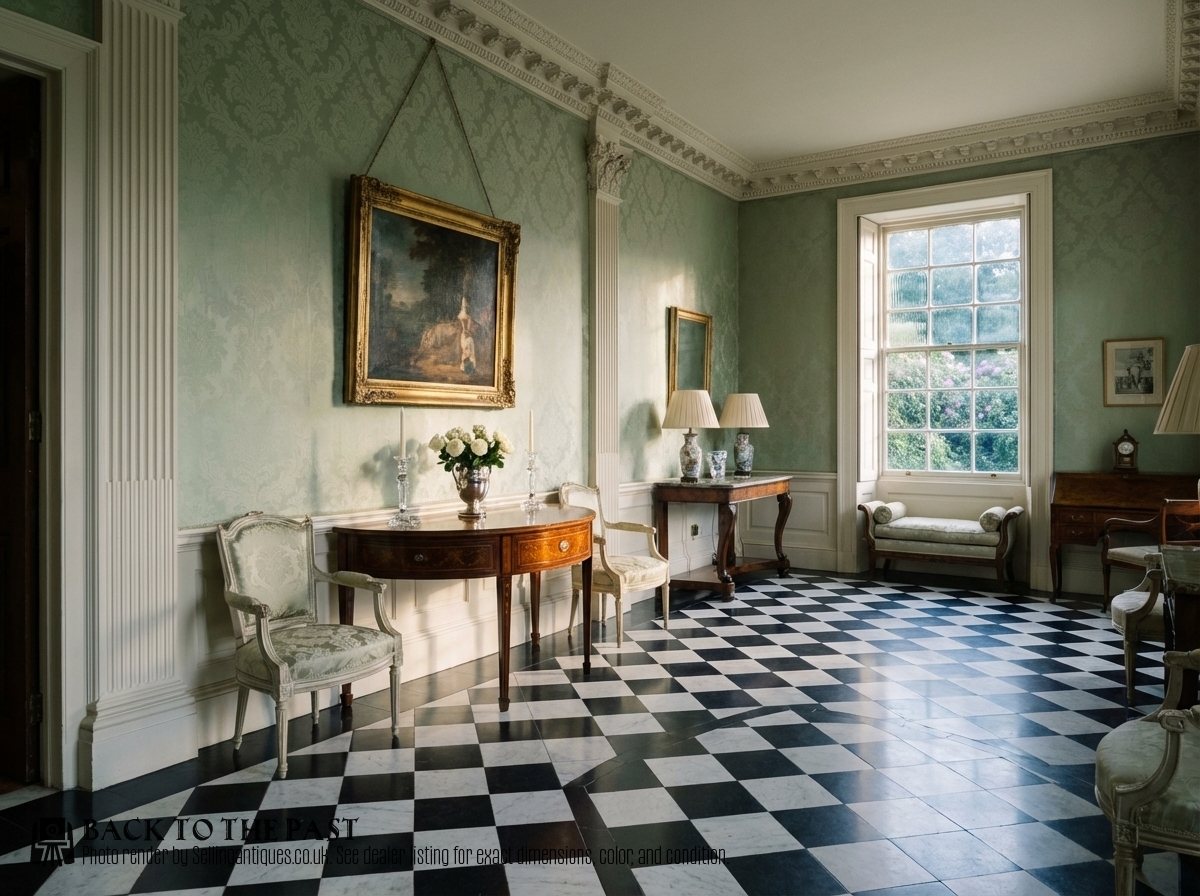
These tables fit well in hallways, living rooms, and dining areas where surface space is needed without blocking walkways.
Their slim profiles and elegant legs allow them to function effectively as serving surfaces, lamp tables, or decorative accents against a wall.
How do I distinguish original 18th century pieces from later revivals?
Distinguishing between periods involves examining timber ageing, construction joints, and the specific style of inlay.
Earlier pieces show hand-cut joinery and natural wear patterns, whereas revival pieces from the late 19th and early 20th centuries often utilise machine tooling while closely copying historical forms.
Were drop-leaf tables used daily?
Drop-leaf tables served flexible daily functions in historic homes, expanding for dining or card games and folding down when space was required.
Their hinged leaves provided practical adaptability for changing household activities throughout the day.
How do I care for polished wood surfaces?
Maintaining polished mahogany and satinwood requires avoiding direct sunlight and excessive moisture to protect the delicate veneers.
Regular dusting with a soft cloth and occasional application of appropriate furniture wax helps preserve the finish.