

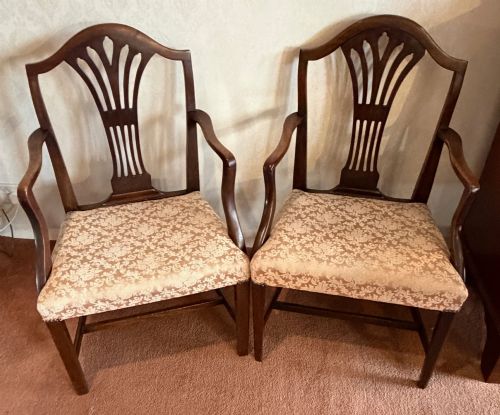


Hepplewhite Style Elbow Chairs
Hepplewhite style elbow chairs bring graceful shield backs and slender tapered legs to the dining room, offering classic seating with notable historical elegance.
Hepplewhite Style Elbow Chairs
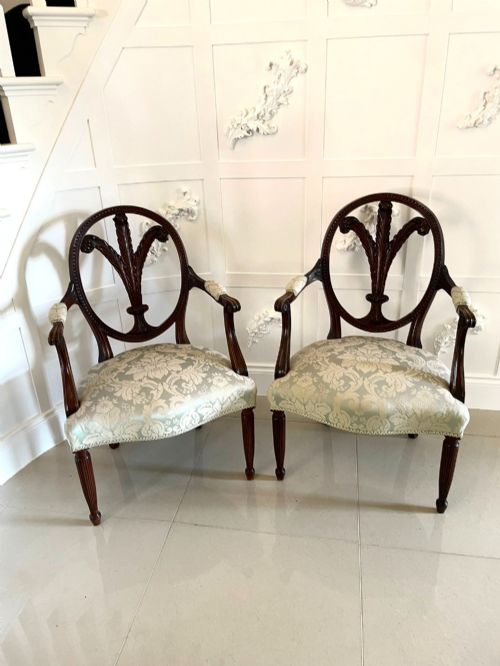
Hepplewhite style elbow chairs stand as refined dining armchairs and carvers rooted in eighteenth-century design traditions. The pieces on this page span several eras, appearing in Georgian originals alongside later Victorian and twentieth-century revivals.
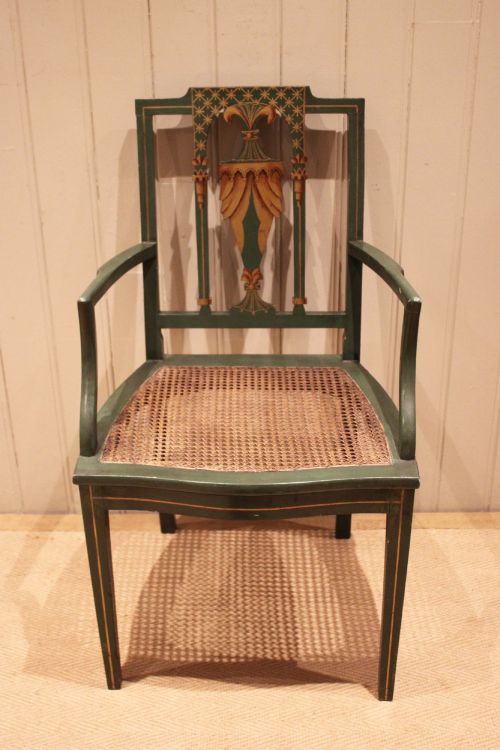
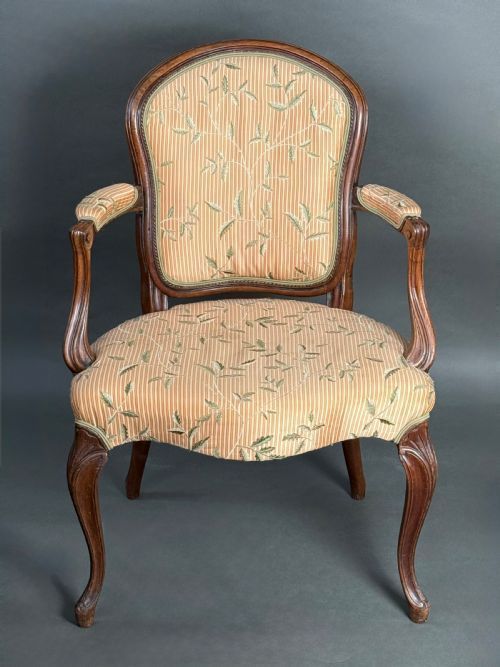
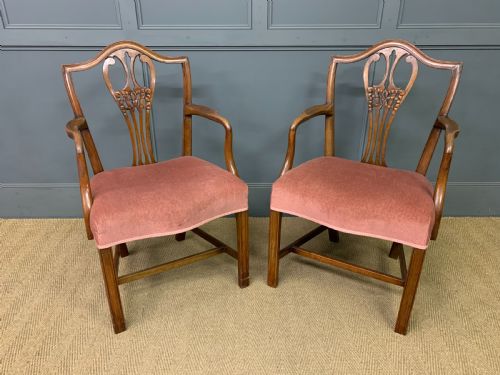
Most examples you encounter here utilise rich mahogany timbers, occasionally complemented by painted finishes, cane seating panels, or traditional upholstery fabrics. The characteristic shield-shaped backrest defines the silhouette, supported by curved arm rests and straight or moulded legs.
How they were made
Cabinet makers constructed these frames primarily using solid mahogany, selecting dense timbers capable of supporting delicate pierced splats and slender supports. Joinery relied on traditional mortise and tenon joints to secure the arm rests and legs firmly to the seat frame.
Surface ornamentation involved careful hand carving, framing shield backs with subtle rosettes, swags, or reeded details. Where cane or upholstery appears, craftsmen integrated woven panels or stuffed pad seats directly into the wooden framework.
Hepplewhite Style Elbow Chairs Retail Price Guide 2026
Typical asking prices for hepplewhite style elbow chairs among the pieces listed under this phrase on Sellingantiques today, from the lower quarter to the upper quarter. They describe what is for sale here now, not the wider market.
Listings feature mahogany predominantly, alongside birch, elm, fabric, cane, and painted finishes across multiple centuries.
What varies in quality
Quality rests in the crispness of the hand carving and the selection of timber grain across the shield back. Superior examples display balanced proportions and tight joinery that endure centuries of daily use.
Later revival pieces show varying degrees of craftsmanship, where heavier timber sections or simplified joinery distinguish standard production from finer cabinet work.
The Hepplewhite Style Elbow Chairs Glossary
- Elbow chair
- An armchair designed primarily for dining or desk use, featuring low arms that fit beneath a table rim.
- Shield back
- A signature chair back shaped like a heraldic shield, often filled with pierced splats or carved drapery motifs.
- Carver
- A traditional term for an armchair that matches a set of single dining chairs.
- Splat
- The vertical wooden strip down the centre of a chair back, frequently carved or pierced in Hepplewhite designs.
Hepplewhite Style Elbow Chairs: Frequently Asked Questions
What defines a Hepplewhite style elbow chair?
These chairs distinguish themselves through characteristic shield-shaped backrests, slender tapered legs, and curved arm supports. The form draws inspiration from eighteenth-century design pattern books.
They appear across various periods, from original Georgian pieces to later Victorian and twentieth-century revival interpretations.
How do I use these chairs at a dining table?
Elbow chairs function naturally at the head and foot of a dining table, offering seated guests additional arm support. Their compact proportions allow them to sit comfortably alongside standard dining chairs.
Ensure you check the arm height against your specific table clearance before placing them.
Are these chairs suitable for daily use?
Solid mahogany frames provide sturdy construction suitable for regular seating when joints remain sound. Professional upholstery and stable cane work ensure the seat withstands everyday wear.
Routine maintenance involves gentle dusting and protecting the wood from direct heat sources.
How do I distinguish revival pieces from older examples?
Distinguishing periods relies on examining timber patination, tool marks, and construction methods within the frame. Georgian pieces show historical wear and specific hand-tool signatures distinct from later revival production.
Revival pieces often utilise cleaner nineteenth or twentieth-century timber preparation while maintaining the classic Hepplewhite silhouette.