



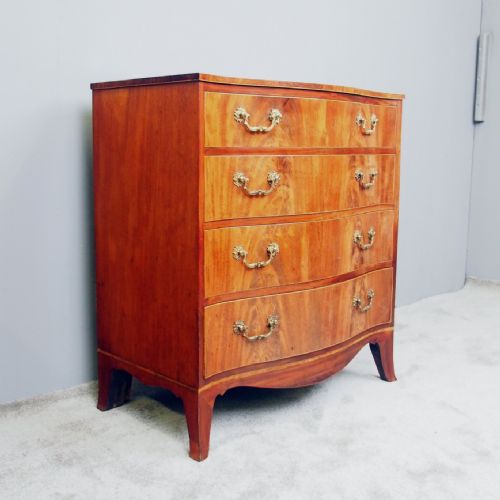

Hepplewhite Inlaid Commode
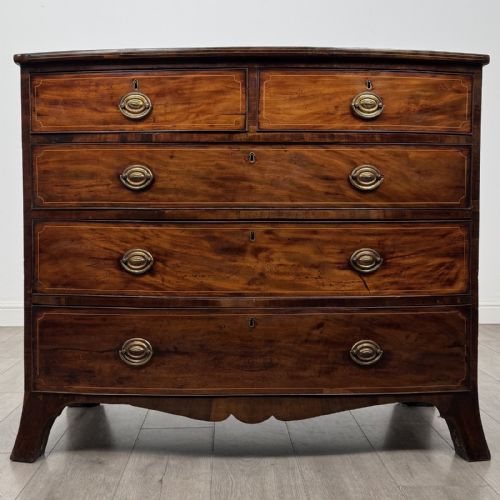
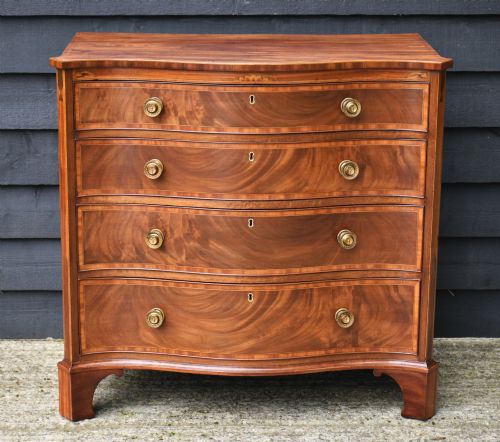
These hepplewhite inlaid commode pieces bring serpentine elegance and fine cabinet-making into a room, offering both history and practical storage.
Hepplewhite Inlaid Commode
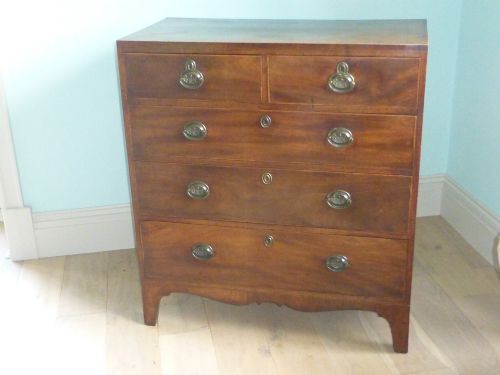
The pieces available on this page lean heavily toward eighteenth-century Georgian origins and later revival interpretations. Alongside traditional drawer chests, the selection encompasses bedside night tables, side cupboards, and writing cabinets bearing the distinct stylistic hallmarks of the period.
Makers and workshops from both the original Georgian period and the Edwardian era produced these designs using characteristic serpentine shapes. Buyers will find that mahogany serves as the primary timber, often enriched with detailed decorative stringing and contrasting wooden insertions.
Materials and construction
Cabinet-makers relied primarily on solid and veneered mahogany as the foundational timber for these serpentine forms. This dense wood provided the stability necessary to shape curved drawer fronts and side panels without warping.
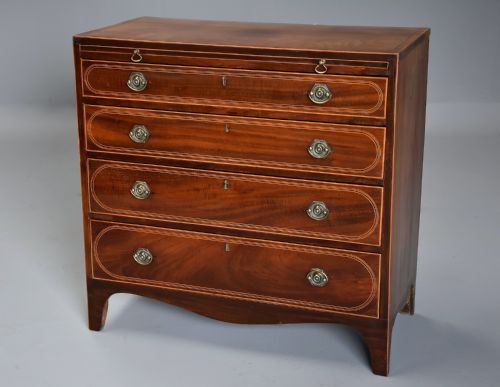
Detailed embellishment relied on contrasting timbers such as satinwood, boxwood, and harewood. Craftsmen utilised fine boxwood inlay and wood inlay to create delicate borders, stringing, and geometric or floral motifs across the drawer facades.
Hepplewhite Inlaid Commode Retail Price Guide 2026
Typical asking prices for hepplewhite inlaid commode among the pieces listed under this phrase on Sellingantiques today, from the lower quarter to the upper quarter. They describe what is for sale here now, not the wider market.
Mahogany serves as the dominant structural timber across the selection, complemented by satinwood, boxwood, and harewood.
Judgements of quality
Quality rests significantly in the execution of the serpentine curve and the precision of the timber matching across the front drawers. Superior examples display seamless continuity in the grain and immaculate alignment of the inlaid borders.
The crispness of the boxwood and satinwood inlay distinguishes finer pieces from simpler utilitarian storage. Furthermore, the retention of original brass hardware and the integrity of the secondary drawer timbers elevate the standing of a commode.
Druce & Co
The Hepplewhite Inlaid Commode Glossary
- Serpentine
- A curved furniture front featuring a convex centre flanked by concave ends. This contour requires immense skill from the cabinet-maker to execute successfully.
- Commode
- A low decorative chest of drawers or cabinet originating in the eighteenth century. These pieces often served functional storage roles in formal reception rooms and bedrooms.
- Inlay
- A technique where contrasting woods are inserted into recess depressions on a timber surface. Craftsmen utilise boxwood and satinwood to form delicate decorative patterns.
- Harewood
- Sycamore wood that has been stained grey, frequently used in high-end eighteenth-century furniture. It provides a subtle, sophisticated contrast against darker mahogany.
- George III
- The period of British history spanning from 1760 to 1820, encompassing the height of classical cabinet-making. Furniture from this era is celebrated for refined proportions.
Hepplewhite Inlaid Commode: Frequently Asked Questions
How do I identify a genuine period piece?
Examine the timber construction, drawer linings, and the ageing of the brass hardware. Eighteenth-century examples display hand-cut dovetails and natural wear patterns consistent with age.
Secondary woods and the method of applying the boxwood inlay also offer reliable clues to dating. Revival pieces from the Edwardian era often show uniform machine-cut elements and different interior construction.
Where were these commodes used originally?
These pieces sat in formal drawing rooms, bedchambers, and reception areas of grand houses. They provided elegant storage for linen, documents, and personal valuables.
Their decorative serpentine fronts ensured they looked striking from multiple angles within a furnished interior.
How should I care for mahogany furniture?
Keep the wood away from direct sunlight and sudden temperature shifts to prevent timber shrinkage. Natural wax polishes applied sparingly help maintain the lustre of the mahogany and protect the delicate inlay.
Avoid using modern silicone sprays, as they build up residue and can damage historic polished surfaces over time.
What is the difference between revival and original pieces?
Original pieces date from the Georgian period and reflect contemporary eighteenth-century tools and workshop practices. Revival commodes date from later periods such as the Edwardian era and imitate those earlier styles.
Both categories offer fine craftsmanship, but original pieces carry the direct provenance of their historical era.