



Satinwood Serpentine Commode
These satinwood serpentine commode examples offer curved fronts and fine timbers, bringing timeless elegance to any interior.
Satinwood Serpentine Commode
A satinwood serpentine commode provides practical storage shaped with a distinctive curved front, combining elegance and utility in period rooms. These pieces appear across several eras, including the eighteenth century and the Victorian period.
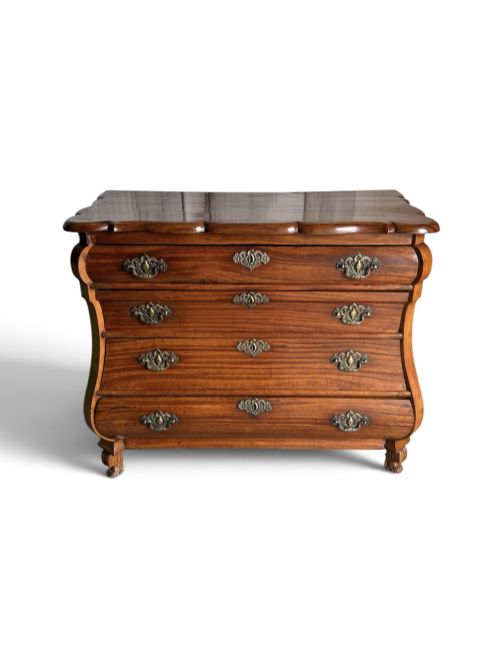
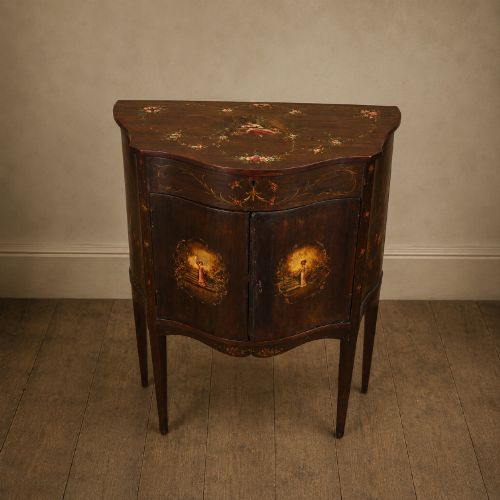
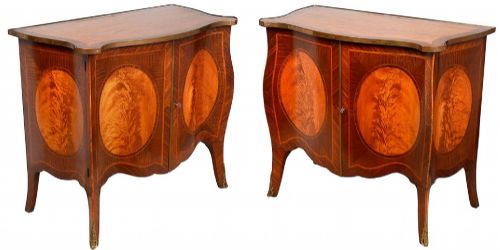
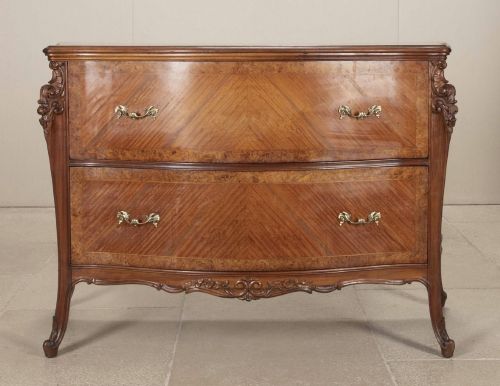
Buyers encounter multiple stylistic interpretations on this page, ranging from George III examples to Sheraton Revival pieces and Dutch Colonial forms. Chests of drawers and side cabinets make up the primary object types available.
Materials and construction methods
Craftsmen built these items using solid satinwood, mahogany, burr walnut, and harewood, frequently applying marquetry inlay to enrich the exterior surfaces. Paint also appears on specific pieces as a decorative finish.
Satinwood Serpentine Commode Retail Price Guide 2026
Typical asking prices for satinwood serpentine commode among the pieces listed under this phrase on Sellingantiques today, from the lower quarter to the upper quarter. They describe what is for sale here now, not the wider market.
Some commodes doubled as gentleman's dressing chests, hiding compartments designed for powdered wigs and morning tonics.
Judging quality in serpentine commodes
The sophistication of the timber grain and the precision of the marquetry inlay determine the visual impact of each piece. Finer examples display meticulous attention to detail in the execution of the serpentine curve.
The integration of brass or gilt brass hardware relative to the primary wood indicates the standard of manufacture. Period context also influences standing, with eighteenth-century pieces differing markedly from later revival interpretations.
The Satinwood Serpentine Commode Glossary
- Serpentine
- A furniture front characterised by a concave central section flanked by two convex ends, creating a gentle wave shape. This contour requires precise woodworking skills to execute properly.
- Satinwood
- A lustrous timber native to India and Ceylon, prized for its golden yellow sheen and fine grain. It serves as the primary veneer or solid material for high-status neoclassical furniture.
- Marquetry
- The art of applying decorative pieces of veneer to a structure to form intricate designs or pictures. Craftsmen utilise various coloured woods to achieve tonal depth.
- Hepplewhite
- A late eighteenth-century English furniture style known for graceful curves, tapered legs, and refined neoclassical ornamentation. Pieces from this tradition often feature delicate inlay work.
Satinwood Serpentine Commode: Frequently Asked Questions
What is a satinwood serpentine commode?
A satinwood serpentine commode is a decorative storage chest featuring a curved front and light-coloured timber.
These items function primarily as chests of drawers or side cabinets within sophisticated interiors.
How do I date a commode?
Dating relies on identifying construction materials, stylistic markers, and cabinet-making techniques associated with specific periods.
Evidence points span the eighteenth century, the Victorian era, and the nineteen-twenties.
Where were these pieces used?
Such commodes typically served in principal reception rooms or bedrooms to store clothing and personal belongings.
Their decorative fronts ensured they functioned as focal points of interior decoration.
What styles are available?
Available variations include George III, Hepplewhite, Sheraton Revival, Dutch Colonial, and nineteenth-century Italian designs.
Each style brings distinct aesthetic priorities to the curved timber form.