





Heavy Oak Seating
Heavy oak seating brings substantial presence to a room, offering sturdy forms from the seventeenth century through to the early twentieth century.
Heavy Oak Seating
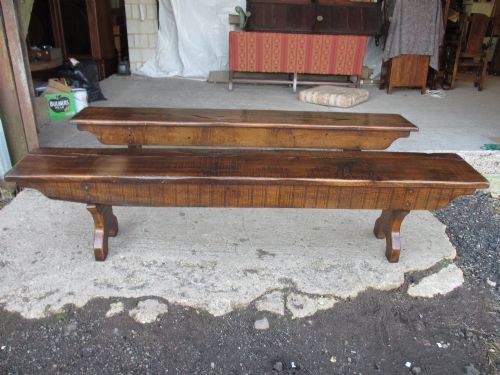
Heavy oak seating encompasses chairs, benches, settles, and club fenders spanning several centuries of British and continental design. When searching for heavy oak seating, buyers encounter substantial dining chairs, high-backed wainscot armchairs, carved hall benches, and sturdy joint stools.
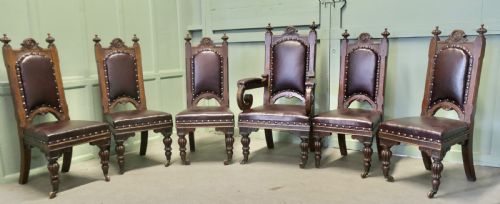
The material origins trace from seventeenth-century provincial pieces through nineteenth-century revivals up to Edwardian and later twentieth-century interpretations. Victorian and Edwardian examples dominate the selection, often incorporating Gothic or Jacobean revival styles with elaborate carving.
Functional seating ranges from single elbow chairs and corner chairs to large matched sets for dining rooms and libraries. Specialised forms such as cockfighting chairs, library armchairs, and club fenders demonstrate the diverse utility of dense timber furniture.
Materials and Construction
Construction relies heavily on solid English oak, shaped and jointed using traditional joinery methods suited to dense timber. Frames often utilise mortise and tenon joints, sometimes reinforced with iron or brass fixings.
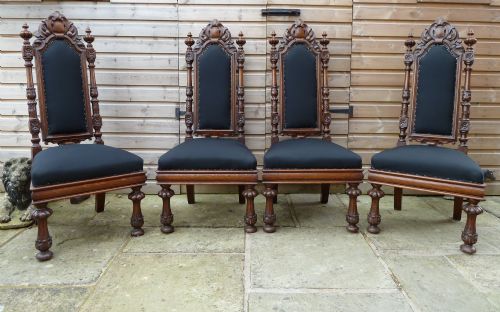
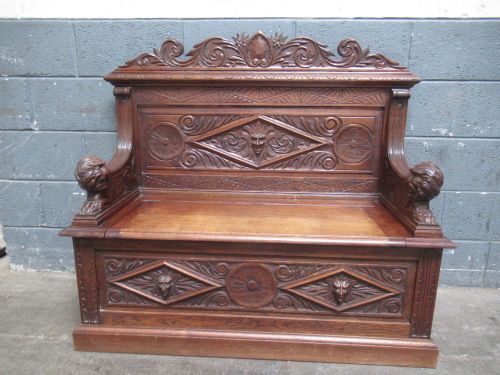
Surface ornamentation incorporates deep relief carving, particularly on Victorian gothic revival frames, depicting heraldic motifs, hounds, and scrollwork. Upholstery materials include leather, velvet, fabric, and woven rush seats secured to the wooden frames.
Heavy Oak Seating Retail Price Guide 2026
Typical asking prices for heavy oak seating among the pieces listed under this phrase on Sellingantiques today, from the lower quarter to the upper quarter. They describe what is for sale here now, not the wider market.
Victorian carvers sometimes hid hunting hounds within the woodwork, leaving dogs to stare out indefinitely from beneath the armrests.
Evaluating Quality
Quality in heavy oak seating rests on the density of the timber and the crispness of the hand-carving. Earlier pieces show the tool marks of traditional hand-working, whereas later revival items display machine assistance or varied depth in the carved panels.
Structural integrity depends on the original timber joints remaining tight despite centuries of weight and movement. Sets maintain higher desirability when all constituent armchairs and side chairs share identical timber grain, colour, and wear patterns.
William Birch
The Heavy Oak Seating Glossary
- Wainscot chair
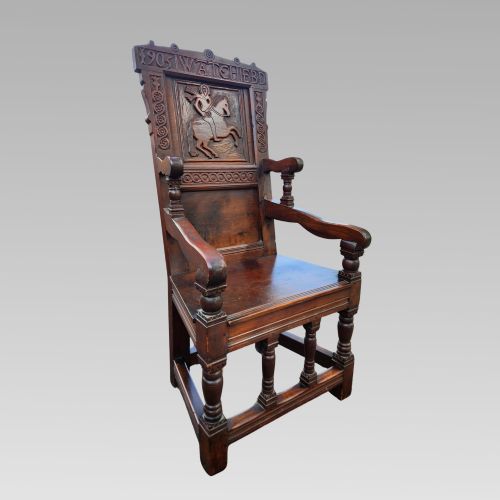
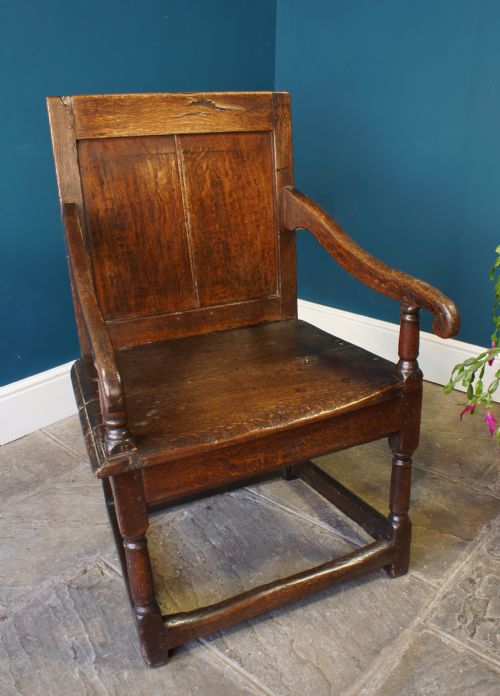
- A heavy wooden armchair from the seventeenth century constructed with panelled backrests and solid wooden seats. These early forms represent the precursor to later upholstered library and elbow chairs.
- Joint stool
- A sturdy wooden stool constructed with pegged mortise and tenon joinery rather than turned legs inserted into a seat. They served multiple domestic purposes and utilised the same dense timber as larger seating.
- Club fender
- A low, U-shaped hearth seat featuring cushioned top rails supported on metal or wooden frameworks. They provide fireside seating and often incorporate brass or iron details.
- Settle
- A high-backed wooden bench with solid arms and a closed base designed to block draughts in large rooms. They frequently feature panelled backs and substantial box seats beneath the hinged lids.
- Gothic Revival
- An architectural and decorative style popular during the Victorian period that reintroduced pointed arches, tracery, and heavy carved ornamentation. This aesthetic heavily influenced nineteenth-century oak dining chairs and armchairs.
Heavy Oak Seating: Frequently Asked Questions
How do I identify seventeenth-century oak seating?
Seventeenth-century pieces, such as wainscot chairs, display pegged joinery, heavy English oak timber, and simpler panel construction without the deep, machine-assisted relief carving seen in later Victorian revivals.
Examine the underside and joints for hand-tool marks and natural timber shrinkage, which indicate genuine age rather than nineteenth-century revival craftsmanship.
What is the difference between a wainscot chair and an elbow chair?
A wainscot chair is a specific seventeenth-century form featuring a rigid panelled wooden back and a solid timber seat designed for domestic status and durability.
An elbow chair is a broader term encompassing later Victorian and Edwardian armchairs, which frequently include upholstered leather or fabric pads and more relaxed ergonomic shaping.
How do I care for antique oak furniture?
Maintain antique oak by placing pieces away from direct heat sources and sudden temperature fluctuations that cause timber to split. Apply a microcrystalline wax periodically to nourish the surface without attracting dust.
Avoid commercial liquid polishes, which can build up over old wax layers and dull the natural sheen of the timber.