




Heavy Oak Credenza
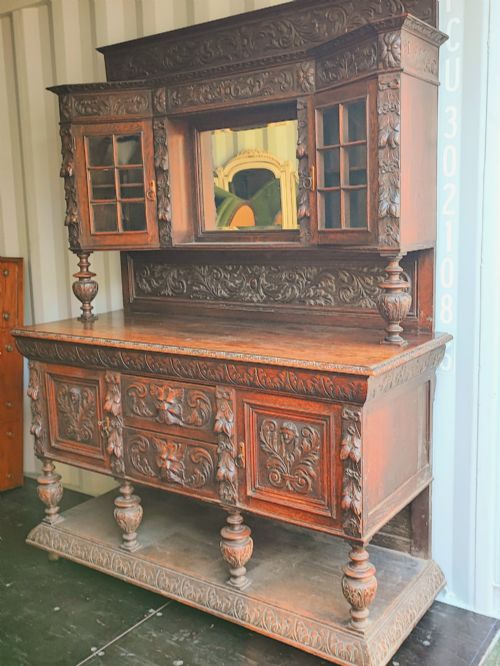
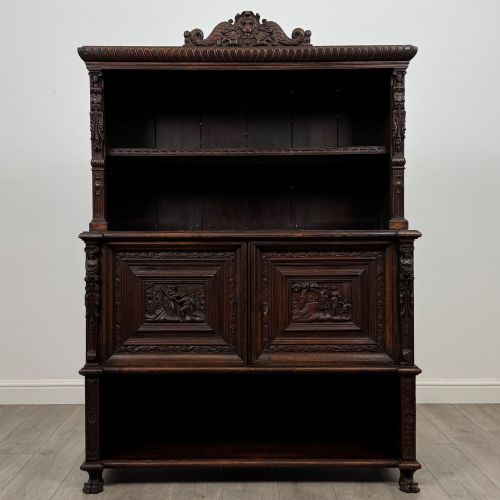
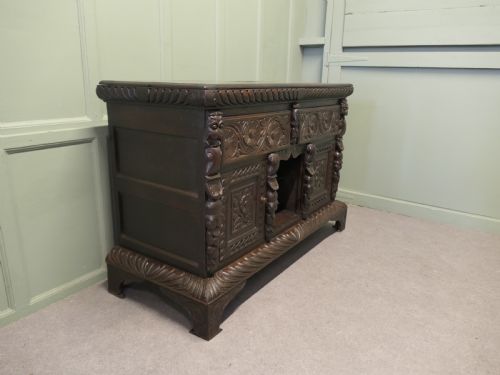
These heavy oak credenza pieces are substantial sideboards and cupboards built from durable timber to anchor a room with serious presence.
Heavy Oak Credenza
A heavy oak credenza search brings up large nineteenth-century sideboards, buffets, and cupboards built to substantial proportions. These items emerge primarily from the Victorian period, spanning the mid to late nineteenth century up to the early twentieth century.
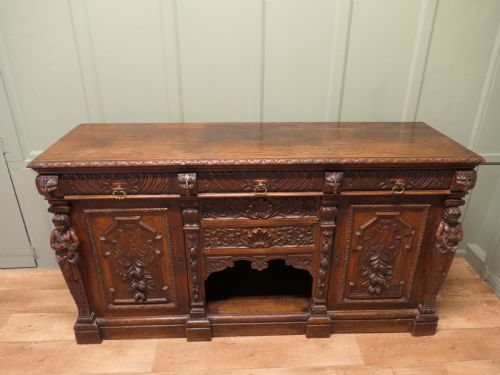
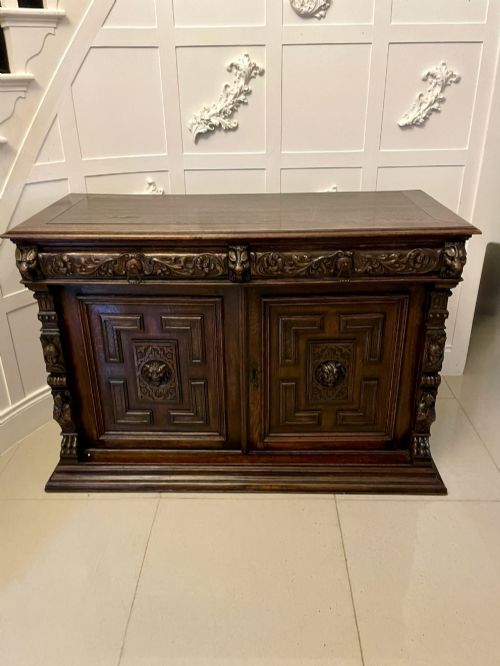
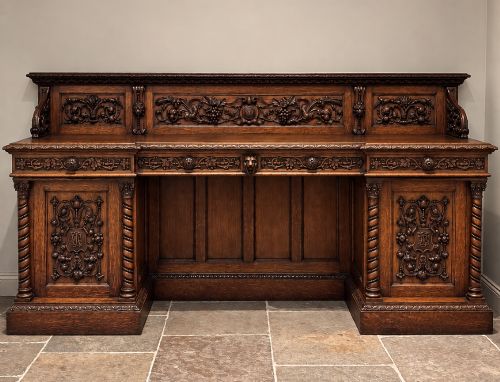
The most common forms on this page are carved oak sideboards and cupboards, frequently featuring revival styles such as Jacobean, Renaissance, Gothic, and Flemish Baroque. They serve as grand storage furniture for dining rooms and large hallways.
Makers and cabinetmakers drew on diverse historicist vocabularies, applying heavy carving, mirror backs, and distinct motifs like Green Man masks. Pieces range from grand mirrored sideboards to dresser bases and three-door hall cupboards.
Materials and construction methods
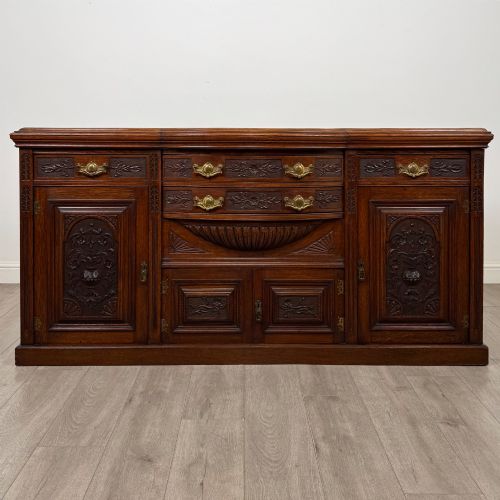
Construction relies heavily on solid oak and pollard oak, selected for durability and pronounced grain patterns. Cabinetmakers augmented these surfaces with brass handles, iron hardware, and bevelled glass mirrors set into tall backboards.
Joinery techniques supported massive proportions, visible in the heavy framing of large sideboards and cupboards. Carving was executed by hand directly into the dense timber, creating deep relief patterns associated with Gothic and Renaissance revivals.
Several heavy oak sideboards stare back at their owners through the leafy jaws of carved wooden Green Men.
Distinctions in craftsmanship and scale
Quality separates ordinary storage from exceptional cabinet work through the depth and crispness of the wood carving. Finer examples display meticulous hand-chisel work on figures like the Green Man and intricate panel mouldings.
Proportion and timber selection also divide the range, with superior items utilising well-figured pollard oak or dense golden oak. The integration of original brass hardware, bevelled mirror glass, and structurally sound heavy framing distinguishes better execution.
The Heavy Oak Credenza Glossary
- Credenza
- A sideboard or buffet cabinet used for serving food and storing dining ware. Historically, these pieces developed from simple serving tables into enclosed cupboards with grand display backs.
- Pollard Oak
- Timber harvested from trees that were pollarded, resulting in a dense grain with rich clustered knots. Cabinetmakers prized this wood for its decorative mottled appearance on drawer fronts and panels.
- Green Man
- A sculptural architectural ornament depicting a human face disgorged from foliage. This motif appears frequently in the carved woodwork of nineteenth-century revival sideboards.
- Renaissance Revival
- A nineteenth-century design movement borrowing architectural elements from sixteenth-century Italy and France. Pieces in this style feature heavy columns, robust cartouches, and deep relief carving.
- Bevelled Glass
- Plate glass with edges ground and polished at an angle. This technique adds depth and catches light within the tall mirror backs of Victorian sideboards.
Heavy Oak Credenza: Frequently Asked Questions
How do I clean a heavy oak sideboard?
Dust the timber regularly with a dry, soft cloth to prevent grit accumulation in the deep carvings.
Apply a traditional beeswax polish sparingly once or twice a year to nourish the oak without building up a sticky film.
Where should I place a large credenza?
Position these substantial pieces against a load-bearing wall in a dining room, large hallway, or spacious living area.
Ensure the floor can support significant weight and keep the timber away from direct heat sources to prevent splitting.
How do I spot a Gothic revival piece?
Look for architectural details borrowed from medieval churches, including pointed arches, tracery panels, and heavy linenfold carving.
These designs often utilise darker golden oak and imposing proportions to create a solemn, monumental appearance.
What is a dresser base?
A dresser base is a low, heavy cabinet featuring drawers and cupboards beneath a flat top surface, originally designed for food preparation and storage.
Unlike traditional sideboards, these pieces often lack upper mirror backs and derive their character from sturdy legs and simple or carved friezes.