

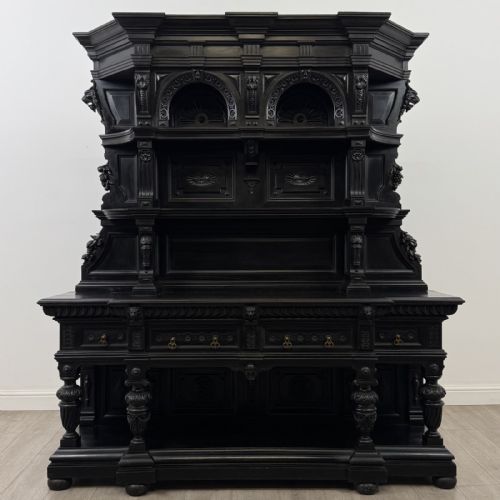
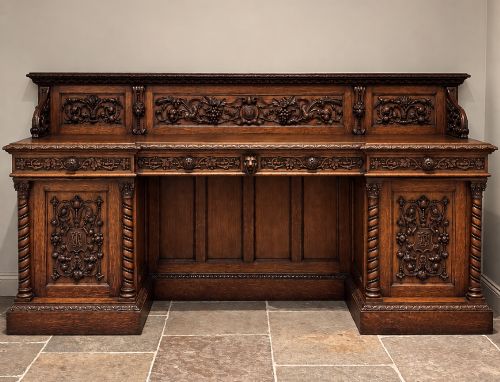
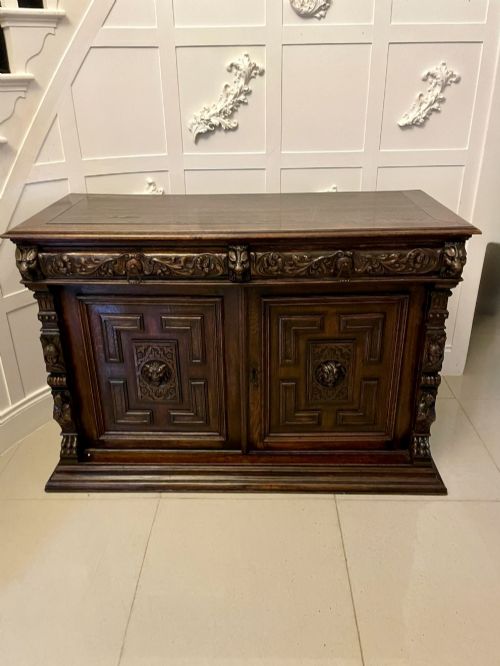


Carved Lion Mask Sideboard
A carved lion mask sideboard brings sculptural presence and heavy timber grain to a dining room or hall.
Carved Lion Mask Sideboard
A carved lion mask sideboard combines substantial storage with prominent feline or green man masks rendered in relief. These large dining furniture pieces most frequently emerge from Victorian and nineteenth century workshops.
The layout typically incorporates a low cabinet base, sometimes paired with upper tiers or cupboard superstructures, designed to anchor a traditional dining space.
Materials and construction
Makers relied heavily on solid oak and figured mahogany, often enhancing surfaces with contrasting ebony inlay or decorative pollard oak veneers. Cabinetmakers carved the prominent lion masks directly into the dense timbers.
Brass hardware and occasional glass panels complement the dark woods, reflecting the revival styles popular through the Victorian and Regency eras.
Carved Lion Mask Sideboard Retail Price Guide 2026
Typical asking prices for carved lion mask sideboard among the pieces listed under this phrase on Sellingantiques today, from the lower quarter to the upper quarter. They describe what is for sale here now, not the wider market.
The archive reveals that French and British cabinetmakers both utilised carved lion masks on Gothic revival cupboards.
Assessing the craftsmanship
The integrity of the structural joinery and the original patination of the timber determine the enduring character of each piece.
The Carved Lion Mask Sideboard Glossary
- Lion mask
- A carved feline visage used as an architectural or furniture ornament. These motifs often merge with green man iconography in nineteenth century revivals.
- Credenza
- A sideboard or buffet cabinet designed for dining rooms. It provides low-level storage surfaces.
- Pollard oak
- Oak timber taken from trees that have been pollarded, producing tightly clustered grain patterns. This wood was selected for decorative cabinet fronts.
- Gothic Revival
- An architectural and decorative style drawing on medieval forms. Pieces often feature heavy tracery and pointed arches alongside carved masks.
Carved Lion Mask Sideboard: Frequently Asked Questions
Where should I place a large sideboard?
These heavy timber cabinets suit spacious dining rooms or wide hallways where their proportional scale anchors the surrounding architecture. Ensure the floor can bear the substantial weight of solid oak and mahogany construction.
Allow sufficient clearance for cupboard doors and drawers to open fully without obstruction from dining chairs or tables.
How do I maintain the wooden surface?
Feed the timber periodically with traditional beeswax to nourish the grain and preserve the deep historic patination. Avoid placing the sideboard in direct sunlight or near heat sources to prevent the wood from splitting.
Dust regularly with a soft, dry cloth rather than using silicone sprays that build up residue over time.
What periods do these pieces span?
The available pieces predominantly date from the nineteenth century, encompassing Regency, Victorian, and Edwardian interpretations. Revival styles frequently draw on earlier Renaissance or Gothic motifs.
Dates are typically estimated from construction methods, timber choice, and the specific style of the carved ornamentation.
How do I distinguish between Regency and Victorian examples?
Regency sideboards generally favour sleek mahogany veneers with subtle ebony inlay and restrained geometric lines. They prioritize understated classical elegance over heavy relief carving.
Victorian pieces embrace heavier oak construction, pronounced architectural mouldings, and deep relief carvings of lion masks and green men.