



Heavy Iron Strap Trunk
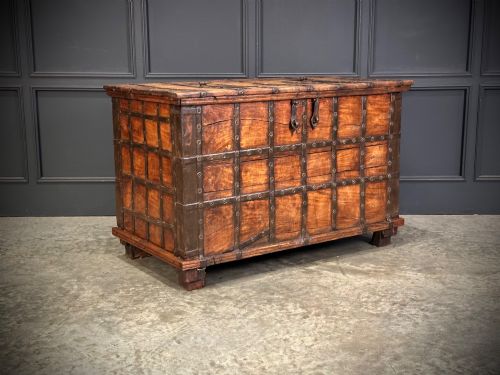
A heavy iron strap trunk combines timber and structural metalwork to provide robust storage with a commanding presence in any room.
Heavy Iron Strap Trunk
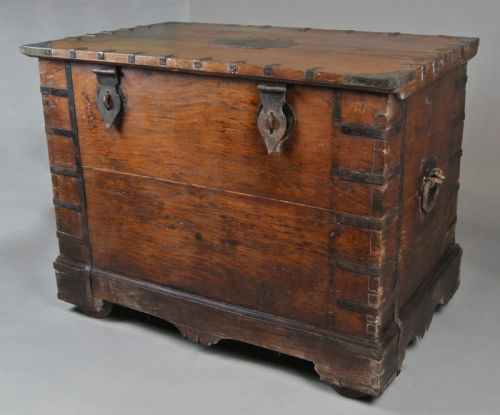
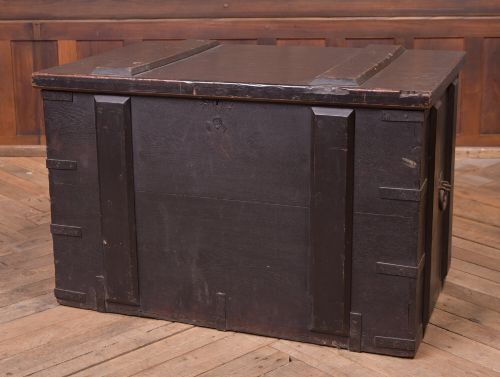
A heavy iron strap trunk provides substantial storage through sturdy wooden construction reinforced with structural metal bands. You encounter forms ranging from English silver chests in oak to colonial dowry coffers in teak and elm.
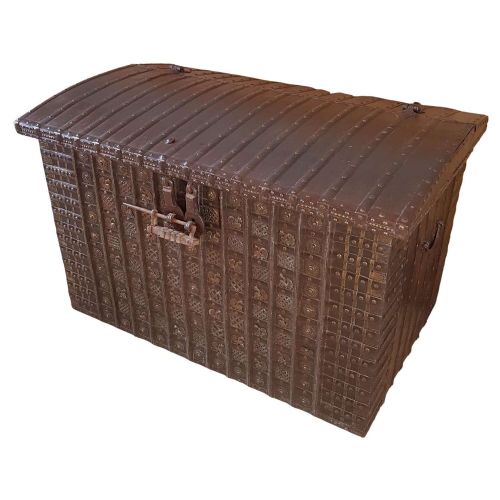
The heavy iron strap trunk appears across several centuries, with Victorian examples in oak and 19th-century pieces originating from Rajasthan, France, and Germany. These containers served varied purposes from secure domestic storage to international shipping.
Most pieces on this page utilise durable hardwoods like oak, teak, and elm combined with hand-wrought iron straps, hinges, and hasps. Their character comes from the interplay of timber grain and functional metal reinforcement.
Materials and construction methods
Carpenters constructed the primary boxes using dense timbers such as oak, teak, elm, and occasionally golden oak. These woods provided the weight and structural integrity required for heavy travel and secure domestic storage.
Blacksmiths applied heavy iron straps, bands, and hasps across the wooden bodies using hand-forged rivets and bolts. This external metal skeleton protected corners and edges from damage during transit.
Many examples feature brass or iron carrying handles, complex internal locking mechanisms, and fitted compartments designed for silver or valuables. The metalwork functions as both structural reinforcement and decorative surface articulation.
Heavy Iron Strap Trunk Retail Price Guide 2026
Typical asking prices for heavy iron strap trunk among the pieces listed under this phrase on Sellingantiques today, from the lower quarter to the upper quarter. They describe what is for sale here now, not the wider market.
Listings for heavy iron strap trunks on this site span the 16th, 19th, and early 20th centuries, utilising oak, teak, elm, and wrought iron.
Assessing quality in heavy iron strap trunks
Quality rests in the integration of the ironwork with the timber frame, where hand-forged straps align precisely with the structural joints of the box. Superior examples display careful blacksmithing in the shaping of hinges, hasps, and corner plates.
The choice of primary wood elevates a piece, from standard domestic elm and oak to dense colonial teak or figured golden oak. Integrated internal fittings and original locking mechanisms further distinguish higher grade examples.
Elkington
The Heavy Iron Strap Trunk Glossary
- Iron strap
- A flat band of metal fixed across the exterior of a trunk to reinforce the wooden joints and protect the edges from impact. These straps are secured with rivets or bolts running through the timber.
- Silver chest
- A specialised storage box lined to protect silver plate or holloware, frequently constructed from dense oak with heavy iron carrying handles. These chests often include internal fitted trays.
- Dowry chest
- A large storage trunk used to hold household goods and valuables for a marriage, often featuring elaborate iron banding and regional decorative characteristics. Examples appear in teak and other regional timbers.
- Hasps
- A slotted metal plate that fastens over a staple and is secured with a padlock or integrated lock mechanism. They provide the primary closure point for travel and storage trunks.
- Coffer
- A heavy wooden box used for safekeeping valuables, typically predating standard chest designs and heavily reinforced with iron. Early versions demonstrate intricate German or continental metalwork.
Heavy Iron Strap Trunk: Frequently Asked Questions
What is a heavy iron strap trunk used for?
These trunks served historical roles ranging from transporting domestic silver and family valuables to storing regional dowries and shipping goods across continents. Today, they function as substantial coffee tables, blanket boxes, or statement storage furniture in modern interiors.
Their rugged construction allows them to handle daily domestic use while providing a secure compartment for household items. The combination of timber and metal suits both traditional and industrial interior schemes.
How do I care for the iron straps?
Maintain the ironwork by keeping it dry and occasionally applying a light microcrystalline wax to prevent oxidation and rust. Avoid harsh chemical cleaners that might strip the historic surface patination from the metal.
Inspect the fixings periodically to ensure the timber has not shrunk away from the metal straps due to dry atmospheric conditions in heated rooms.
How do I date a heavy iron strap trunk?
Dating relies on examining the construction methods of the timber dovetails, the style of the ironwork, and the design of the locking mechanism. Earlier pieces from the 16th or 17th centuries exhibit hand-hammered Nuremberg ironwork and simpler plank construction.
Victorian and later 19th-century examples often feature machine-sawn timbers, standardised brass screws alongside iron bolts, and more complex proprietary lock systems.
Are these trunks waterproof?
Historical travel trunks were designed to shed water during shipping, but surviving pieces may have gaps in the timber or worn seals due to age. They suit indoor display and storage rather than exposure to damp outdoor conditions.
The interior linings, especially in silver chests, should be kept dry to protect the surrounding wood and any stored items from moisture damage.