


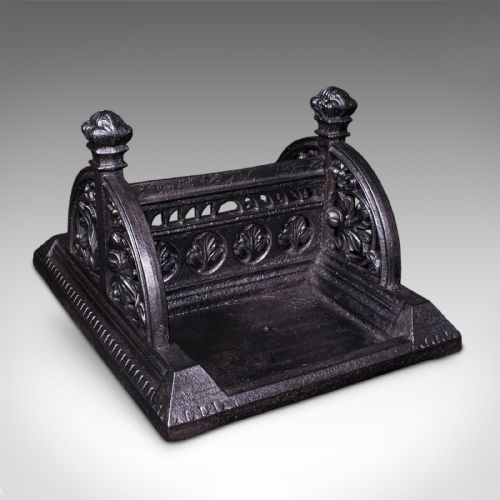


Heavy Iron Scraper
A heavy iron scraper keeps mud outside the threshold where it belongs, grounding an entryway with honest, practical weight.
Heavy Iron Scraper
A heavy iron scraper stands at the doorway of a townhouse or country house, designed to clean mud and dirt from footwear before entry. The heavy iron scraper takes forms ranging from simple utility models to elaborate revival pieces placed by front doors.
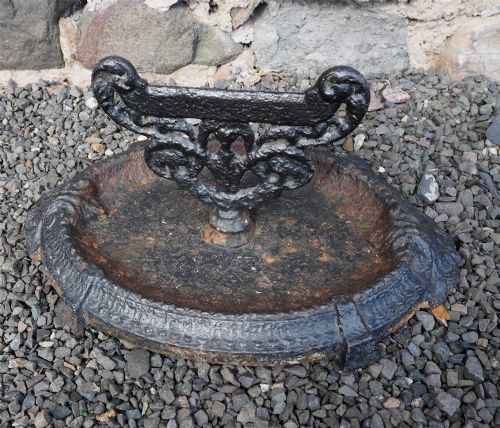
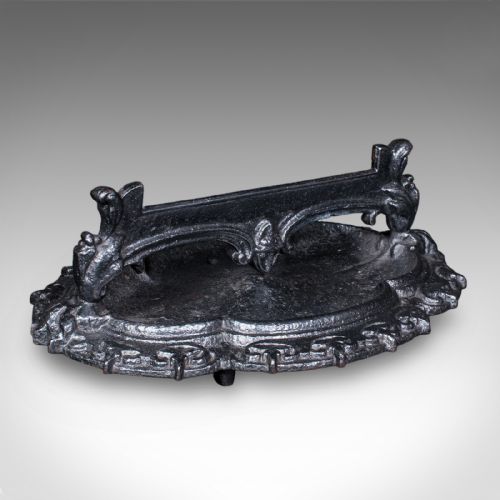
Most examples found here date from the Georgian, Regency, and Victorian periods, capturing the architectural needs of nineteenth-century domestic life. These items often combine the scraper blade with an integrated shoe pull for removing muddy boots.
The heavy iron scraper appears most frequently in cast iron, sometimes accompanied by stone mounting bases, reflecting the robust standards of English entranceways. Buyers encounter domestic pieces tailored for townhouses alongside larger country house variants.
How they were made
Foundries shaped these objects primarily through iron casting, pouring molten metal into moulds to achieve rigid structures and decorative details. Wrought iron also appears in construction, adding forged strength to specific components.
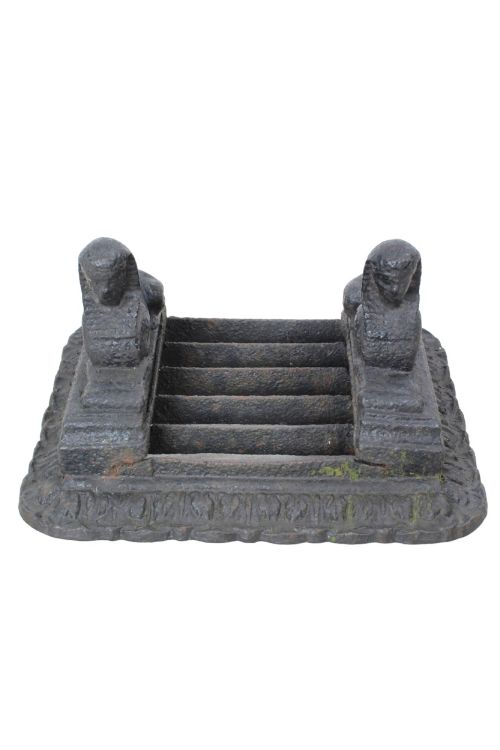
Stylistic elements draw upon Egyptian Revival and Gothic Revival design motifs, integrating ornamental patterns directly into the cast iron frames. Stone forms part of the mounting structure on certain pieces, anchoring the heavy metalwork firmly in place.
Heavy Iron Scraper Retail Price Guide 2026
Typical asking prices for heavy iron scraper among the pieces listed under this phrase on Sellingantiques today, from the lower quarter to the upper quarter. They describe what is for sale here now, not the wider market.
Listings span the Georgian, Regency, and Victorian periods, utilising cast iron, wrought iron, and stone.
What varies in quality
Quality rests upon the crispness of the casting and the ambition of the design, distinguishing standard utility pieces from architectural statements. Elaborate stylistic details, such as those found on Egyptian Revival or Coalbrookdale examples, show superior foundry work.
Proportion and scale separate modest doorway fixtures from substantial country house pieces or matched pairs. The integration of structural stone bases alongside clean ironwork defines the upper tier of surviving examples.
Coalbrookdale
The Heavy Iron Scraper Glossary
- Boot scraper
- A fixed metal blade outside a doorway for removing mud from the soles of shoes. It remains bolted to stonework or mounted in a heavy base.
- Shoe pull
- A loop or handle attached to a scraper frame to assist in drawing off muddy boots. This feature saves the user from bending down too far.
- Coalbrookdale
- A famous ironworks location associated with high-quality nineteenth-century cast iron production. Pieces bearing this association display superior foundry craftsmanship.
- Egyptian Revival
- An architectural and decorative style drawing inspiration from ancient Egyptian motifs. This aesthetic appears on select nineteenth-century ironwork.
- Victorian Gothic Revival
- A nineteenth-century style reviving medieval architectural forms within decorative arts. It lends pointed arches and heavy detailing to domestic iron objects.
Heavy Iron Scraper: Frequently Asked Questions
Where were heavy iron scrapers placed?
These items stood immediately outside front doorways, townhouses, and country house entrances. They were positioned where visitors and residents paused before stepping inside.
Installations were bolted to stone steps or courtyard paving to withstand the vigorous scraping of footwear.
What is the shoe pull for?
The integrated loop or handle served to anchor the foot while the wearer pulled off a muddy boot. It provided leverage for heavy footwear.
This addition made the fixture a dual-purpose tool for muddy arrivals.
How do I distinguish Georgian pieces?
Georgian examples often display restrained lines, simple architectural mounting, and straightforward utility forms. They predate the ornate revival styles of the Victorian era.
Examination of the casting style and proportions helps indicate this earlier period of production.
Can I use these outside today?
These iron objects were built for permanent outdoor placement exposed to the weather. Their heavy construction handles modern entranceway use.
Regular maintenance helps preserve the cast iron surface against moisture over time.