

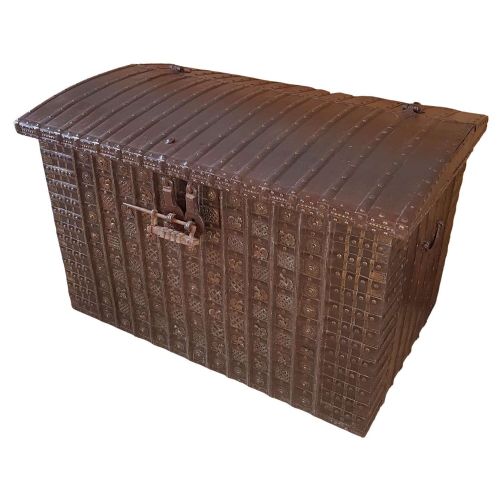


Heavy Iron Bound Trunk
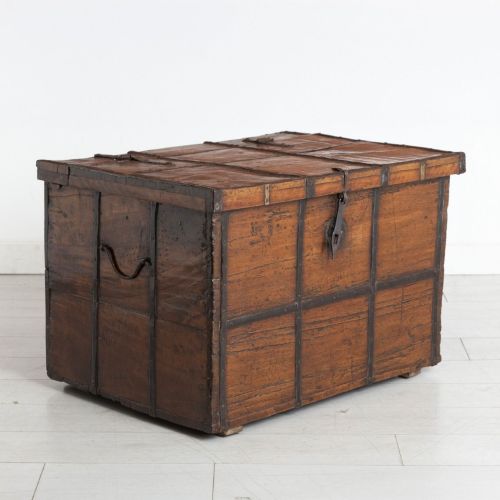
A heavy iron bound trunk offers practical utility and rugged timber construction, built for travel and security in the nineteenth century.
Heavy Iron Bound Trunk
A heavy iron bound trunk is a robust storage piece designed for transport, security, and domestic organisation across various centuries. When you search for this phrase, you encounter large coffers, silver chests, and campaign boxes spanning the Georgian and Victorian eras.
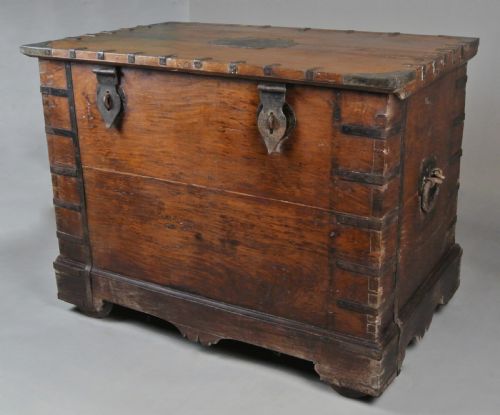
The versions most likely to meet you on this page are nineteenth-century English silver chests in oak with iron bands, alongside teak and hardwood storage chests from Indian workshops. These sturdy containers served military officers, country houses, and international travellers who required durable protection for valuables.
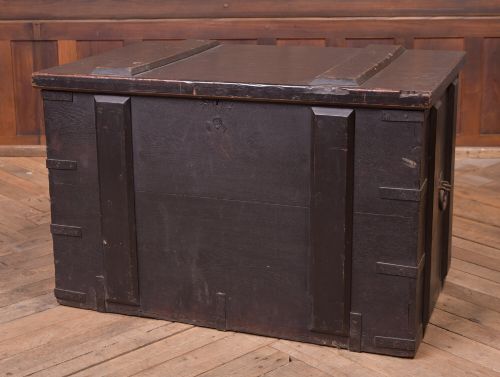
Beyond standard domestic storage, the selection encompasses specialised forms such as country house log bins, dowry chests, and travel trunks. Each variant retains the signature metal straps and corner reinforcements that define the category.
What varies in quality
Quality rests in the selection of primary timbers and the integration of the metalwork. Finely jointed oak silver chests with hand-forged iron bands represent a higher tier than plain utility boxes.
The sophistication of the internal fittings and the retention of original locks, handles, and hinges distinguish superior examples. Retaining linings or manufacturer details elevates the integrity of the piece.
The inventory includes specialised forms such as campaign chests, dowry trunks, log bins, and heavy silver boxes.
Allen of London·H D Dean
The Heavy Iron Bound Trunk Glossary
- Silver chest
- A heavy storage box specifically lined and partitioned to hold plate and cutlery. These oak and iron-banded chests kept domestic silver secure in country houses.
- Campaign case
- A portable trunk or chest constructed for military officers on the move. They utilise robust timbers and metal mountings to endure harsh transport conditions.
- Coffer
- A large wooden chest traditionally used for holding valuables or documents. Early examples feature heavy iron straps and intricate locking systems.
- Dowry chest
- A traditional trunk made to hold a bride's household goods and linen. Pieces from Rajasthan and other regions display regional decorative ironwork.
- Strongbox
- A secure metal and wood container designed to protect currency and precious items. They incorporate heavy iron bands and complex locking mechanisms.
Heavy Iron Bound Trunk: Frequently Asked Questions
What were heavy iron bound trunks used for?
These trunks served primarily for transporting and securing valuable possessions during travel by land or sea. Households utilised them to store silver plate, clothing, and important documents safely.
Many examples functioned as military campaign pieces or domestic storage boxes in grand country houses. Their robust construction protected contents from moisture and impact.
How do I date a heavy iron bound trunk?
Dating relies on examining the timber species, construction techniques, and the style of the ironwork. Georgian and Victorian pieces often feature dovetail joints and specific lock mechanisms.
Earlier examples from the sixteenth century display distinct coffer construction and hand-wrought iron bands. Maker plates or stamps, when present, provide precise chronological markers.
Where were these trunks manufactured?
Production occurred across Britain, Europe, and colonial regions depending on the specific style and timber. English workshops produced oak silver chests for domestic and shipping use.
Other pieces originated in India as teak dowry chests or colonial storage trunks. Continental makers contributed specialised cofers and iron-banded boxes.
How should I clean the iron bands?
Maintain the metalwork by removing light dust with a dry brush and applying a microcrystalline wax to prevent oxidation. Avoid abrasive cleaners that strip the historic surface.
Preserving the natural patina on both the iron and the surrounding wood ensures the piece retains its historical character.