
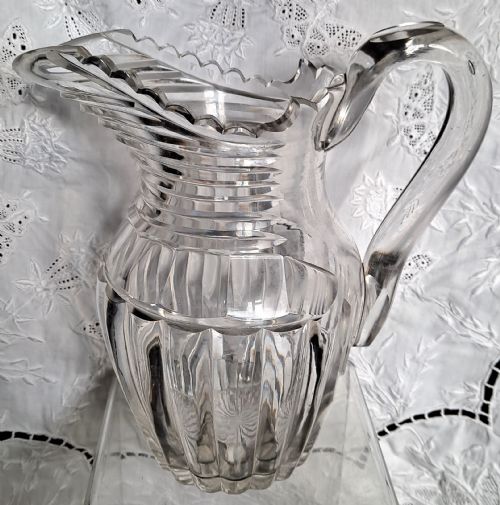
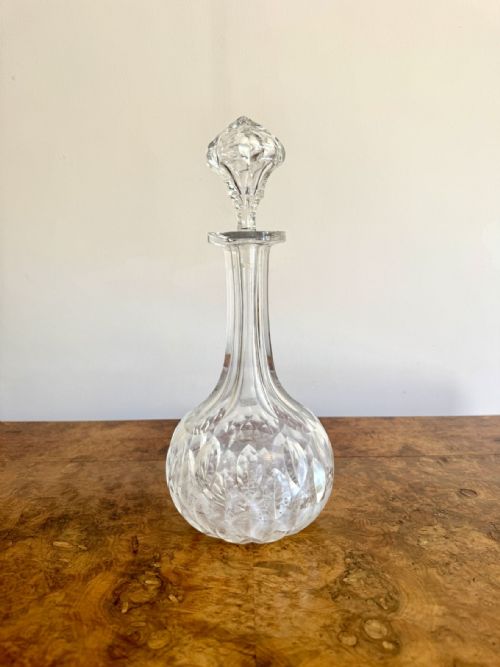
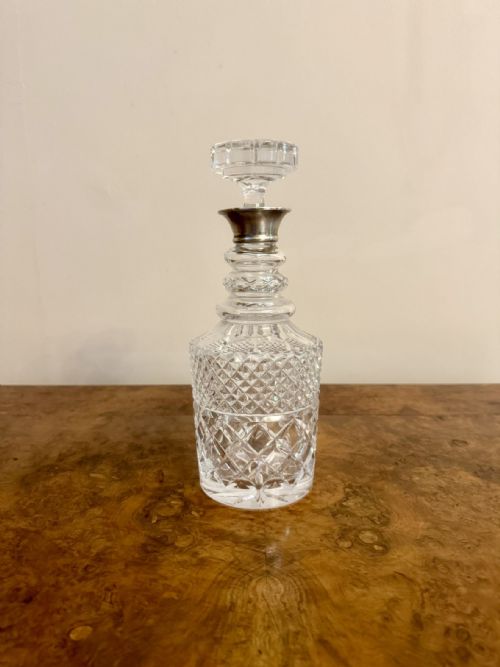


Heavy Glass Decanter
These heavy glass decanter pieces bring tactile weight and brilliant light to a sideboard.
Heavy Glass Decanter
When you search for heavy glass decanter, you are looking at substantial vessels designed for holding spirits, wine and water across several historical periods. The examples found here span from the Georgian and Regency eras through the Victorian and Edwardian periods up to the mid-twentieth century. Most pieces you will meet on this page date from the Edwardian and Victorian years, taking the form of traditional decanters, spirit flasks, water jugs and carafes.
The selection ranges from solo vessels to matched pairs, often featuring generous capacities and thick walls. You will encounter forms that include classic ship's decanters with wide bases for stability at sea, alongside barrel-shaped bodies and three-ring carafes. These items served practical dining purposes in grand homes and continue to function as striking table service accessories today.
How they were made
The material composition relies heavily on lead crystal and lead glass, which provides the substantial heft and high refractive index characteristic of these vessels. Artisans shaped the molten material through glassblowing techniques before applying deep wheel-cut decoration. This cutting creates sharp geometric facets and flutes that catch and disperse ambient light.
Many specimens incorporate metal elements to complete the form, utilising silver collars or silver gilt mounts attached to the glass necks. These metal components provide both structural reinforcement and decorative contrast against the clear crystal.
Listings feature lead crystal and cut glass vessels spanning from Georgian and Regency periods through to the mid-twentieth century.
What varies in quality
The distinction between standard examples and the finest pieces rests upon the crispness of the glass cutting and the clarity of the metal. Superior items display deep, mathematically precise facets with hand-polished surfaces that feel smooth yet sharply defined to the touch. Lesser examples often feature shallow, unpolished cutting that lacks the brilliant optical sparkle found in top-tier work.
Proportion and weight also dictate the hierarchy of these objects. The most desirable pieces balance a heavy, grounded base with a well-formed neck and a matching original stopper, whereas lesser items may feel unbalanced or mismatched in their components.
Freeman & Son Ltd
The Heavy Glass Decanter Glossary
- Cut Glass
- Glass decorated by holding the vessel against a rotating abrasive wheel to carve patterns into the surface. This technique produces deep facets and brilliant light refraction.
- Ship's Decanter
- A form characterised by a broad, low base and a tapering body designed to prevent tipping during rough movement at sea. It remains a stable choice for dining tables.
- Lead Crystal
- Glass containing a significant percentage of lead oxide, which increases the weight, density and clarity of the material. It allows for sharper cutting than standard soda-lime glass.
- Silver Gilt
- Silver that has been coated with a thin layer of gold on its surface. This treatment provides a rich decorative finish to mounts and collars.
- Three Ring Carafe
- A vessel featuring three distinct raised glass rings encircling the neck. These rings originally provided a secure grip for pouring when condensation formed.
Heavy Glass Decanter: Frequently Asked Questions
How do I clean inside a heavy glass decanter?
Cleaning requires warm water and mild detergent combined with specialised cleaning beads to reach stubborn sediment. Avoid sudden temperature changes to prevent thermal shock to the thick crystal walls.
Allow the vessel to air dry completely upside down on a specialised drying rack before storing.
Are these decanters safe for storing spirits?
Most of these historic vessels were made to hold wine, whisky and brandy for serving at the table. Lead crystal can leach small amounts of lead into contents left sitting for extended periods.
For daily modern use, it is best to pour spirits into the vessel just before serving rather than storing them there permanently.
How do I date a Georgian decanter?
Georgian pieces often display characteristic heavy kick-ups on the base and distinctive hand-cut fluting or ring configurations around the neck. The glass itself frequently shows a slightly darker tone and minor handmade imperfections.
Comparing the cutting style and stopper fit helps confirm the period of manufacture.
What is the purpose of a ship's decanter?
The wide, conical shape provides a low centre of gravity that kept the vessel upright during rough sea voyages. This practical marine design proved equally popular on land to prevent tipping on crowded dining tables.