


Heavy Cut Lead Crystal
Heavy cut lead crystal brings genuine weight and deep brilliance to the table through pieces shaped by Victorian, Edwardian, and Art Deco makers.
Heavy Cut Lead Crystal
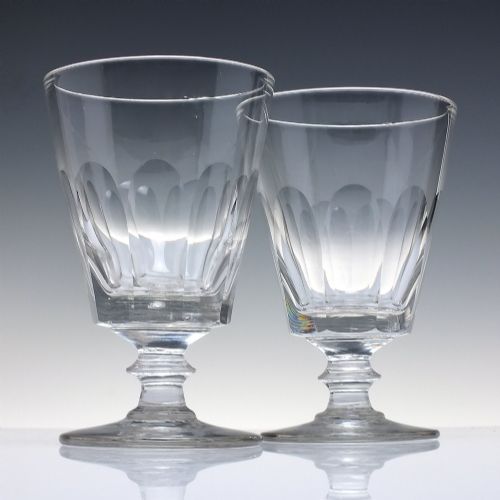
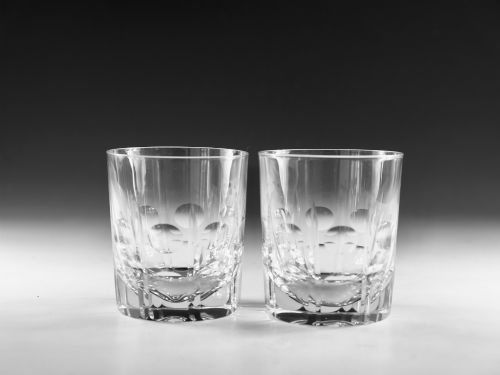
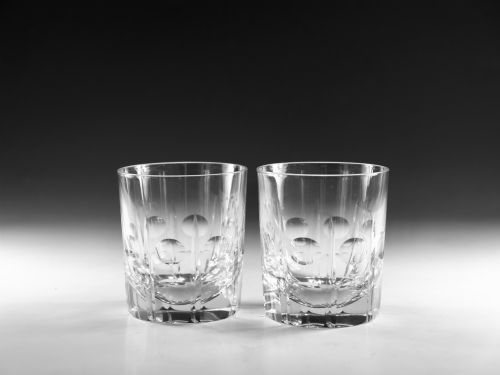
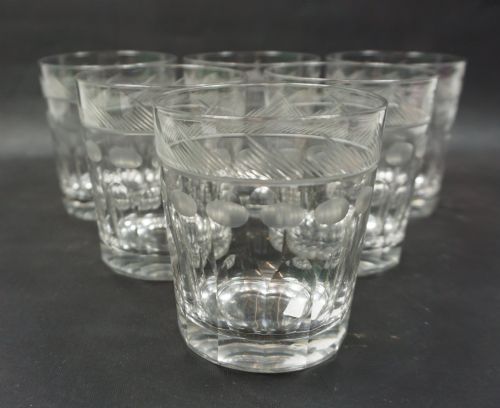
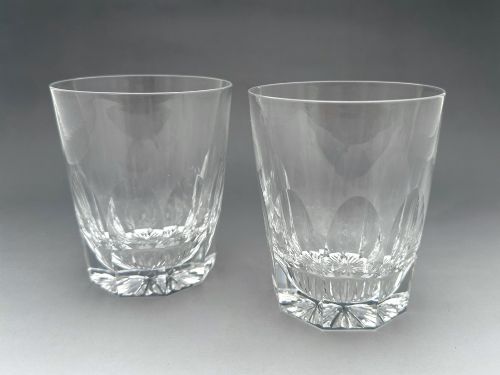
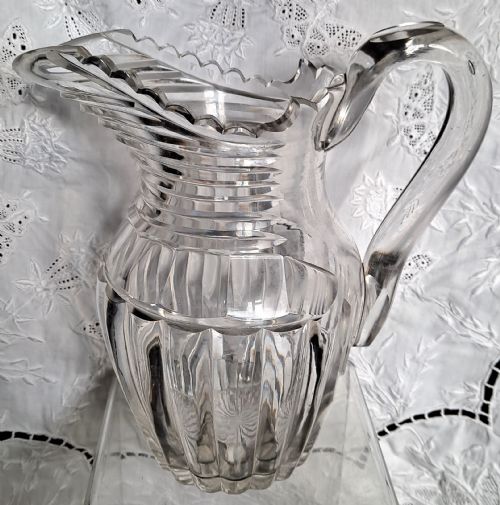
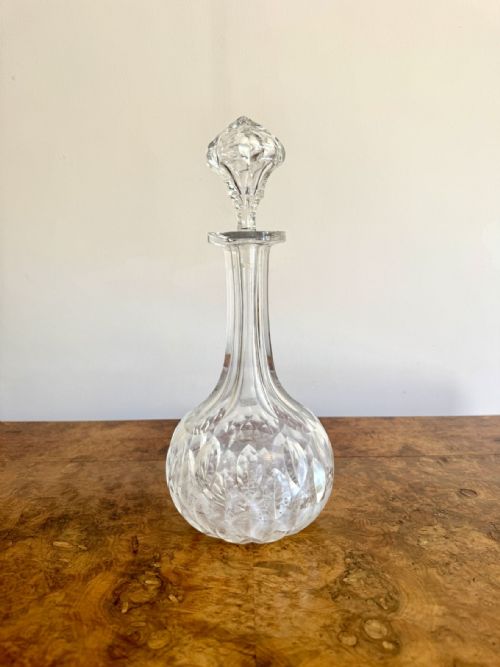
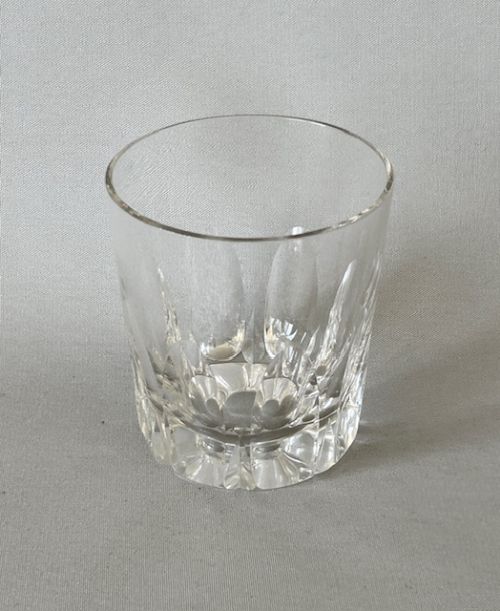
When you search for heavy cut lead crystal, you are looking at substantial vessels designed for utility and display across the nineteenth and twentieth centuries. The pieces range from decanters and water jugs to fruit bowls, table lamps, and tumblers.
You are most likely to meet Edwardian decanters and Victorian rummers or spirit decanters on this page, alongside twentieth-century champagne buckets and whisky glasses. These items appear in domestic settings from the 1800s onward, often paired with silverplate mounts.
The styles span traditional Irish crystal, Regency, and traditional classical forms, reflecting a long history of glass-cutting craftsmanship. Each object displays the dense refractive quality typical of lead crystal.
Materials and Working Methods
The material combines lead oxide with traditional glass components to produce a heavier substance with high light refraction. Craftsmen shaped these objects through blowing or moulding before applying deep surface cuts.
Cutting involved holding the glass against revolving wheels of stone, iron, and wood to carve geometric or floral motifs into the thick walls. Metal and silverplate elements were subsequently added to items such as champagne buckets and cruet sets.
The listings span periods from the early nineteenth century through the mid-twentieth century, including Victorian, Edwardian, and Art Deco examples.
Assessing the Workmanship
Quality depends upon the depth and crispness of the wheel-cut facets, which produce sharp light refraction rather than softened edges. The raw thickness of the lead crystal also contributes significantly to the physical heft of the vessel.
Superior examples demonstrate meticulous attention to symmetry in the geometric patterns and a complete absence of internal bubbles or cloudiness within the glass body.
Charles Graffart for VSL·Waterford
The Heavy Cut Lead Crystal Glossary
- Lead Crystal
- Glass containing a significant proportion of lead oxide, which increases the weight, clarity, and refractive index of the material. This composition allows for deeper and sharper cutting.
- Rummer
- A large, heavy-stemmed drinking glass used historically for ale, wine, or punch during the Georgian and Victorian periods. These vessels frequently display thick bases and robust cut decoration.
- Silverplate
- A thin layer of silver fused to a base metal such as copper or Britannia metal. It is found on mounts, rims, and handles of specific crystal forms.
- Cruet Set
- A matched collection of small bottles or containers held in a frame for condiments like oil, vinegar, or mustard. They often incorporate hand-cut lead crystal components.
- Over Crystal
- A technique involving layers of different coloured glass where the outer layer is partially cut away to reveal the contrasting colour beneath.
Heavy Cut Lead Crystal: Frequently Asked Questions
What is heavy cut lead crystal?
Heavy cut lead crystal consists of dense glass infused with lead oxide, shaped by deep wheel-cutting techniques. These pieces were produced primarily across Victorian, Edwardian, and mid-twentieth-century periods.
The high lead content gives the glass its characteristic weight and brilliance, distinguishing it from standard soda-lime glass vessels.
How do I date a decanter?
Dating relies on observing the shape of the body, the profile of the neck, and the style of the stopper. Earlier nineteenth-century examples often feature polished pontil marks and distinct hand-cut facets.
Twentieth-century pieces generally show more standardised manufacturing traits or distinct maker attributions, while Regency and Victorian items display heavier, hand-finished proportions.
How should I clean my crystal?
Wash crystal vessels by hand in warm water using a mild detergent, avoiding harsh scouring pads that can scratch the surface. Placing them on a padded towel during drying prevents accidental chips along the rim.
Sudden temperature changes should be avoided to protect the thick lead glass from thermal shock.
Were these pieces meant for daily use?
Many items were manufactured for regular dining and entertaining, particularly spirit decanters, water jugs, and whisky tumblers. Their substantial walls provide durability suited to handling.
Over time, many households transitioned these items from functional dining service to cabinet display.