

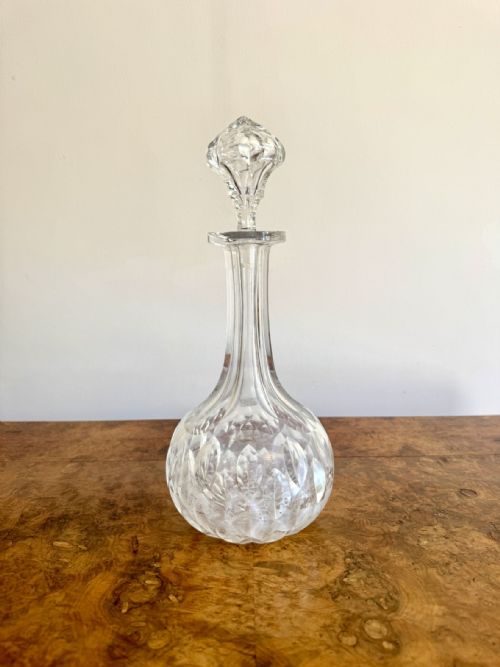


Heavy Cut Crystal Carafe
These heavy cut crystal carafe examples are substantial serving vessels combining weight and deep facets that catch the light.
Heavy Cut Crystal Carafe
A heavy cut crystal carafe search covers substantial serving vessels primarily found from the Regency, Victorian, and Edwardian periods. These pieces include decanters and water jugs made to hold spirits, wine, and water on formal tables.
The most common versions met on this page date from the Edwardian and Victorian eras, often featuring thick glass bodies with deep geometric facets. Alongside traditional decanters, the selection includes large jugs and pitchers designed for everyday utility.
Originating mostly from English workshops, these items demonstrate the heavy handling characteristic of nineteenth-century glass production. Buyers encounter both single vessels and matched pairs suitable for tabletop display.
How they were made
These vessels are formed from heavy lead glass and lead crystal, offering a dense body that allows for deep wheel-cutting. Artisans cut geometric patterns directly into the thick walls, creating sharp facets that define the exterior texture.
Certain examples incorporate fitted silver collars around the neck, combining metalwork with heavy moulded glass. The bases are typically thick and polished flat to ensure stability for these weighty containers.
Heavy Cut Crystal Carafe Retail Price Guide 2026
Typical asking prices for heavy cut crystal carafe among the pieces listed under this phrase on Sellingantiques today, from the lower quarter to the upper quarter. They describe what is for sale here now, not the wider market.
Listings feature items spanning the Regency, Victorian, and Edwardian periods, constructed from lead crystal, cut glass, and silver.
What varies in quality
Quality rests in the crispness of the cutting and the weight of the metal itself. Deeper, sharper facets demand greater skill from the glass cutter and produce a more brilliant refraction of light.
Proportion and clarity separate standard items from superior pieces. Heavier lead crystal and clear metal without internal clouding indicate finer manufacturing standards.
The Heavy Cut Crystal Carafe Glossary
- Cut glass
- Glass decorated by holding it against a rotating wheel to grind away material, creating facets, flutes, and geometric patterns. This technique produces tactile surfaces that catch ambient light.
- Lead crystal
- Glass containing a significant proportion of lead oxide, which increases the weight, refractive index, and resonance of the material. It allows for deeper and sharper wheel cutting than standard soda-lime glass.
- Ship's decanter
- A form with a wide, heavy base and a conical body designed to prevent tipping during movement at sea. The low centre of gravity made them practical for dining on vessels.
- Silver collar
- A decorative and protective metal band fitted around the neck of a glass decanter or jug. It often anchors a pouring lip or provides a secure seating for a stopper.
Heavy Cut Crystal Carafe: Frequently Asked Questions
What is a heavy cut crystal carafe used for?
These vessels are designed to hold and serve spirits, wine, and water during dining. Their heavy construction keeps liquids cool while adding formality to the table setting.
Historically, they transitioned from storage containers in cellars to presentation pieces on the dining table. Today, collectors utilise them for serving beverages or as decorative objects.
How do I date an antique decanter?
Dating relies on examining the shape of the body, the style of the cutting, and the presence of any hallmarks on silver collars. Regency examples often feature broad, low bases, while Edwardian pieces lean towards taller, rectilinear forms.
The weight of the lead glass and the specific geometric patterns also offer clues to the manufacturing period. Comparing the profile to documented pieces helps narrow down the decade.
Are ship's decanters different from standard ones?
Ship's decanters possess a distinctive wide-based, conical shape designed to remain stable on rolling tables. This practical geometry prevents spills in transit.
Standard decanters feature straight sides or globular bodies that require a flat, stationary surface. The wider footprint of the ship's variant makes it instantly recognisable among table glassware.
How should I clean my antique decanter?
Cleaning requires warm water and mild detergent, avoiding harsh abrasives that might scratch the exterior cut surface. Stubborn interior residue is traditionally removed using non-abrasive cleaning beads or rice with warm water.
Sudden temperature changes must be avoided to prevent thermal shock in thick lead glass. Thorough air drying before replacing the stopper keeps the interior clear.