

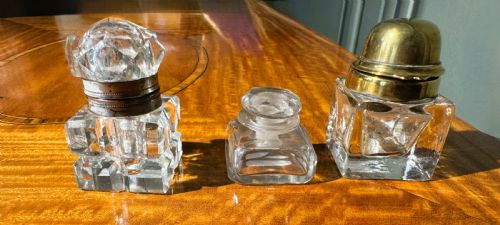
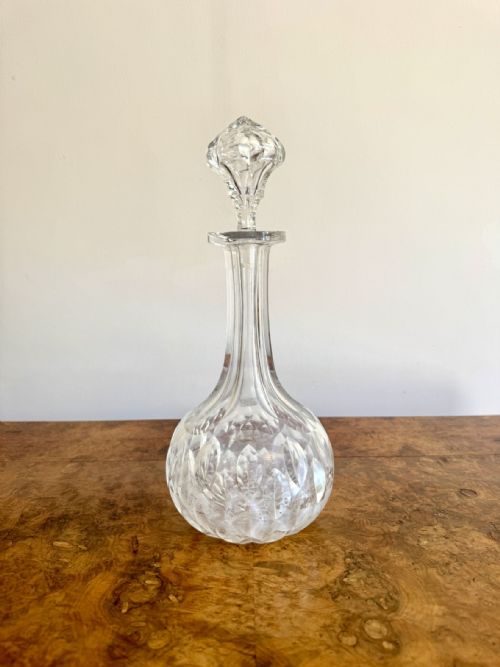


Heavy Cut Crystal Bottle
These heavy cut crystal bottle pieces are substantial glass vessels designed to hold spirits, ink, or condiments with weight and brilliance.
Heavy Cut Crystal Bottle
When you search for a heavy cut crystal bottle, you are looking at substantial glass vessels produced across the nineteenth and early twentieth centuries. These functional objects range from spirit decanters and inkwells to five piece cruet sets designed for the dining table or desk.
The versions you are most likely to meet on this page date from the Victorian and Edwardian eras, alongside pieces from the Regency and Art Deco periods. They combine functional utility with decorative cutting that catches the light from every angle.
How they were made
These items are formed from lead crystal, cut glass, and lead glass, utilising high lead content to achieve maximum brilliance and weight. Skilled artisans shaped the vessels before applying deep wheel cuts to the surface.
Some examples incorporate subsidiary materials such as brass and other metals for mounts, stoppers, or bottle collars. The hand cutting requires immense precision to ensure geometric symmetry across heavy walled glass.
Heavy Cut Crystal Bottle Retail Price Guide 2026
Typical asking prices for heavy cut crystal bottle among the pieces listed under this phrase on Sellingantiques today, from the lower quarter to the upper quarter. They describe what is for sale here now, not the wider market.
Some Victorian inkwells are so heavily cast they could double as paperweights in a gale.
What varies in quality
Quality rests in the depth and crispness of the glass cutting, where sharper facets create superior light refraction. Heavier lead crystal provides a more resonant ring and greater physical substance than standard glass alternatives.
Design harmony also separates ordinary utility items from finer examples, particularly in matched pairs, cruet sets, and vessels retaining their original matching stoppers.
The Heavy Cut Crystal Bottle Glossary
- Lead crystal
- Glass containing a significant proportion of lead oxide, which increases weight, clarity, and the dispersion of light.
- Decanter
- A vessel used for holding and serving liquids, notably wine and spirits, typically fitted with a ground glass stopper.
- Cruet set
- A matched collection of small bottles or containers designed to hold condiments like oil, vinegar, salt, and pepper.
- Inkwell
- A small jar or container for holding writing ink, often set upon a desk or paired with metal stands.
- Wheel cutting
- A decorative technique where the glass is held against a rotating abrasive wheel to carve deep geometric or floral patterns.
Heavy Cut Crystal Bottle: Frequently Asked Questions
How do I clean a heavy cut crystal bottle?
Wash these vessels by hand using warm water and a mild detergent, avoiding sudden temperature changes that can crack the heavy glass. A soft bottle brush helps reach interior residue without scratching the inner walls.
Dry the exterior thoroughly with a lint free cloth to restore the brilliant sparkle of the cut facets. Store them upright to prevent stoppers from becoming stuck over time.
Can I use these decanters for serving wine today?
These antique vessels are fully functional and well suited for decanting and serving contemporary spirits or wine at the table. Their heavy walls help maintain the temperature of the contents during a meal.
Ensure the interior is completely clean and odour free before introducing fresh beverages. Inspect the ground glass stopper to ensure a secure fit.
How do I date a cut glass decanter?
Examine the shape of the body, the style of the cutting, and the formation of the neck and base to determine the manufacturing period. Earlier Regency and Early Victorian pieces often feature heavier kick ups at the base and distinct hand cut flutes.
Later Edwardian and Art Deco examples display more stylised geometric patterns and lighter metal mounts. Comparing the base wear and pontil mark helps confirm the age of the piece.
What is the difference between glass and lead crystal?
Lead crystal contains a high percentage of lead oxide, which gives the material a noticeable heft and a clearer, more resonant ring when struck. Standard glass is lighter and lacks the same dense refractive index.
This added weight allows artisans to cut deeper, sharper patterns into the surface without compromising the structural integrity of the bottle.