

Crystal Wine Carafe
A crystal wine carafe brings heavy lead glass and intricate cut patterns to the table, offering a traditional way to aerate and serve vintage bottles.
Crystal Wine Carafe
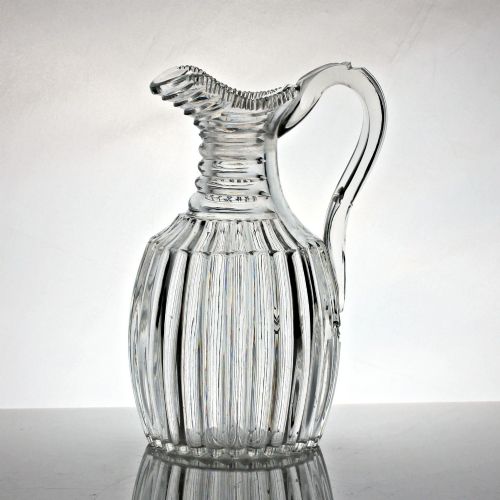
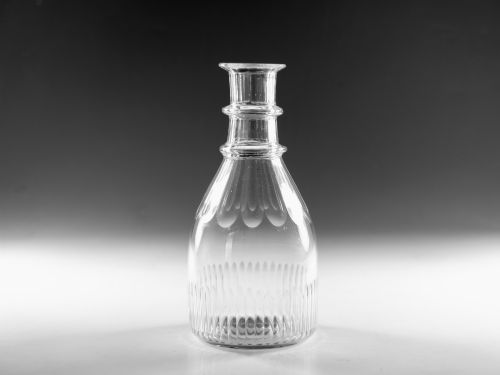
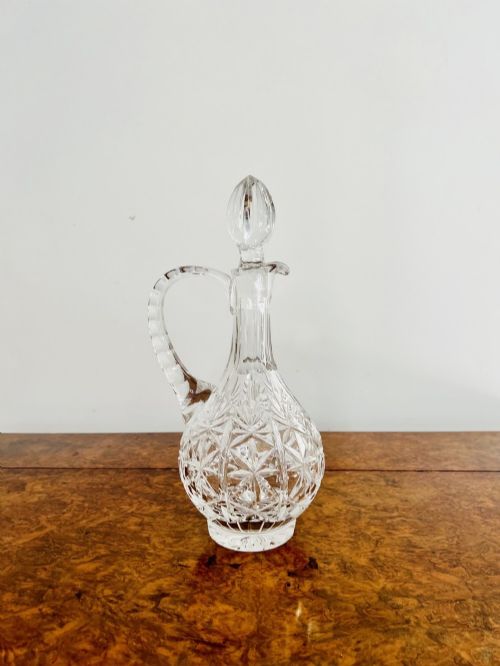
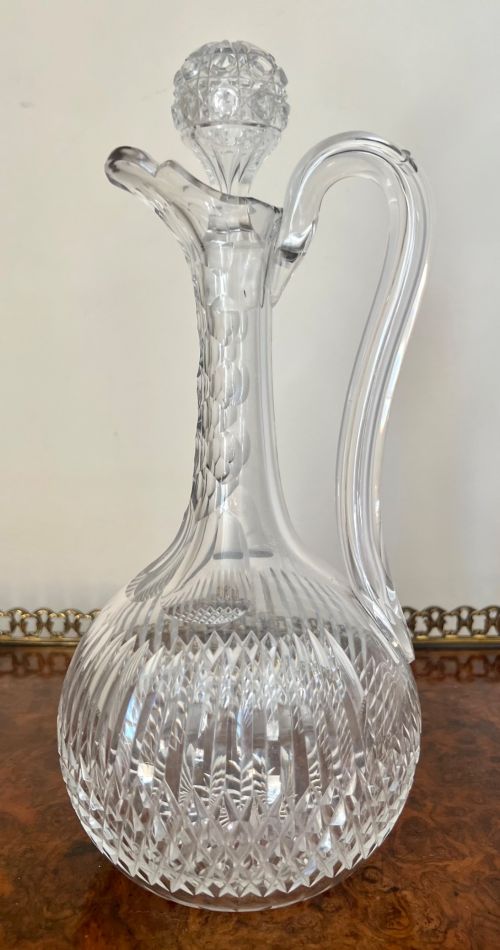
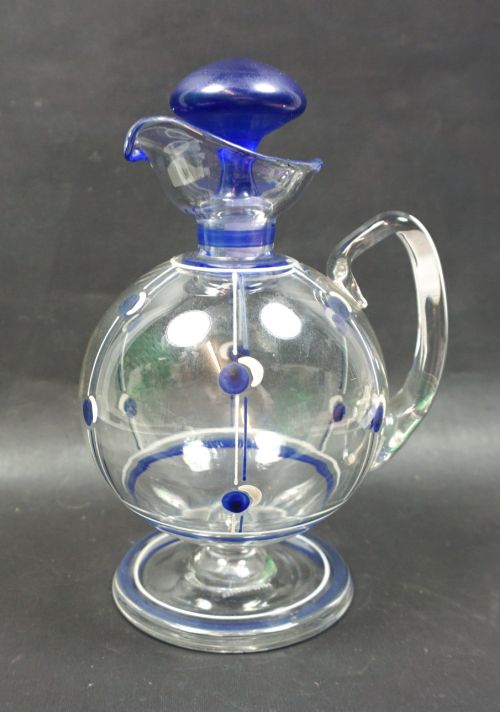
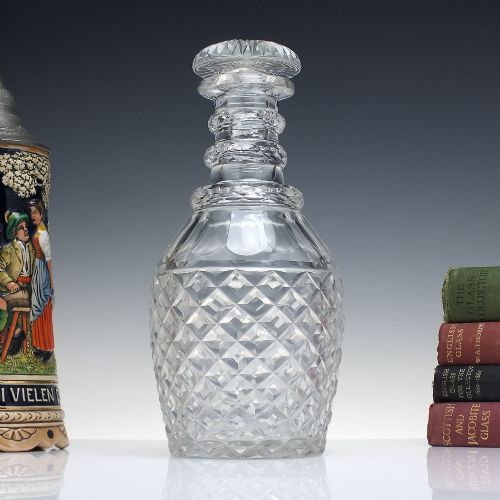
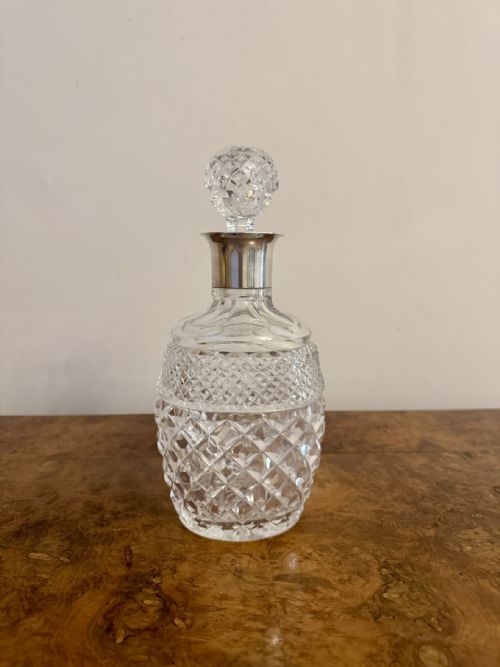
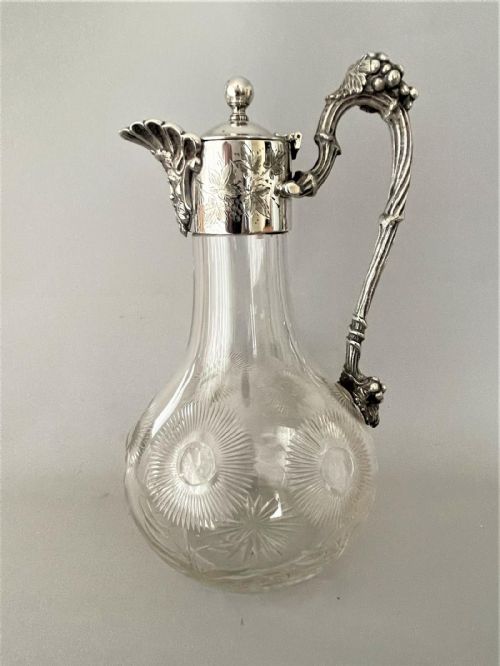
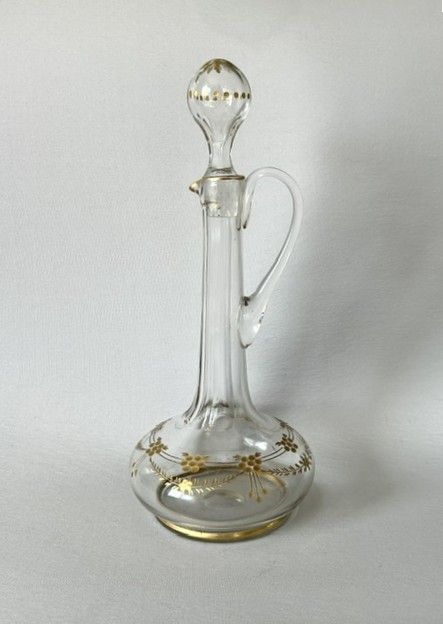
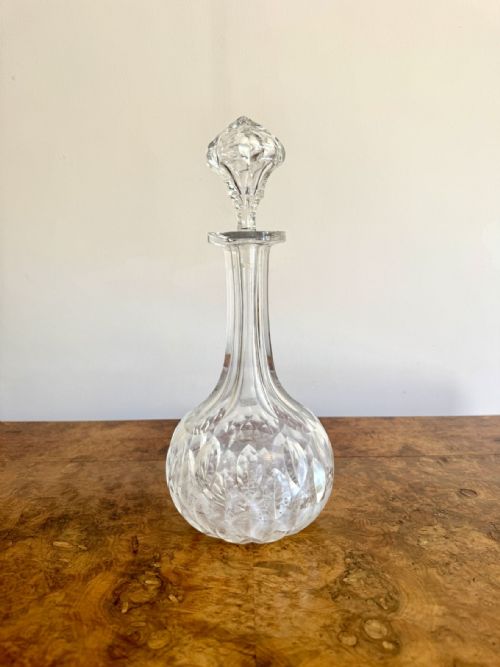
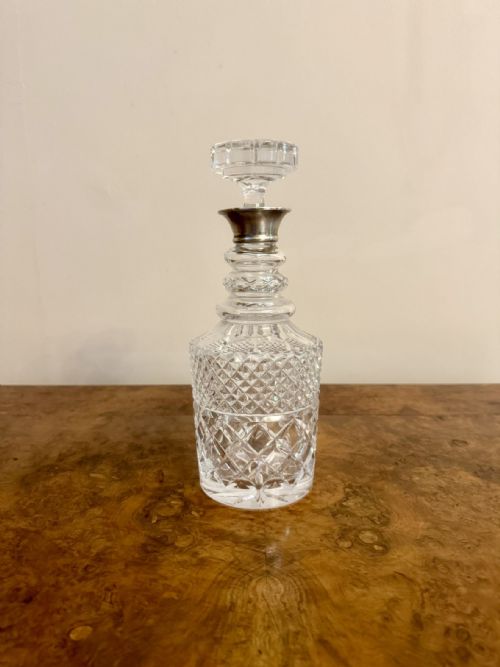
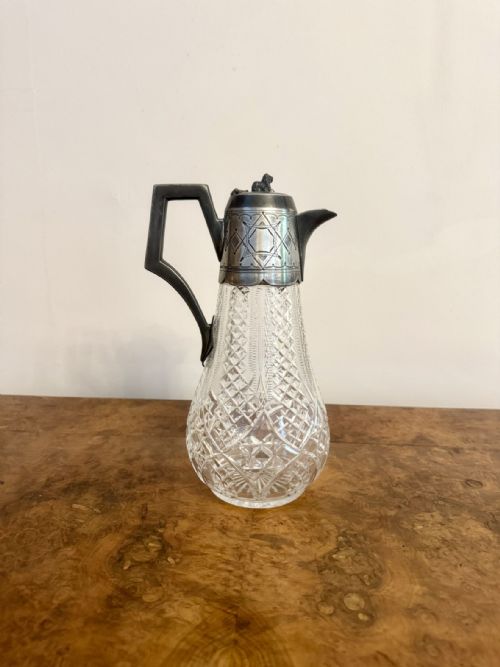
A crystal wine carafe serves as the primary vessel for pouring and decanting vintages at the dining table, appearing across periods from the Georgian era through to the twentieth century. These pieces encompass forms described as decanters, claret jugs, pitchers, and ewers, often retaining their original fitted stoppers or metal mounts.
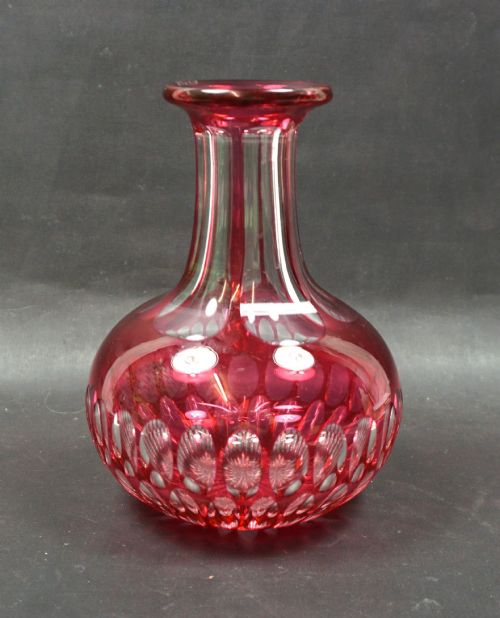
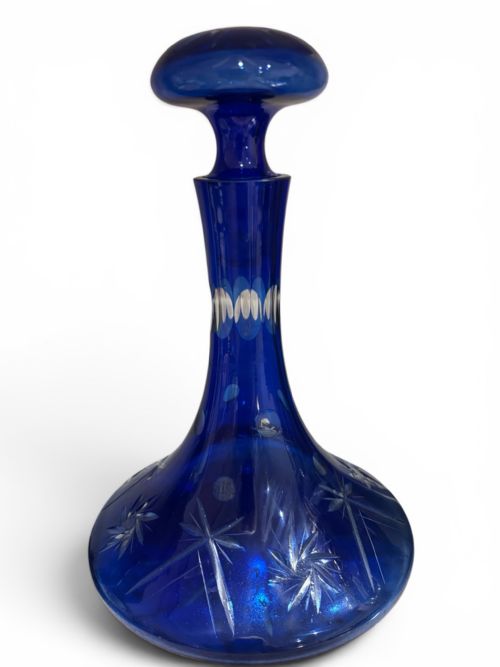
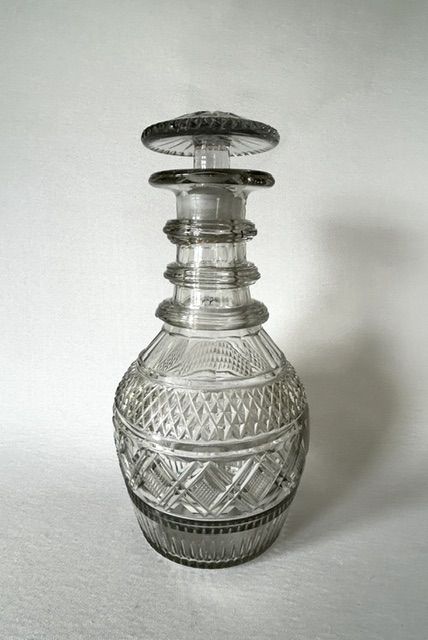
The selection on this page relies heavily on Edwardian and Victorian examples alongside earlier Regency and Georgian items, spanning clear glass, lead crystal, and coloured overlays. Buyers frequently encounter bell-shaped bodies, pillar-cut water jugs, and shoulder decanters bearing engraved labels.
Origins stretch from English workshops to Bohemian glasshouses, with distinct regional styles dictating whether a piece takes a slender silhouette or a wide base. The common thread across these objects is the use of heavy refractive glass designed to catch the candlelight during service.
How they were made
Maker's hands shaped molten lead crystal and clear glass into these vessels through blowing and pressing, before cooling the material for subsequent surface work. Artisans then applied deep wheel-cutting, pillar and prism cutting, or hand engraving to create tactile geometric facets across the body.
Mounts and hardware incorporate sterling silver, silver plate, and enamel decoration, fastened securely around the necks of claret jugs and decanters. Handles shaped like serpents or simple glass loops were joined to the main body during formation to complete the functional silhouette.
Several Victorian claret jugs feature sculpted serpent handles wrapping around the neck as if guarding the vintage within.
What varies in quality
The weight and clarity of the crystal define the baseline of quality, where high lead content produces a resonant ring and deep refractive brilliance. Precision in the wheel-cut facets - evident in crisp edges and symmetrical patterns - separates workshop output from standard production pieces.
The integration of metalwork, such as silver collars and cast mounts, determines the sophistication of claret jugs and decanters. Superior examples feature crisp casting on embellishments like Bacchus masks and tight, secure fits between the stopper and the neck.
Asprey and Co. Ltd
The Crystal Wine Carafe Glossary
- Claret jug
- A vessel specifically designed for serving red wine, usually featuring a handle and a hinged metal lid made from silver plate or sterling silver. These often incorporate cut glass bodies.
- Pillar and prism cut
- A decorative glass-cutting technique involving broad vertical flutes and sharp geometric facets that refract light intensely. This treatment is common on Georgian and 19th Century tablewares.
- Ship's decanter
- A form with a wide, flat base and a conical body designed to prevent tipping on rolling ocean vessels during maritime travel. The low centre of gravity keeps the liquid secure.
- Over crystal
- A layered glass technique where a coloured glass layer is cased over a clear crystal base before being cut away to reveal the contrasting tones underneath.
- Shoulder decanter
- A decanter style characterised by a sharp transition near the top of the body before narrowing into a slender neck.
Crystal Wine Carafe: Frequently Asked Questions
How do I clean an old decanter?
Residue inside vintage glass requires gentle treatment using warm water, mild detergent, and specialised cleaning beads rather than harsh abrasives.
Wooden or metal mounts on silver-collared pieces must stay dry during washing to prevent damage to the historic finishes.
Can I use these for modern wine?
Daily dining use remains entirely practical for sturdy Victorian and Edwardian lead crystal carafes once inspected for interior cleanliness.
Hand washing preserves the historic silver plate and prevents thermal shock from hot water.
How do I date a cut glass decanter?
Stylistic clues such as pontil marks on the base, stopper shape, and the depth of the glass-cutting patterns help narrow the period.
Georgian pieces often display heavier kick-ups and distinct facet cuts, while Edwardian versions lean towards lighter, machine-assisted finishing.
What is the difference between a decanter and a carafe?
Traditional definitions often separate carafes as simpler serving jugs from decanters which feature fitted glass stoppers.
Victorian and Edwardian makers frequently blended these terms across claret jugs and spirit bottles.