


Heavy Copper Log Bin
A heavy copper log bin brings substance and warmth beside an open hearth, holding timber with functional authority.
Heavy Copper Log Bin
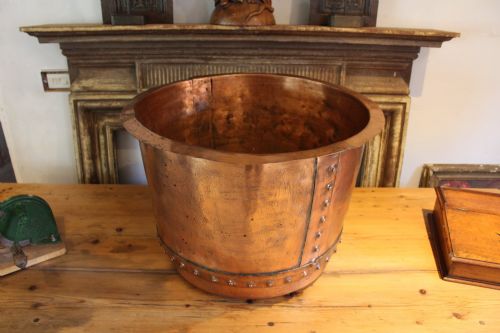
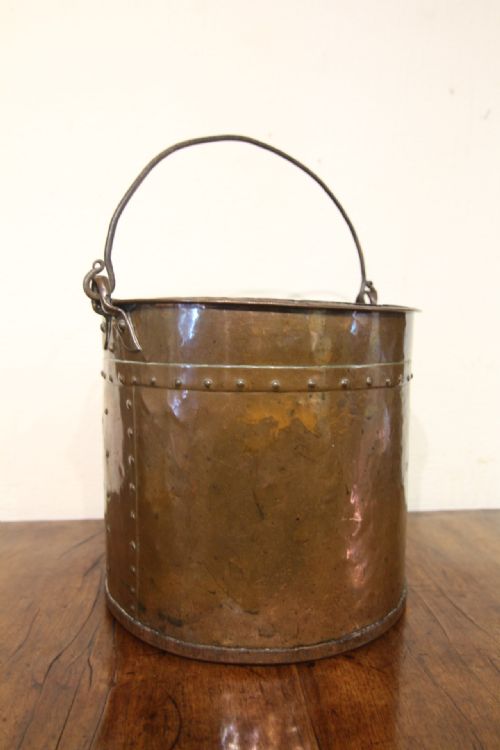
A heavy copper log bin serves primarily as a robust vessel for holding firewood beside a hearth, though these pieces double successfully as large garden planters or decorative pots. When searching for a heavy copper log bin, buyers encounter diverse forms ranging from nineteenth-century grain measures and riveted cauldrons to lidded containers and utilitarian coal buckets.
The selection on this page spans several distinct eras, with nineteenth-century Victorian pieces appearing frequently alongside Georgian examples, rustic farmhouse vessels, and later Art Deco dinanderie creations. These items transition easily from practical fireside accessories to prominent interior focal points, retaining their utilitarian character regardless of their modern placement.
Assessing quality and craftsmanship
Quality in these vessels rests upon the thickness of the metal gauge and the integrity of the hand-riveted seams. Superior examples display substantial weight, well-proportioned wrought iron mounts, and stable bases that remain flat under heavy contents.
The distinction between ordinary utility items and finer pieces lies in the subtlety of the hand-hammered surface work and the preservation of an honest, undisturbed patina. Original handles and authentic period fixings add considerable integrity to the piece.
Materials recorded across these vessels include heavy copper, brass, wrought iron, galvanised steel, and tin.
The Heavy Copper Log Bin Glossary
- Dinarderie
- Decorative metalware shaped and beaten from copper or brass, often associated with Art Deco production.
- Verdigris
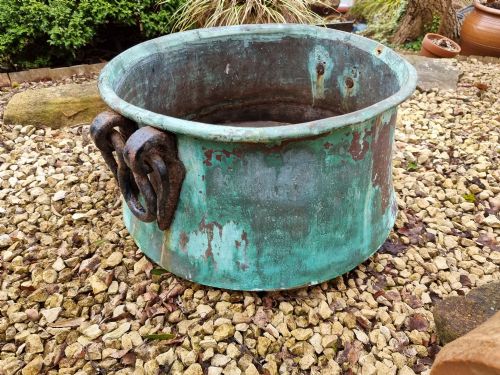
- The green patina that forms naturally on copper through atmospheric oxidation over long periods.
- Gauge
- The thickness of the sheet metal used in construction, where heavier metal denotes greater durability.
- Cauldron
- A large round metal pot with a wide opening and a swing handle, traditionally used for heating or holding materials.
Heavy Copper Log Bin: Frequently Asked Questions
How do I clean a copper log bin?
Wipe the surface gently with a soft, dry cloth to remove dust without disturbing the historic patina. Avoid abrasive polishes that strip away age and character.
For stubborn interior marks, mild soapy water works safely if dried thoroughly afterwards.
Can these bins hold logs outdoors?
Many of these vessels function well outdoors as garden planters or decorative pots, enduring natural weather conditions easily. Copper develops a protective verdigris when exposed to moisture over time.
Ensure adequate drainage if planting directly inside the vessel to protect the metal.
Are these pieces waterproof?
Riveted copper vessels were originally built for practical farm and household tasks, meaning many hold water successfully. However, older seams may weep slightly depending on their condition and history.
Inspect the base and riveted joints before filling any container with water for indoor displays.
How do I date an antique copper bin?
Examine the construction methods, noting whether the seams feature hand-beaten rivets or machine welding. Hand-forged wrought iron handles and heavy copper gauges typically point toward nineteenth-century origins.
Stamps, grain measure numbers, and distinct surface patinas offer further clues to the manufacturing period.