
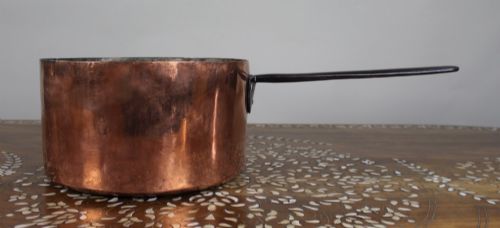
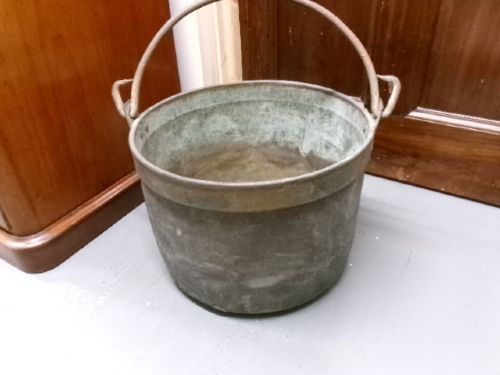


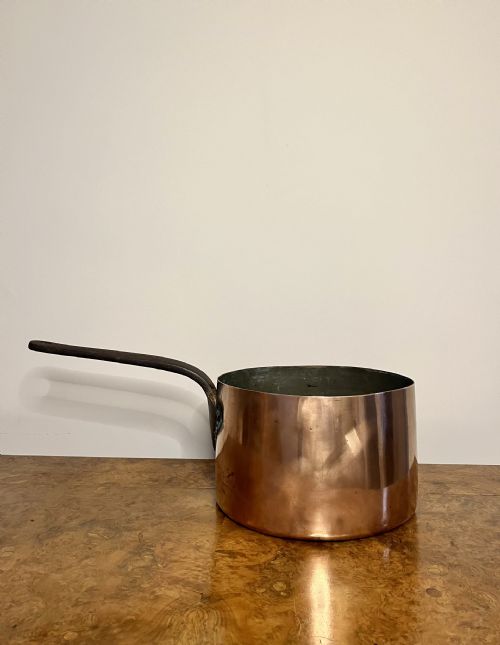


Heavy Copper Cook Pot
These heavy copper cook pot examples bring solid warmth and functional history straight from nineteenth-century kitchens to yours.
Heavy Copper Cook Pot
A heavy copper cook pot offers a substantial piece of antique kitchenware, spanning Georgian, George III, and Victorian periods. Buyers seeking these items encounter robust vessels designed for serious culinary use, from large preserve pans to saucepans with swing handles.
Most items appearing on this page belong to the nineteenth century and French Country or Victorian Country styles. These domestic workhorses combine copper bodies with brass, iron, or wrought iron elements, often featuring riveted construction.
Forms range from single saucepans to sets of pans and lidded cooking vessels. Each object reflects historical kitchen environments where weight and heat conduction mattered above all else.
Materials and construction methods
Makers formed these pots using heavy copper sheets, frequently joining seams with visible rivets for structural strength. Handles typically incorporate brass, iron, or wrought iron, secured firmly to the main copper body.
Many examples include tin linings on the interior to prevent copper from reacting with food during cooking. Exterior surfaces display an original patina developed through decades of service and age.
Current listings feature copper, brass, iron, and tin across Georgian and Victorian periods.
Assessing quality in copper cookware
Quality rests in the thickness of the copper gauge and the integrity of the original construction. Substantial metal weight ensures even heat distribution and long-term durability across centuries of existence.
Attention to detail in the hand-beaten form, the sturdiness of riveted handles, and makers' marks elevate certain pieces above standard kitchenware. Preserved surface patinas and intact hardware define the finer survivors.
Hodges and Sons·Liptons
The Heavy Copper Cook Pot Glossary
- Saucepan
- A deep cooking pan with a handle, used for boiling or simmering. Georgian and Victorian examples often feature thick copper walls and heavy bases.
- Preserve pan
- A wide, open vessel designed for boiling fruit and sugar. These typically include swing handles for lifting heavy loads of jam.
- Cauldron
- A large round pot for cooking over an open fire. Many Victorian versions combine copper bodies with brass handles and iron fittings.
- Patina
- The surface sheen and colour acquired by metal through age and use. Original patinas show the authentic history of an antique cooking vessel.
- Riveted
- Joined together using metal bolts hammered flat at the ends. This technique secured handles firmly to heavy copper bodies before modern welding.
Heavy Copper Cook Pot: Frequently Asked Questions
How do I clean an antique copper pot?
Traditional methods involve gentle cleaning agents that remove tarnish without stripping the historic patina. Avoid harsh abrasives that thin the antique metal.
Keeping the exterior polished is a matter of personal taste, while the interior tin lining requires careful maintenance if used for food preparation.
Can I still cook with these pots?
Many of these vessels remain physically capable of heating food, provided the interior tin lining is intact and safe. Buyers often evaluate the inner surface before culinary use.
For most collectors, however, these heavy pieces serve as decorative display items rather than daily kitchen tools.
How do I date a copper pot?
Dating relies on manufacturing techniques such as handmade dovetailing, early rivet styles, and specific handle designs. Georgian pieces differ in handle shape and heft from later Victorian items.
Makers' stamps or engraved initials can also point towards specific decades within the nineteenth century.
Why are some pots heavier than others?
The weight depends on the thickness of the copper sheet used by the metalsmith. Commercial kitchens and large households required thicker metal to withstand constant fires.
Heavier pots distributed heat more evenly and resisted warping under intense daily use.