
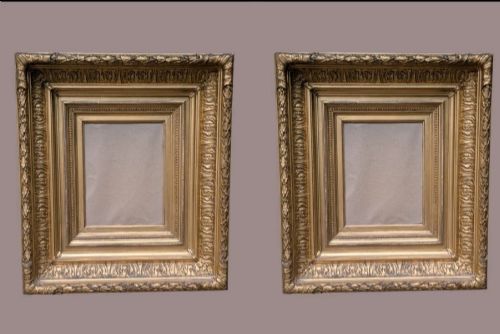

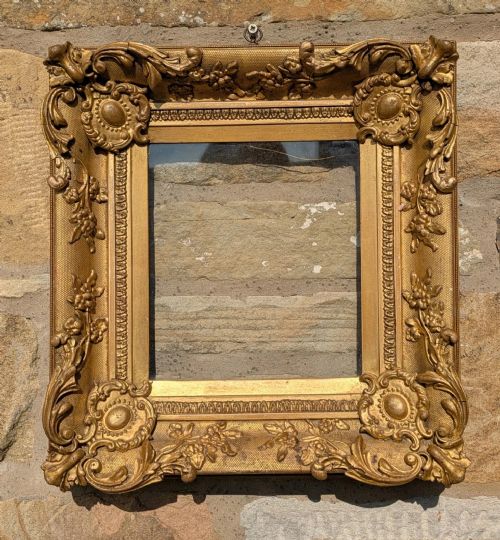


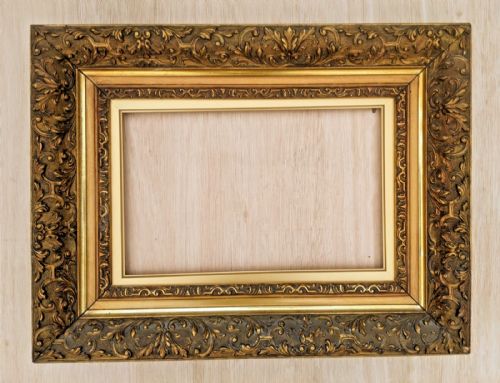


Heavy Carved Picture Frame
These heavy carved picture frame pieces give oil paintings and mirrors real architectural presence on a wall.
Heavy Carved Picture Frame
When you search for a heavy carved picture frame, you are looking at substantial surrounds built to hold large oil paintings or overmantle wall mirrors. The pieces you meet on this page span from the seventeenth century through the Victorian era up to the nineteen-thirties, taking forms such as deep picture frames and large decorative wall mirrors.
The styles you encounter most often include Victorian, Rococo Revival, Grand Regency, and Baroque Revival. Many of these surrounds feature deep profiles and generous proportions designed to anchor major artworks or rooms with grand interior schemes.
How they were made
Makers built these frames using solid wood as a primary structural base, applying layers of gesso to create smooth surfaces for detailed ornamentation. This plaster-like mixture allowed craftsmen to carve and model elaborate relief work before applying finish.
Gold leaf and giltwood finishes provide the characteristic metallic sheen seen across the selection, while some later examples incorporate linen slips. Brass hardware and glass components appear where frames double as wall mirrors.
Some seventeenth-century wall mirrors have hung in so many grand rooms they likely watched centuries of fashion mistakes unfold.
What varies in quality
The depth of the moulding and the crispness of the carving distinguish finer examples from simpler production. Deep Victorian frames with intricate gesso work show a standard of hand-finishing that elevates them above standard commercial surrounds.
The integrity of the giltwood surface and the weight of the timber dictate the overall presence of the piece. Superior construction ensures the heavy wooden frame supports large canvases or mirrors securely without warping over time.
The Heavy Carved Picture Frame Glossary
- Gesso
- A plaster-like mixture applied to wood frames to create a smooth surface for gilding and carving. It allows intricate decorative details to be moulded with precision.
- Giltwood
- Timber covered with a thin layer of gold leaf or metallic paint. This finish creates the rich, reflective appearance typical of antique picture frames and mirrors.
- Linen slip
- A fabric-covered inner border placed between the painting and the outer frame. It provides a neutral visual transition that softens the contrast of heavy gilding.
- Overmantle wall mirror
- A large mirror designed specifically to hang above a fireplace mantel. These pieces share the deep proportions and ornate carving of heavy picture frames.
Heavy Carved Picture Frame: Frequently Asked Questions
Can I use these frames for mirrors?
Many large nineteenth-century gilt frames were originally manufactured or later adapted to house mirror glass instead of canvas. The deep profiles of these surrounds suit wall mirrors particularly well.
When selecting a frame for a mirror, ensure the rebate depth can accommodate both the glass and a secure backing board.
How do I date an antique frame?
Dating relies on observing the timber, the composition of the gesso, and the style of the carving. Victorian Revival and Baroque Revival pieces often exhibit specific Victorian joinery methods and deep moulding profiles.
Comparing the construction of the corners and the type of gold leaf application helps place the piece within the nineteenth century or earlier periods.
What is a linen slip used for?
A linen slip acts as an internal border that sits inside the main wooden frame next to the artwork. It creates a subtle visual buffer between heavy gilt ornamentation and an oil painting.
This fabric insert helps smaller or lighter canvases sit comfortably within deep, imposing frames without getting visually lost.