
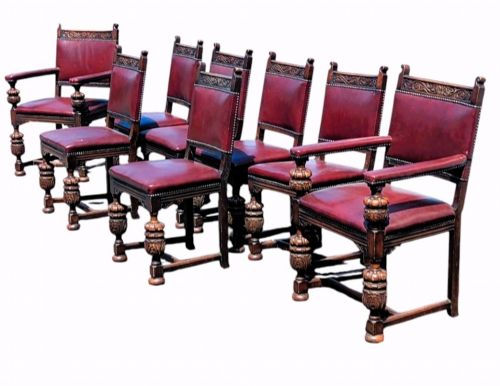


Heavy Carved Oak Chairs
These heavy carved oak chairs bring deep historical character into a room through dense timber and confident ornamentation.
Heavy Carved Oak Chairs
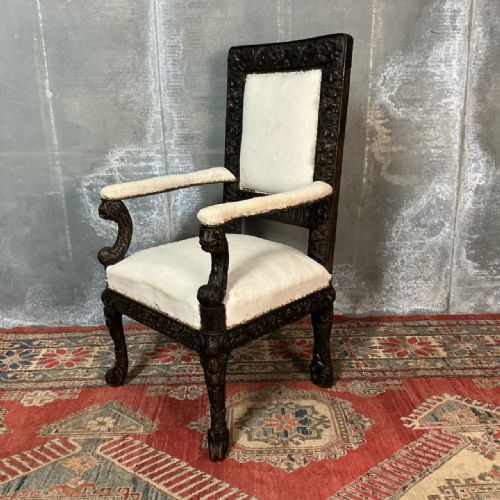
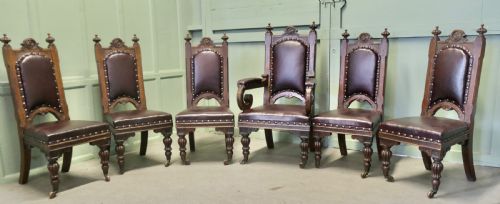
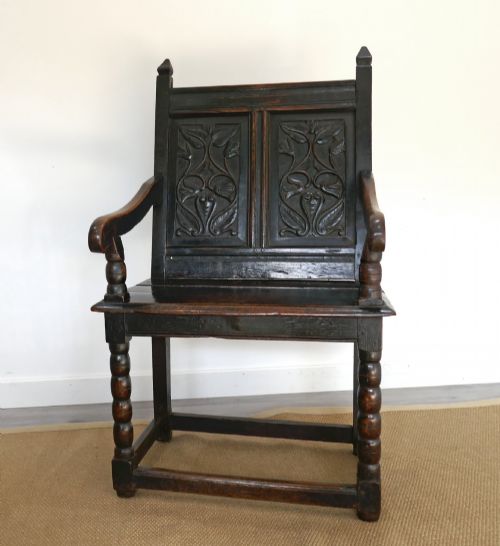
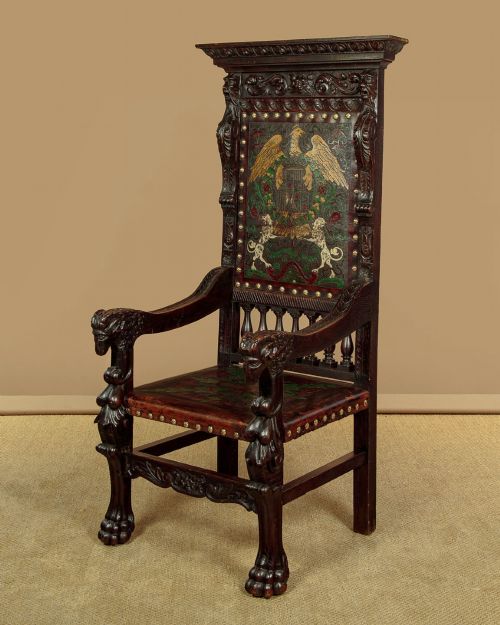
Heavy carved oak chairs appear in various forms on this page, ranging from single wainscot and throne chairs to complete dining sets. Buyers search for these pieces to anchor a room with substantial timber and historical presence.
Early periods are represented by seventeenth-century wainscot chairs, while later interpretations include Edwardian dining suites and twentieth-century revival carvers. Each piece utilises solid English oak to achieve its weight and structural permanence.
Craftsmanship and Proportion
Quality rests in the depth and clarity of the hand carving, where sharper execution distinguishes superior examples from softer, mass-produced revival work. The integration of the ornament with the structural frame marks the better workshop output.
Proportion and timber selection dictate the visual weight of the piece, with tightly grained oak holding crisper detail than coarser cuts. Original upholstery materials and well-preserved joints further separate standard examples from notable ones.
Listings feature oak combined with leather, velvet, and brass across periods spanning the seventeenth century to the twentieth century.
S&H Jewell
The Heavy Carved Oak Chairs Glossary
- Wainscot chair
- An early form of wooden armchair constructed with panelled backboards and solid seat boxes. These pieces represent some of the earliest seating forms recorded in the evidence.
- Gothic Revival
- A nineteenth-century style that revived medieval architectural motifs such as pointed arches and tracery. Carvings in this style often incorporate deep relief and religious or heraldic themes.
- Throne chair
- A high-backed, imposing armchair designed to command authority within a room. They frequently feature elaborate crest rails and heavily carved arm supports.
- Baroque Revival
- A decorative style favouring dramatic curves, scrollwork, and rich ornamentation. Pieces from this tradition display exuberant carving across the back panels and legs.
- Jacobean Revival
- A nineteenth-century interpretation of seventeenth-century furniture design. It typically employs straight lines, geometric panel moulding, and dark oak finishes.
Heavy Carved Oak Chairs: Frequently Asked Questions
What is a wainscot chair?
A wainscot chair is an early form of wooden seating constructed from heavy panelled oak. These pieces typically feature solid timber seats and high, boxed backs.
They originated in the seventeenth century and serve as sturdy examples of early domestic woodwork.
How do I date a carved oak chair?
Dating relies on examining the joinery methods, tool marks, and the specific style of the carving. Revival pieces often borrow motifs from earlier centuries but betray their later origin through machine-cut elements.
Comparing the timber grain and construction style against documented period examples helps confirm the era of manufacture.
Where should I place a heavy oak armchair?
These substantial chairs suit libraries, studies, or large living spaces where their visual weight balances the room. They function well as standalone statement pieces rather than tucked into tight corners.
Ensure the floor surface can support both the weight of the chair and daily sitting use.
How do I care for antique oak furniture?
Maintenance involves dusting with a dry cloth and occasionally applying suitable wax to nourish the timber. Avoid placing these chairs near direct heat sources or strong sunlight, which can dry out the oak.
Regular care preserves the natural patina built up over centuries of use.