


Heavy Carved Oak Armchair
A heavy carved oak armchair brings centuries of solid timberwork and deep relief carving straight into a modern room.
Heavy Carved Oak Armchair
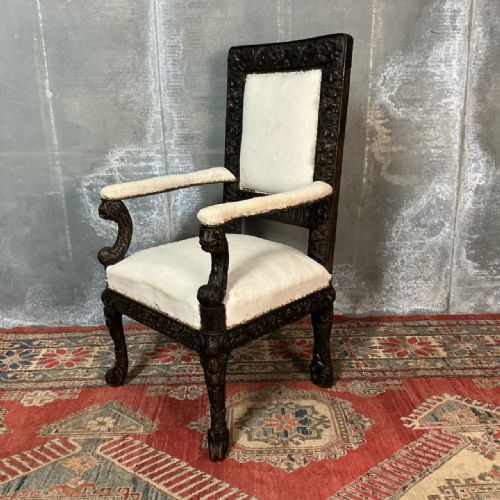
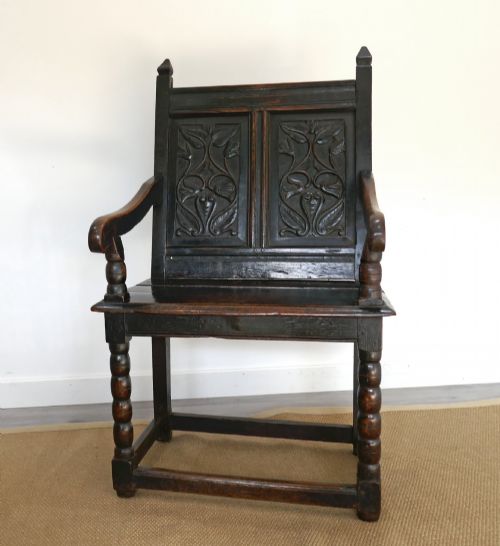
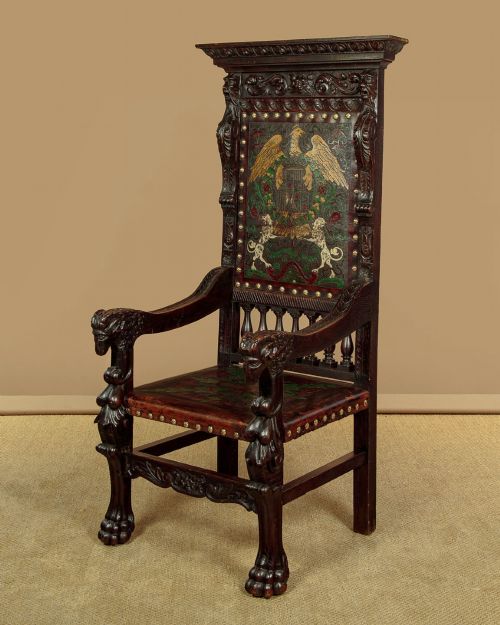
A heavy carved oak armchair is a substantial seat built primarily from English oak, appearing in forms such as wainscot chairs, throne chairs, and library armchairs. These pieces span several distinct eras, running from seventeenth-century originals through nineteenth-century revivals like Gothic, Jacobean, and Renaissance styles, up to early twentieth-century interpretations.
The version you are most likely to meet on this page is a nineteenth-century revival piece, often heavily ornamented with strapwork, foliage, or figural carvings, alongside occasional genuine seventeenth-century wainscot examples. They function naturally as desk chairs, accent chairs, or imposing fireside seats rather than casual lounging furniture.
Makers and workshops across Britain produced these chairs to project authority and permanence, utilising dense timber and traditional joinery. Surviving examples often incorporate upholstery in leather, velvet, or fabric, adding texture to the rigid wooden frames.
What varies in quality
The depth and crispness of the carving dictate much of the distinction between standard production and exceptional examples, particularly in revival pieces where relief work can range from shallow stamping to deeply undercut foliage and figures. The choice of timber grain and the integrity of the original joints also separate mass-produced nineteenth-century workshop items from master-carved exhibition pieces.
Proportion and structural weight define the presence of the chair, with superior examples maintaining balanced sightlines despite heavy ornamentation. The integration of period elements, such as genuine seventeenth-century panels within later frames, influences the overall character of the piece.
One recorded Victorian armchair comes carved specifically with hunting hounds, dedicated to the pursuits of the field.
S&H Jewell
The Heavy Carved Oak Armchair Glossary
- Wainscot chair
- A heavy wooden armchair of seventeenth-century origin featuring panelled construction and solid wooden seats. These early forms set the template for later revival seating.
- Throne chair
- An imposing armchair with a high back and prominent arms designed to dominate a room. They frequently display Renaissance or Gothic revival carving.
- Jacobean Revival
- A nineteenth-century style copying seventeenth-century English furniture characteristics. It relies heavily on geometric strapwork and turned legs.
- Gothic Revival
- A nineteenth-century movement drawing on medieval ecclesiastical architecture and motifs. Pieces in this style often incorporate tracery, pointed arches, and carved animal figures.
- Medullary rays
- The natural silver-grain flecks visible in quartersawn oak. Carpenters prize this figure for its aesthetic appeal and structural stability.
Heavy Carved Oak Armchair: Frequently Asked Questions
Are these armchairs comfortable for daily sitting?
These armchairs are built with rigid wooden frames and upright backs that encourage an upright posture rather than relaxed lounging. Many benefit from a supportive cushion on the wooden or leather seat.
While historic models were designed for formal rooms rather than hours of television viewing, adding a loose pad makes them practical for a desk or study.
How do I tell a seventeenth-century chair from a nineteenth-century revival?
Seventeenth-century pieces display genuine age-related wear, hand-riven timber, and pegged mortise and tenon joints that reflect period tool marks. Revival pieces from the Victorian era often use steam-sawn timber and machine assistance.
Examining the underside and the back panels usually reveals the construction methods and tool technology characteristic of the later nineteenth-century workshops.
Where should I place a heavy carved oak armchair?
These substantial chairs suit hallways, studies, or libraries where their dark timber and architectural carving can anchor the room. They also function well as desk chairs or dramatic accent pieces against neutral walls.
Because of their physical weight and imposing scale, they require space to breathe rather than being crammed into tight corners.
What maintenance does old oak require?
Solid oak benefits from occasional applications of beeswax to nourish the timber and maintain a soft lustre. Avoid placing these chairs near direct heat sources or in fluctuating humidity to prevent the wood from splitting.
Dusting with a soft cloth keeps the carved recesses clean without building up residue on the polished surface.