




Heavy Carved Dresser
A heavy carved dresser brings substantial presence and deep historical ornament to a room.
Heavy Carved Dresser
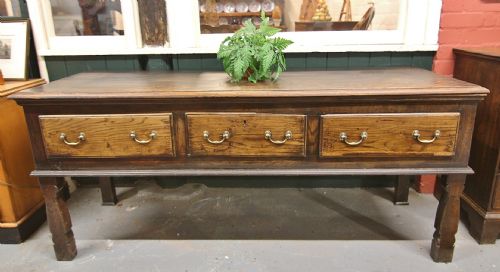
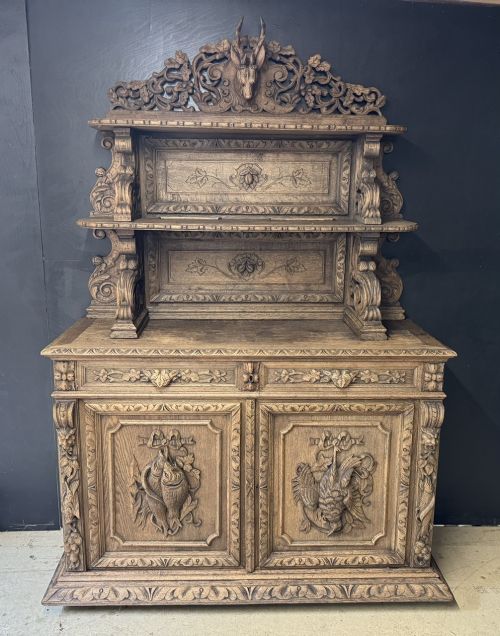
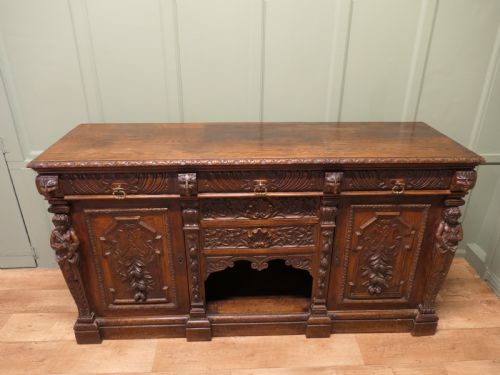
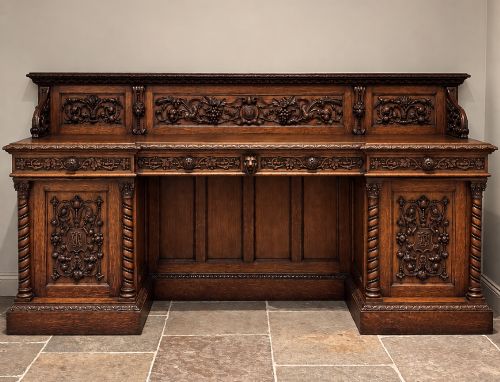
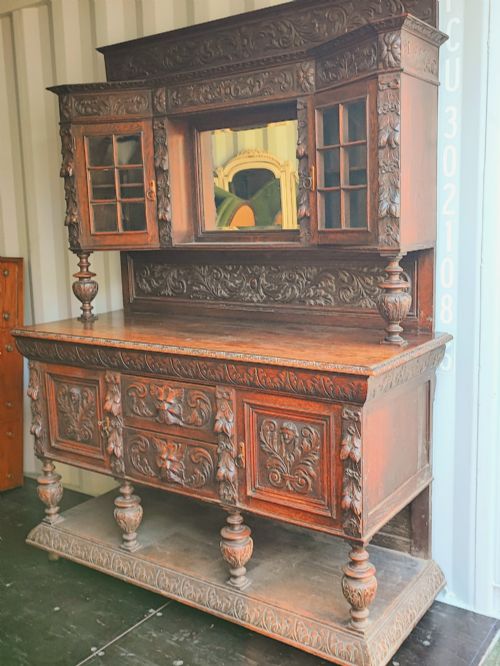
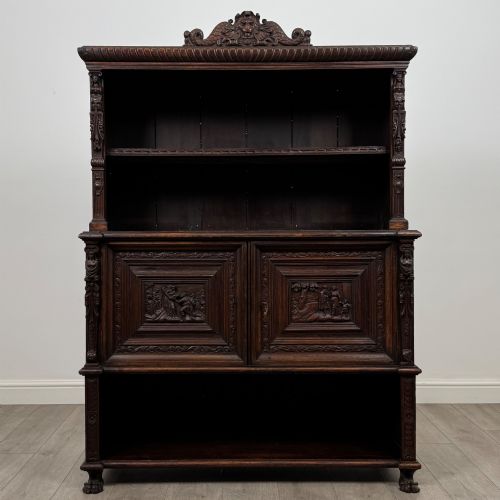
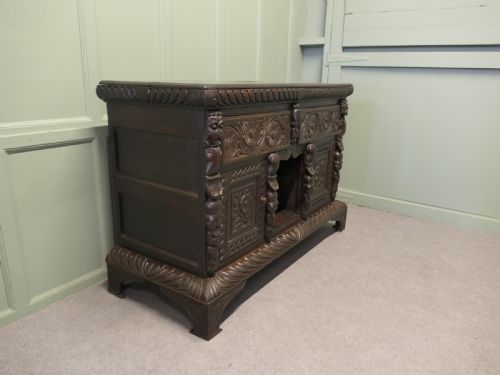
A heavy carved dresser encompasses robust storage furniture built primarily from oak across several centuries. These substantial pieces frequently appear as large sideboards, dresser bases, cupboards, and bookcases adorned with deep relief work.
The versions most commonly met on this page date from the Victorian period and the nineteenth century, often reflecting revival styles such as Jacobean, Gothic, and Renaissance Revival. Such examples display architectural proportions, panelled doors, and heavy timber construction.
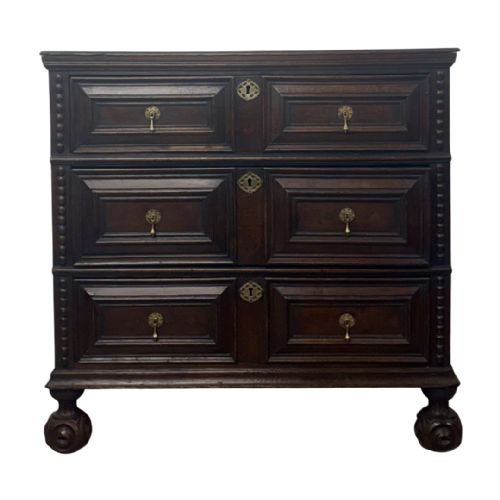
Earlier iterations stretch back to the seventeenth century, offering simpler chests and wall shelves alongside monumental library bookcases and buffet cabinets. Buyers seek these forms for their commanding scale and the rich texture of their carved surfaces.
How they were made
Construction relies heavily on solid oak timbers, chosen for strength and durability to support deep, elaborate chisel work. Cabinetmakers joined heavy boards using traditional framing techniques to withstand the weight of massive cornices and doors.
Surface decoration involves hand-carved motifs including Green Man masks, scrolling foliage, and figural scenes executed directly into the timber. Additional structural integrity and contrast come from brass, iron, or metal hardware, while select pieces incorporate bevelled glass or mirrored elements.
Heavy Carved Dresser Retail Price Guide 2026
Typical asking prices for heavy carved dresser among the pieces listed under this phrase on Sellingantiques today, from the lower quarter to the upper quarter. They describe what is for sale here now, not the wider market.
Common revival styles include Jacobean, Gothic, and French Renaissance interpretations executed in solid oak.
What varies in quality
The integrity of the original timber and the structural harmony of the piece also determine its standing. Heavy oak furniture that retains its original patination, substantial hardware, and well-balanced proportions represents the higher tier of these works.
The Heavy Carved Dresser Glossary
- Green Man
- A sculptural motif depicting a human face surrounded by or sprouting from foliage. It symbolises rebirth and appears frequently on nineteenth-century oak furniture.
- Stretcher base
- A configuration of horizontal wooden bars connecting the lower legs of a piece for added stability. This structural feature often appears on sideboards and dresser bases.
- Renaissance Revival
- A nineteenth-century design style drawing inspiration from fifteenth and sixteenth-century European architecture and ornament. It manifests in heavy mouldings, pilasters, and classical carvings.
- Bevelled glass
- Glass panes featuring an angled edge ground down to a decorative slope. This technique catches the light and is typically found in cabinet doors and mirror backs.
Heavy Carved Dresser: Frequently Asked Questions
What is a heavy carved dresser?
A heavy carved dresser is a substantial oak storage item, such as a sideboard, buffet, or dresser base, decorated with deep hand-carved relief work.
These pieces range from seventeenth-century chests to nineteenth-century revival cabinets designed to anchor a room with architectural presence.
How do I date a carved oak cabinet?
Dating relies on examining the construction methods, tool marks, timber characteristics, and stylistic revival influences present in the woodwork.
Nineteenth-century examples often emulate earlier seventeenth-century Jacobean or Renaissance styles, meaning hardware and joinery details provide crucial clues to true age.
Where should I place a large sideboard?
Large sideboards and dresser bases require significant wall space and a room with sturdy floorboards to support their considerable weight and mass.
They function effectively in dining rooms, large hallways, or libraries where their substantial storage capacity and decorative carvings can be fully appreciated.
What materials are used in these pieces?
Solid oak serves as the primary material for the vast majority of these heavy storage units, prized for its strength and ability to hold deep carvings.
Metal hardware, brass accents, and occasionally bevelled glass or mirror panels complement the dark timber surfaces.