



Heavy Brass Wall Clock
A heavy brass wall clock brings solid maritime history and dependable timekeeping into a room with striking industrial presence.
Heavy Brass Wall Clock
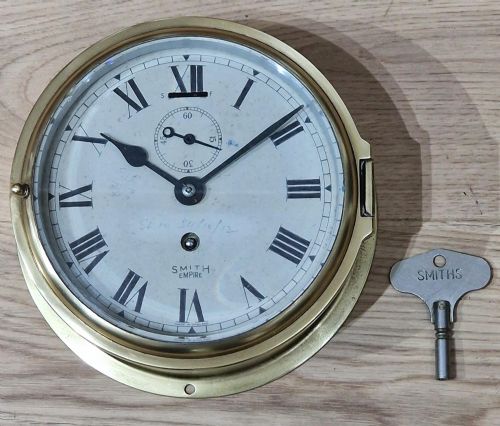
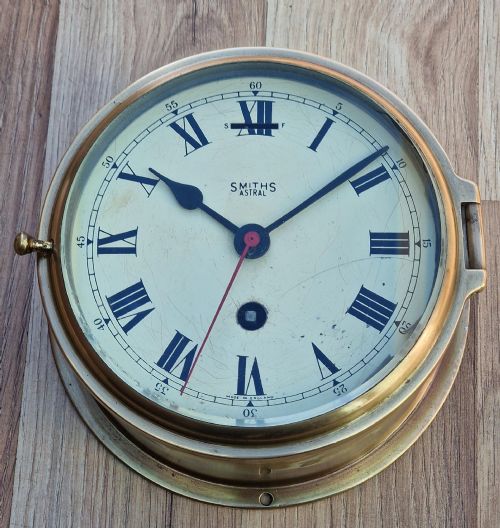
A heavy brass wall clock represents maritime and industrial heritage, originating from railway offices, engine rooms, and ships' bulkheads. When searching for a heavy brass wall clock, buyers encounter robust timepieces designed for demanding environments rather than domestic parlour use.
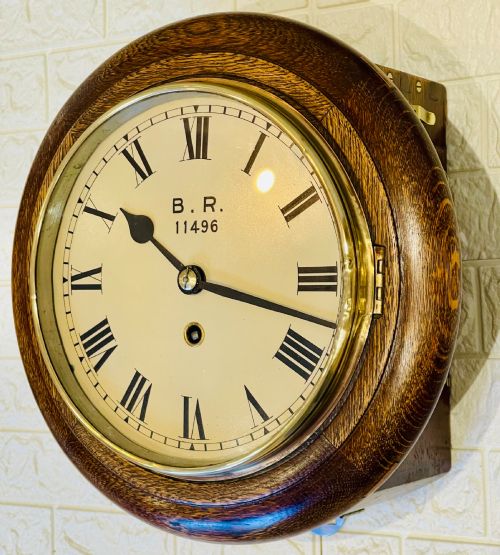
The versions most commonly met on this page span the Victorian, Edwardian, and mid-twentieth-century periods, often linked to railway companies or aviation ministries. These clocks display utilitarian forms built around solid brass cases and clear dials intended for immediate legibility.
Makers such as Prescot Clock Co and Kelvin White & Hutton London appear among the selections, alongside notable institutional pieces like British Rail and Air Ministry items. Their substantial weight derives from thick metal housings and heavy-duty mechanical movements.
How they were made
Heavy brass wall clocks rely on thick-gauge brass cases cast or spun to withstand marine conditions and vibration. Enamel dials provide a durable face that resists yellowing, paired with glass covers to protect the hands.
Many examples utilise chain fusee movements, a mechanical system that equalises the declining power of the mainspring to ensure steady timekeeping. Secondary materials such as oak frames and nickel-plated brass appear on specific railway and bulkhead variants.
Heavy Brass Wall Clock Retail Price Guide 2026
Typical asking prices for heavy brass wall clock among the pieces listed under this phrase on Sellingantiques today, from the lower quarter to the upper quarter. They describe what is for sale here now, not the wider market.
Several clocks here once kept time inside engine rooms and railway offices, enduring decades of steam, smoke, and relentless vibration.
What varies in quality
The standard of a heavy brass wall clock depends on the sophistication of its internal movement, particularly the presence of a chain fusee mechanism rather than a standard spring-driven setup. Heavy castings with clean lines and minimal institutional wear elevate an example above standard utility pieces.
Originality of components, including the enamel dial and matching hands, defines the distinction between a preserved working artefact and a heavily restored assembly. Maker signatures on the dial or movement add historical weight and confirm origin.
Prescot Clock Co·Kelvin White & Hutton London
The Heavy Brass Wall Clock Glossary
- Fusee
- A conical pulley used with a chain or cord to maintain even power as the mainspring unwinds. This mechanism ensures consistent accuracy throughout the running time of the clock.
- Bulkhead clock
- A rugged timepiece designed to be mounted directly to the interior wall of a ship's cabin or bridge. These cases feature heavy screw bezels and secure mounting points to resist moisture and movement.
- Enamel dial
- A metal dial face coated with fused glass powder to create a smooth, glossy, and permanent surface. These faces retain their crisp markings over decades of exposure.
- Bezel
- The ring of brass or metal that holds the glass cover in place over the clock face. On marine examples, this ring often screws tightly into the case with a rubber or felt seal.
- Twin fusee
- A movement featuring two separate fusee cones and chains, typically found in clocks that include a striking mechanism alongside the timekeeping train.
Heavy Brass Wall Clock: Frequently Asked Questions
What is a fusee movement?
A fusee movement uses a conical pulley and chain to regulate power from the mainspring, ensuring consistent force reaches the escapement as the spring relaxes.
This sophisticated mechanical design was favoured in marine and railway environments where accuracy was paramount.
Are enamel dials original to these clocks?
Most period maritime and railway clocks feature fired enamel dials on copper discs, which resist fading and wear over decades of service.
Fine hairline fractures are common on genuine older enamel faces and form part of their authentic character.
Where were bulkhead clocks used?
Bulkhead clocks were mounted on the interior walls of ships, engine rooms, and railway installations to maintain precise schedules in harsh conditions.
Their heavy brass housings protected the delicate mechanisms from salt spray and engine vibration.